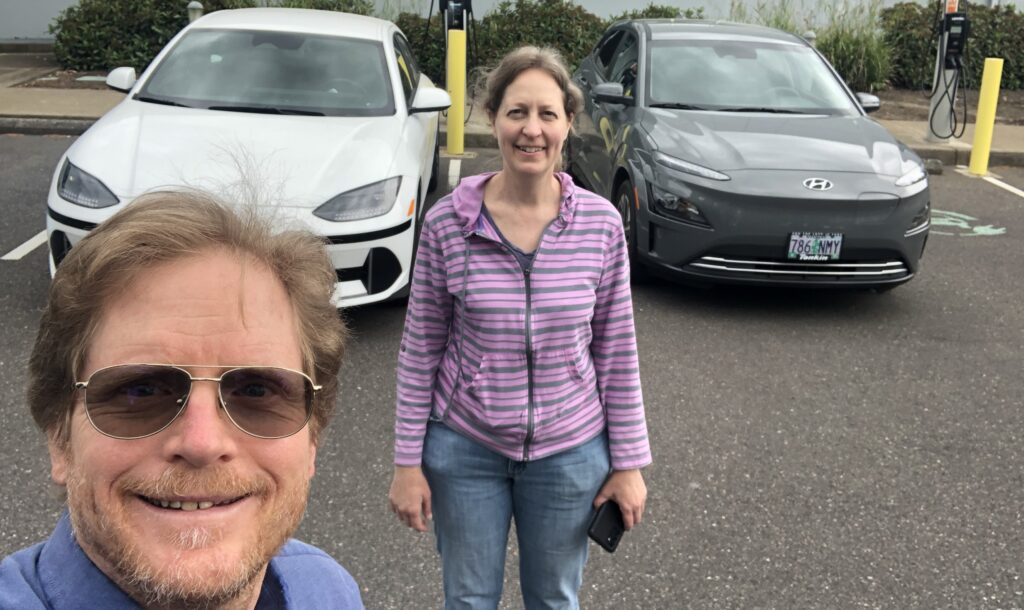
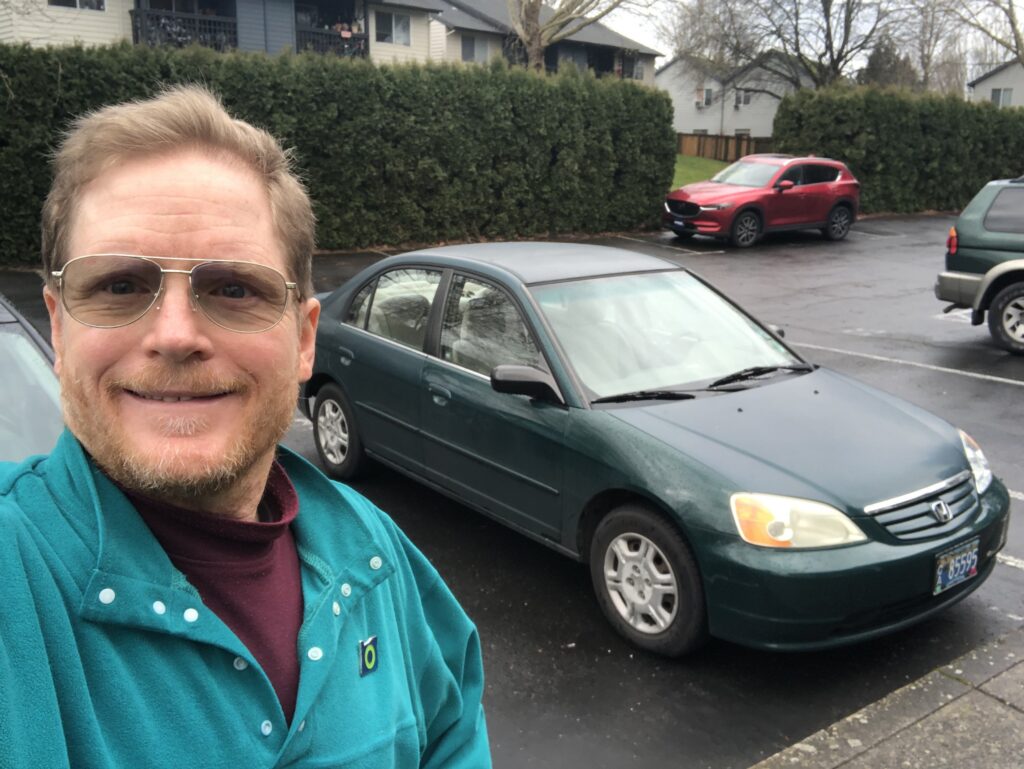
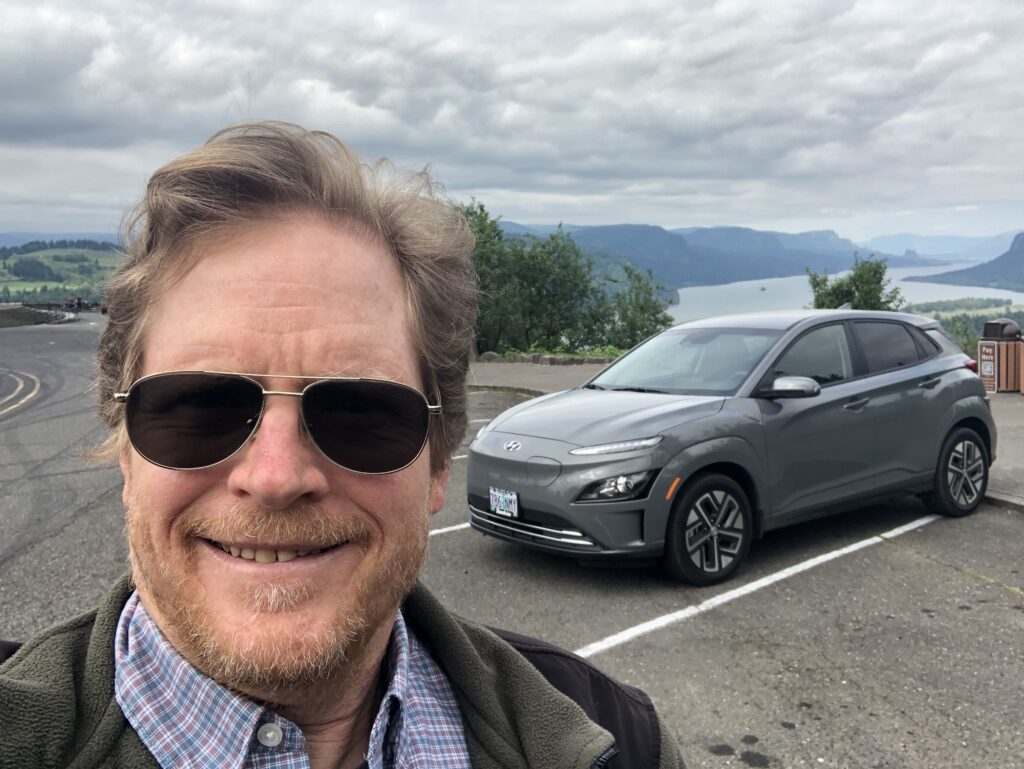
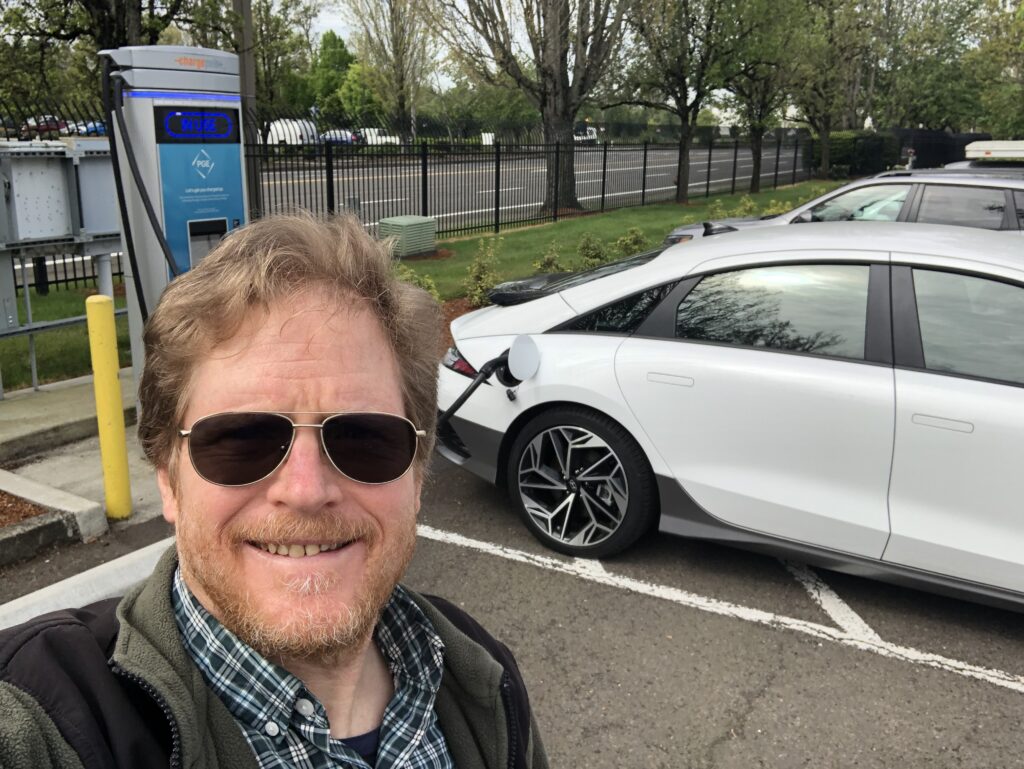
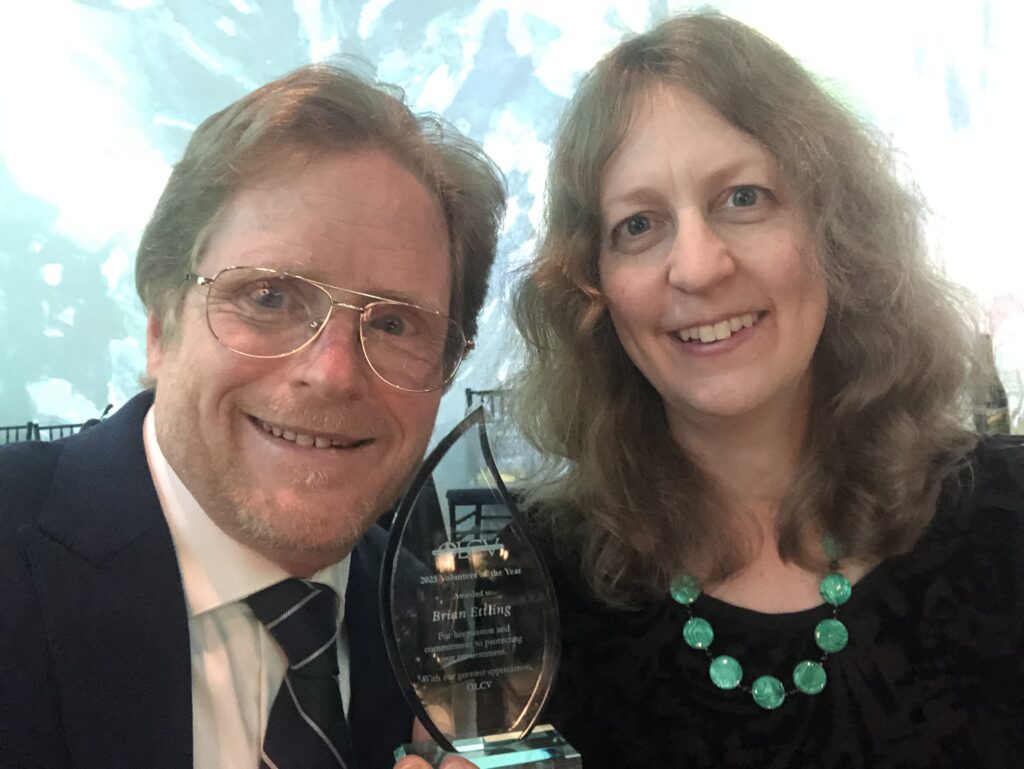
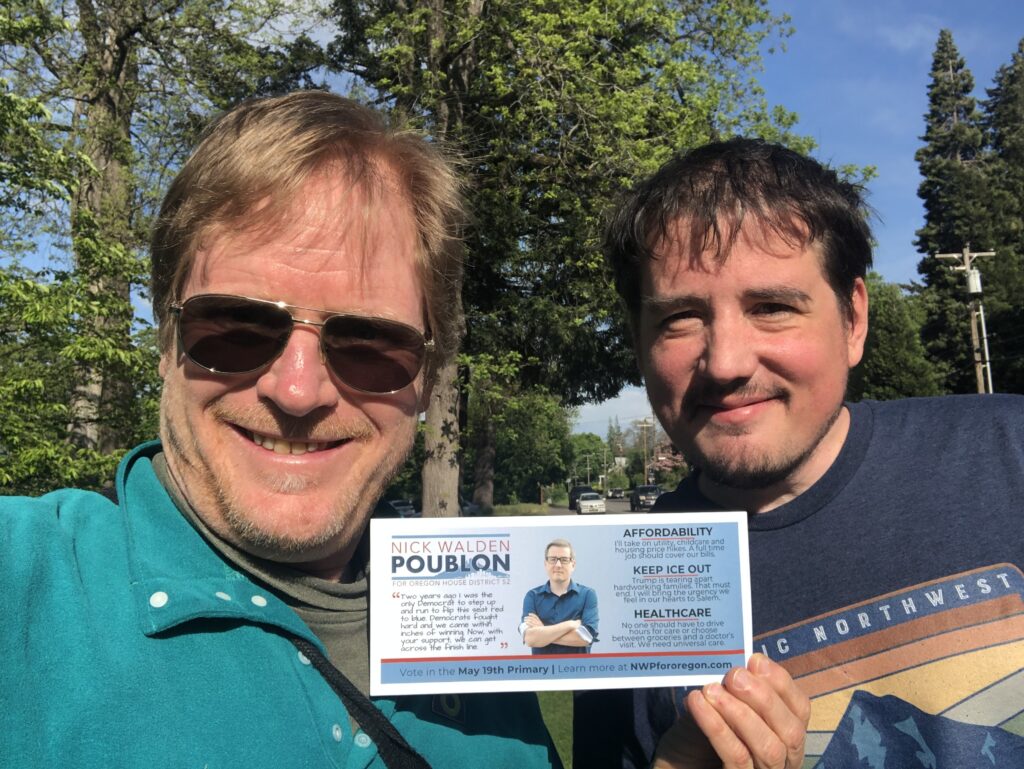
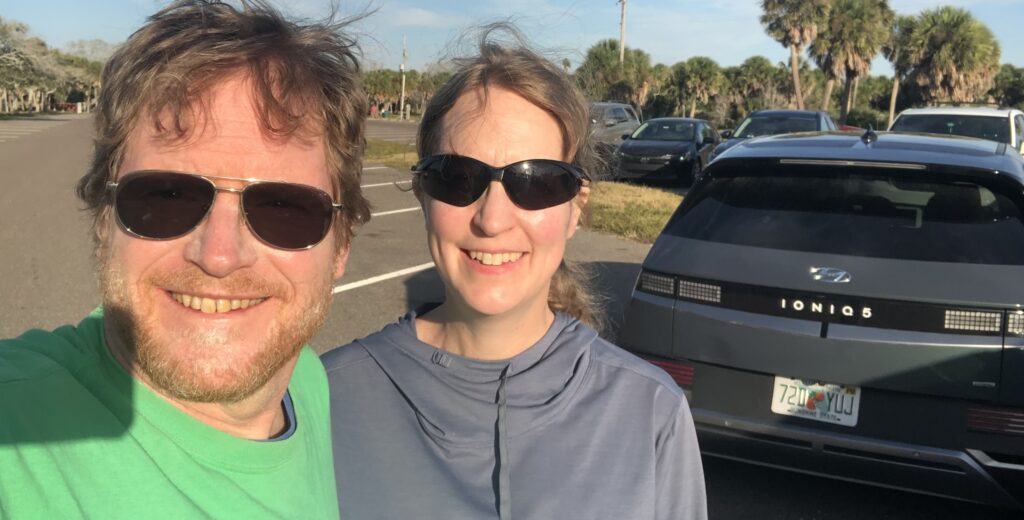
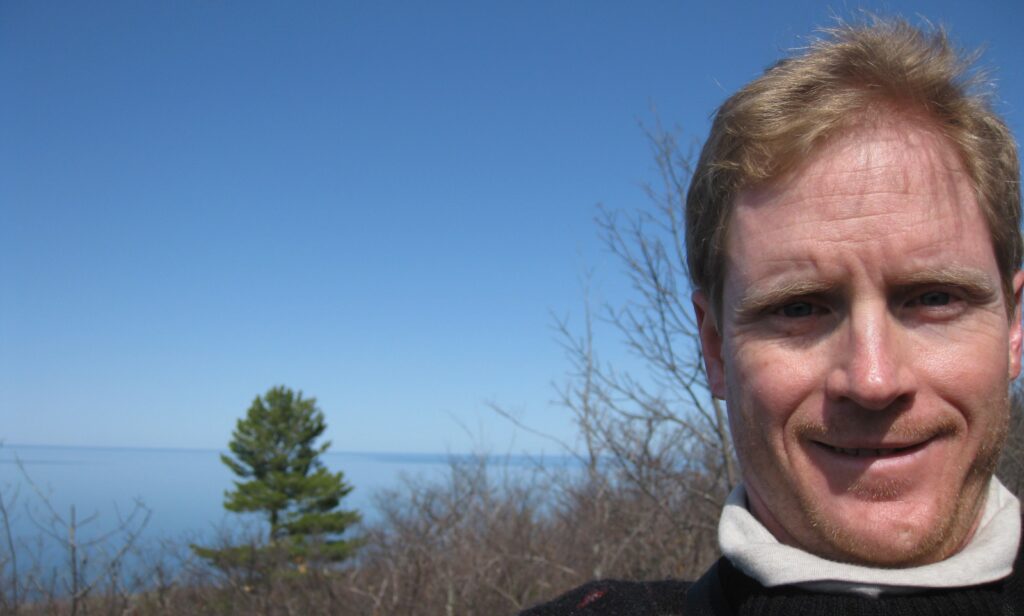
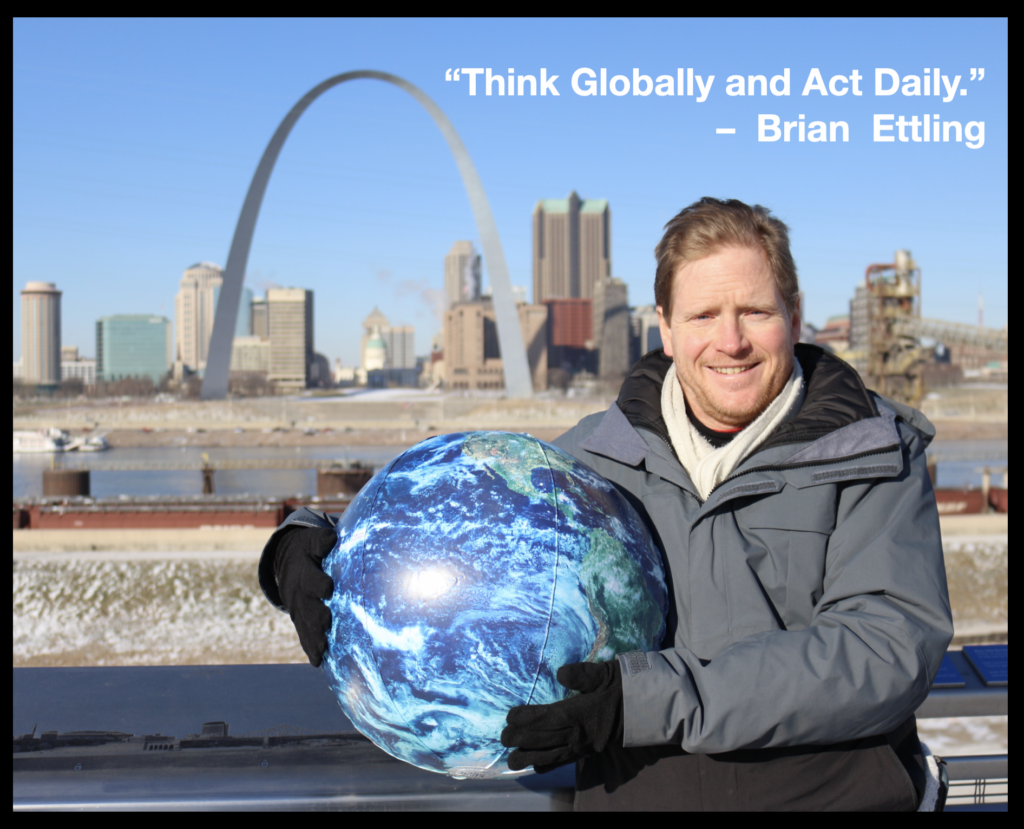
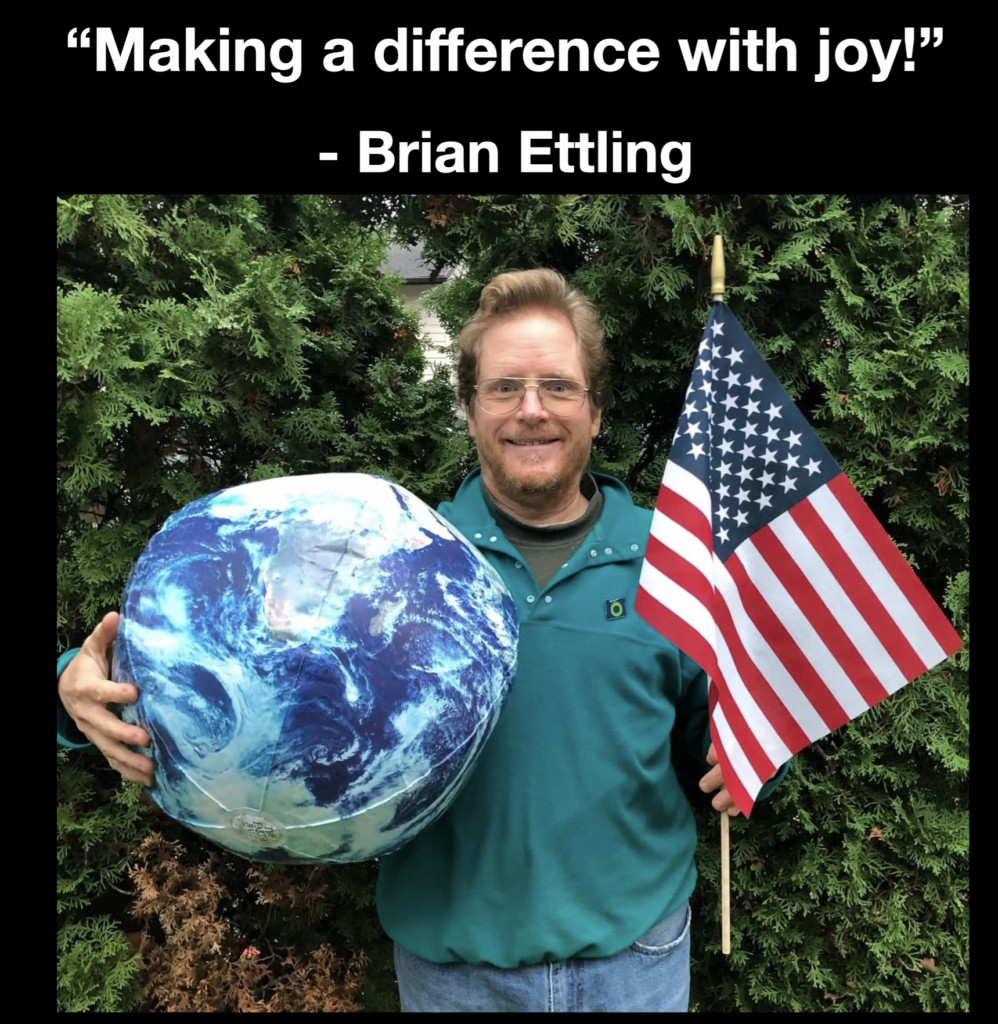
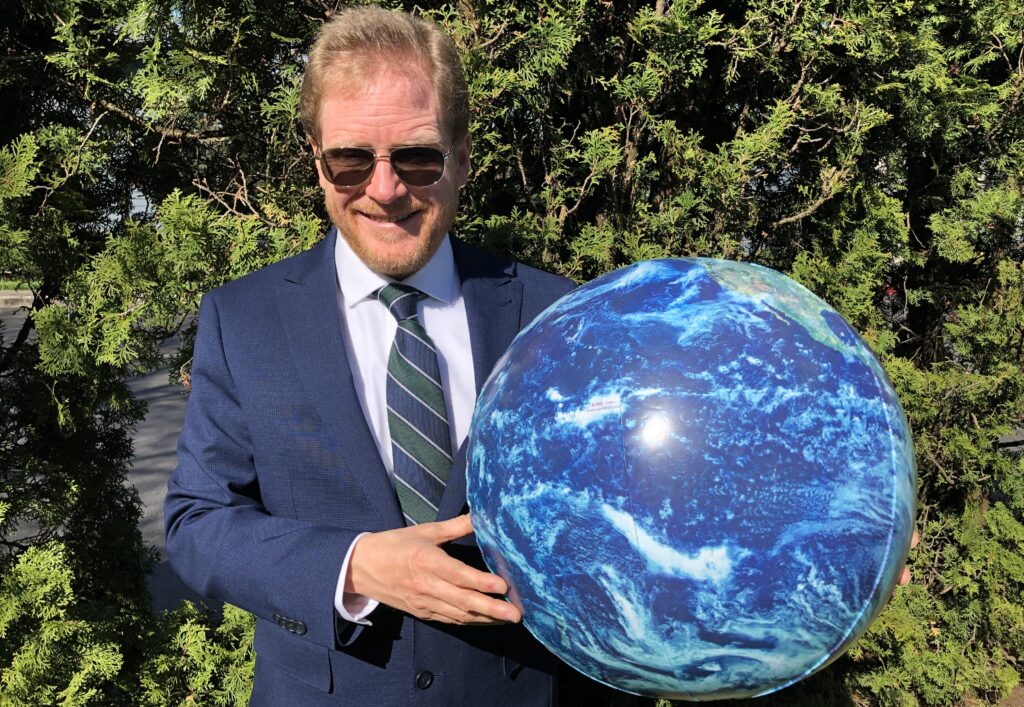
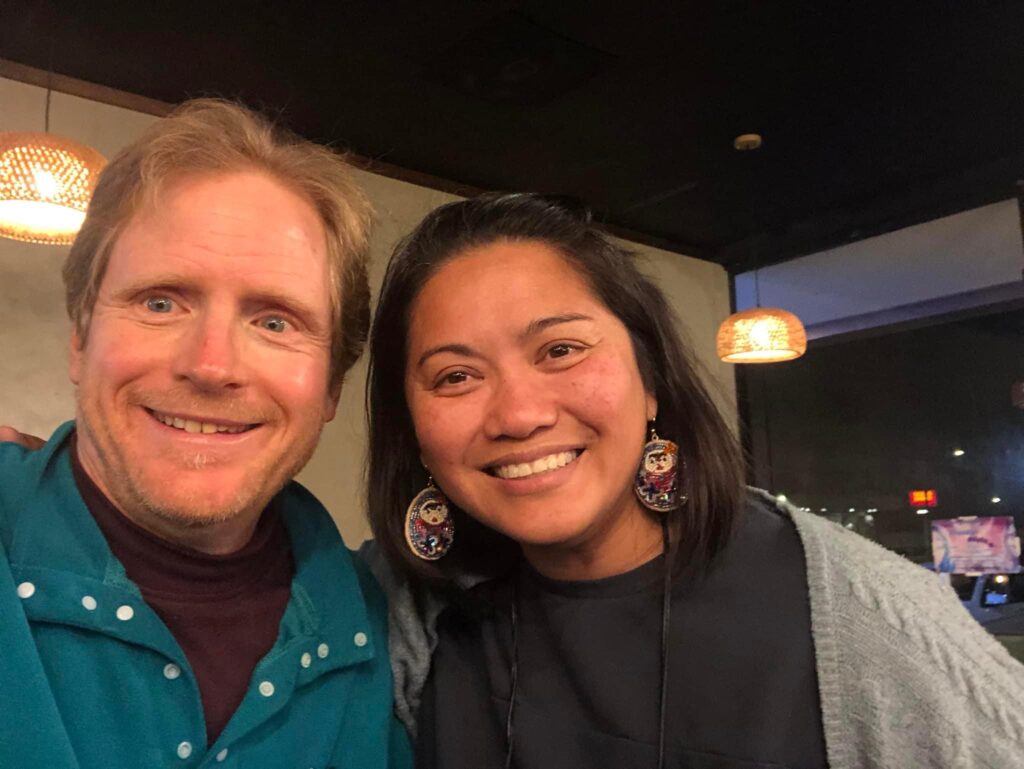
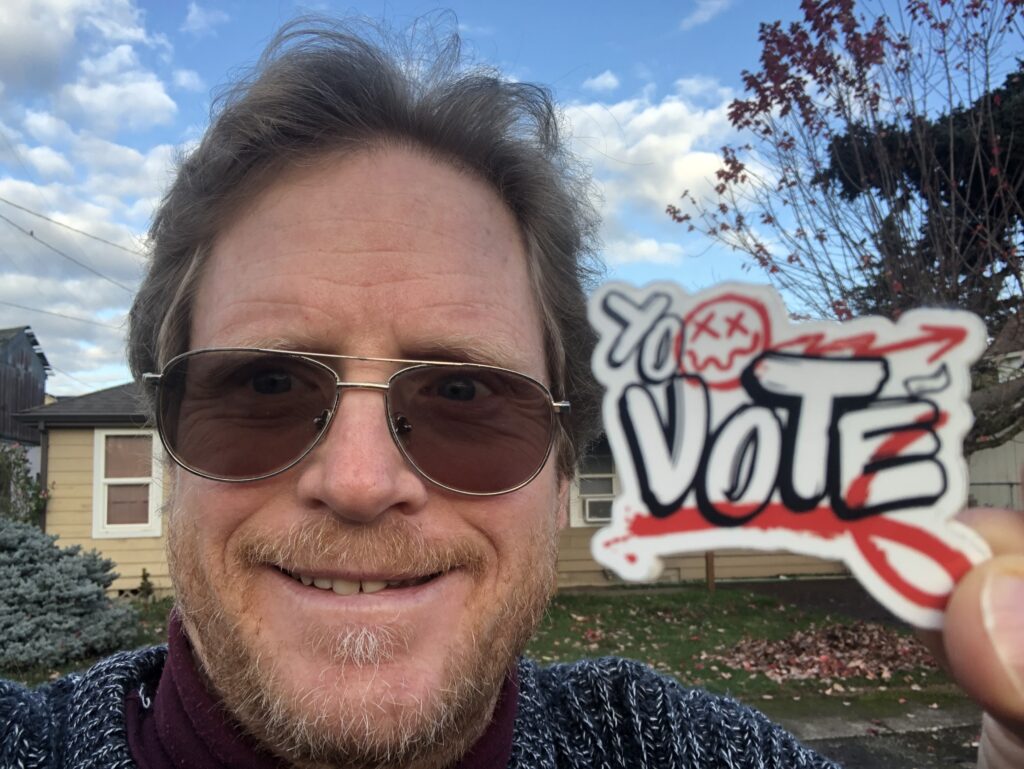
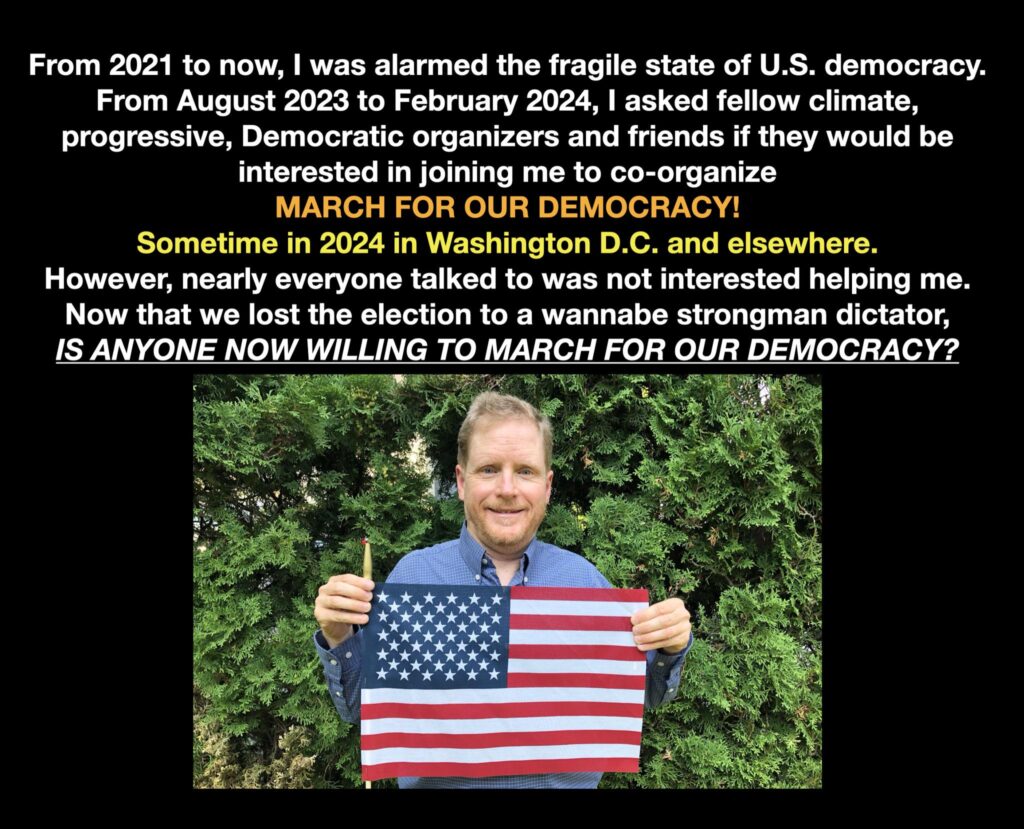
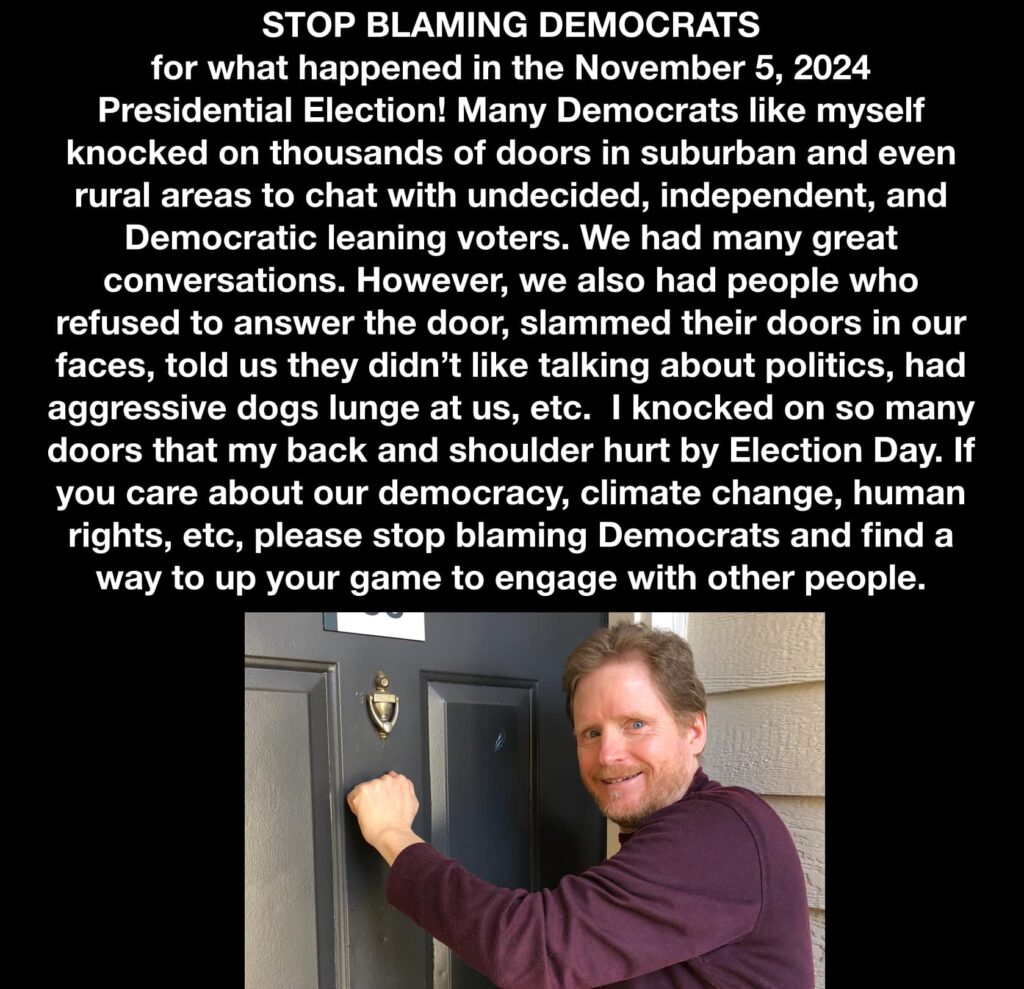
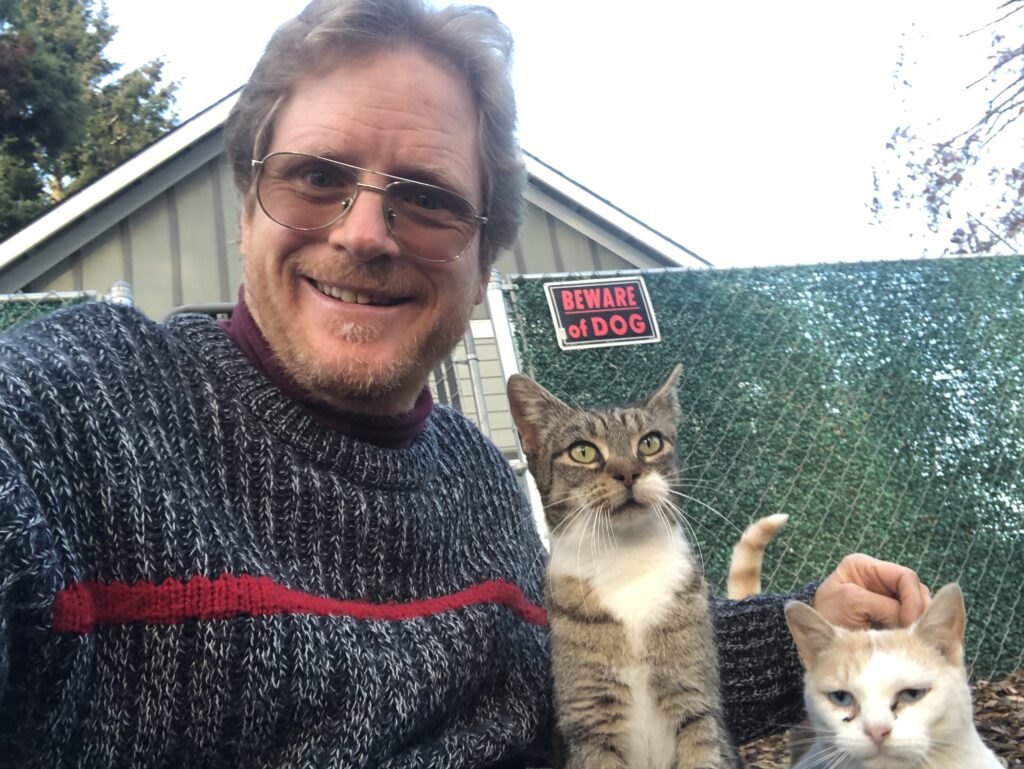
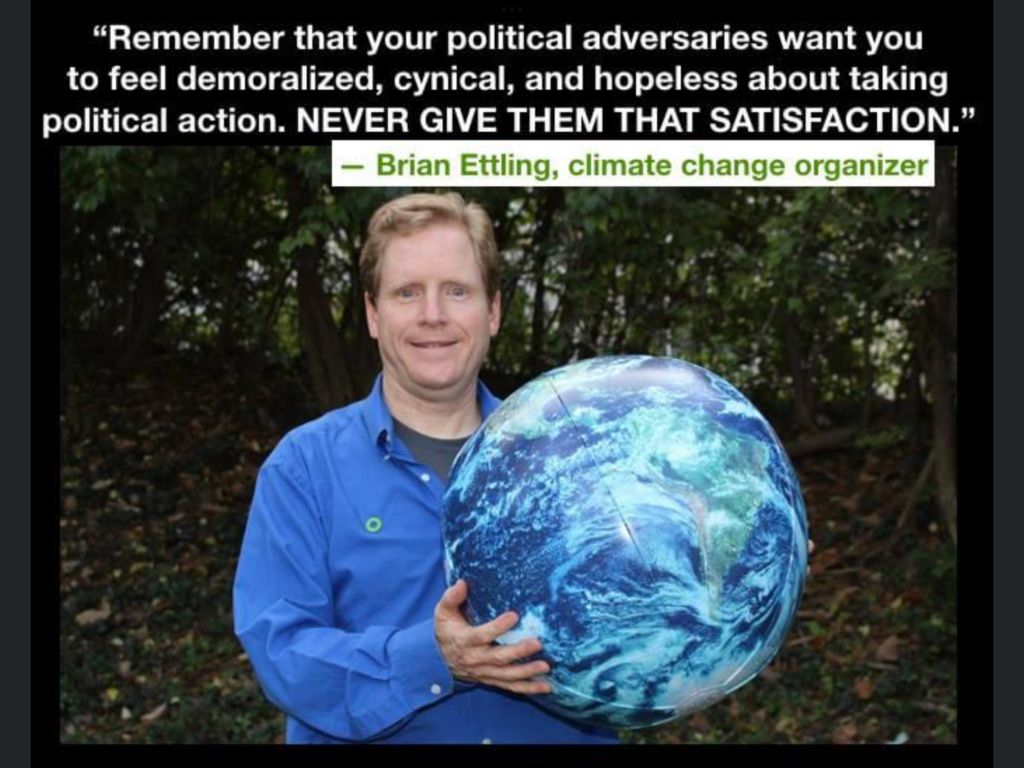
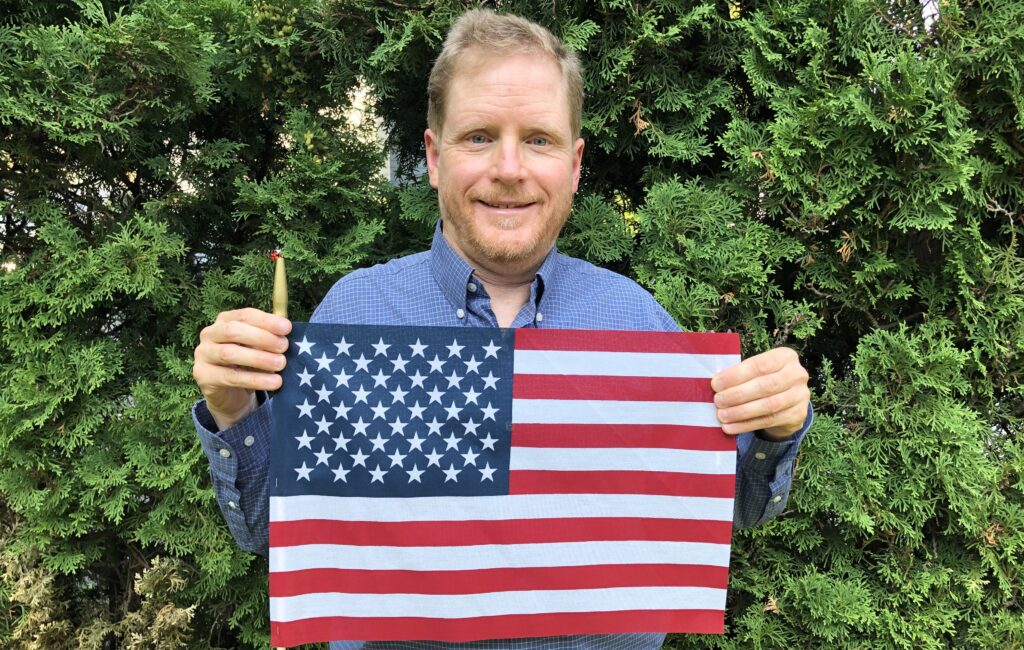
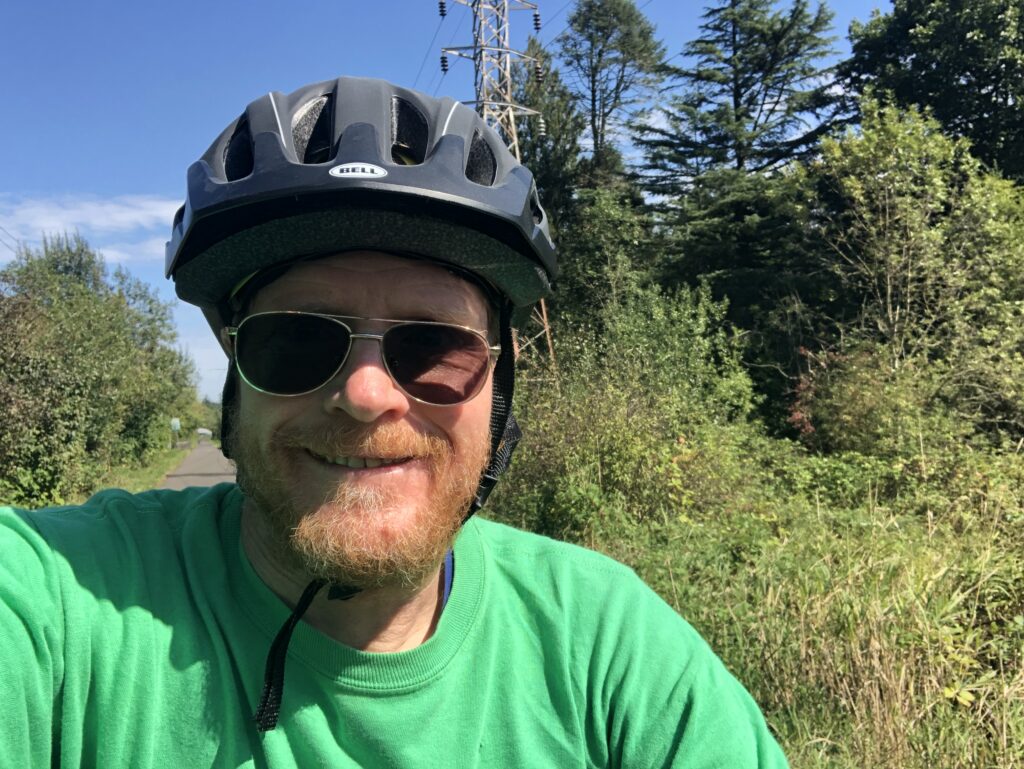
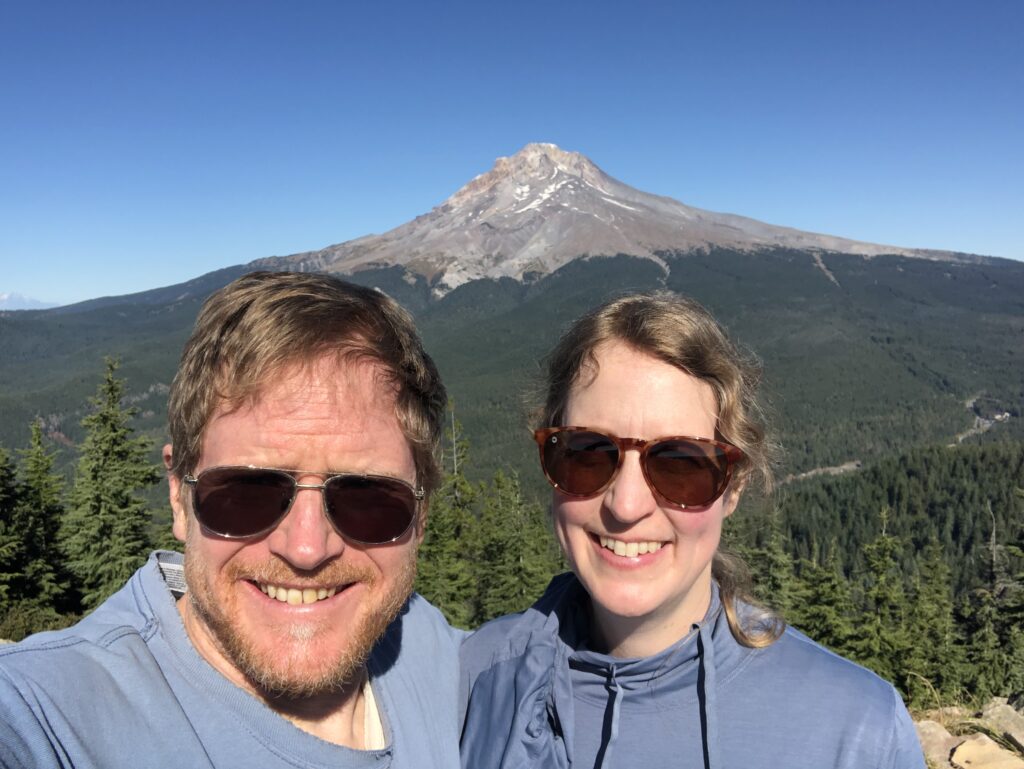
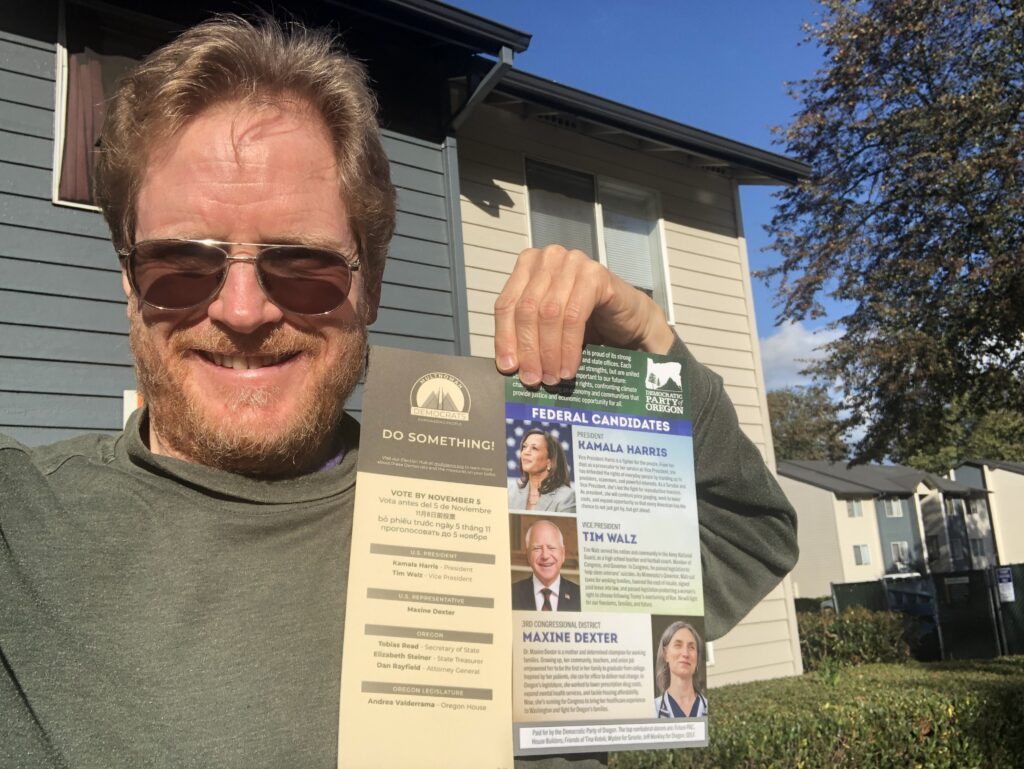
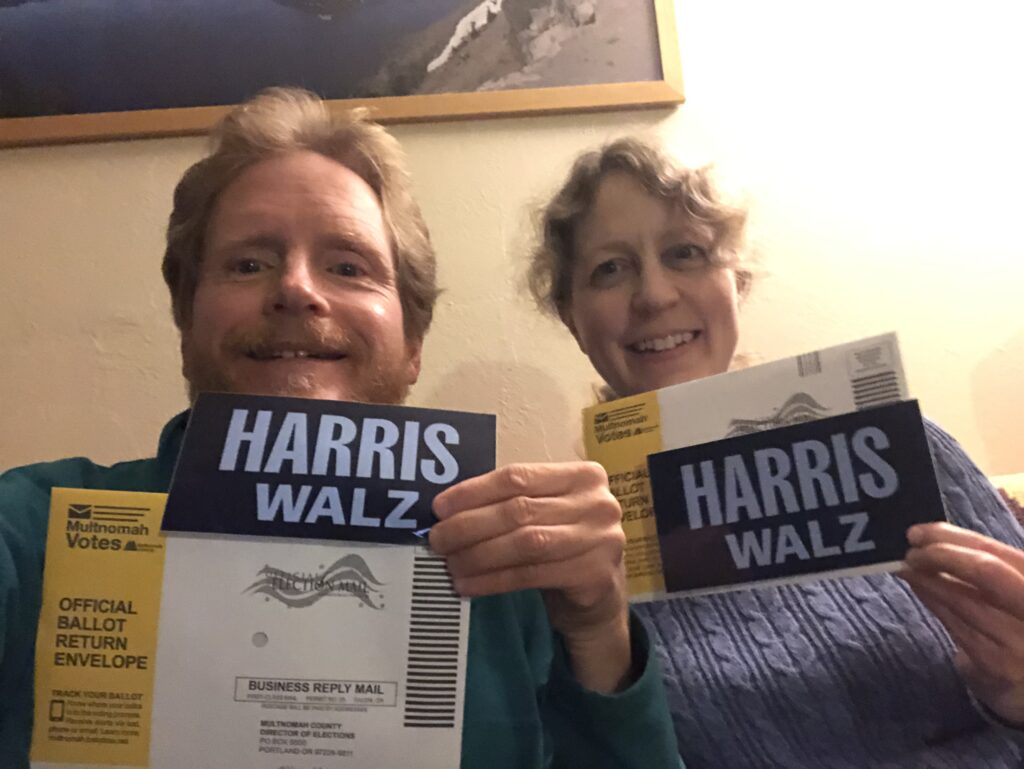
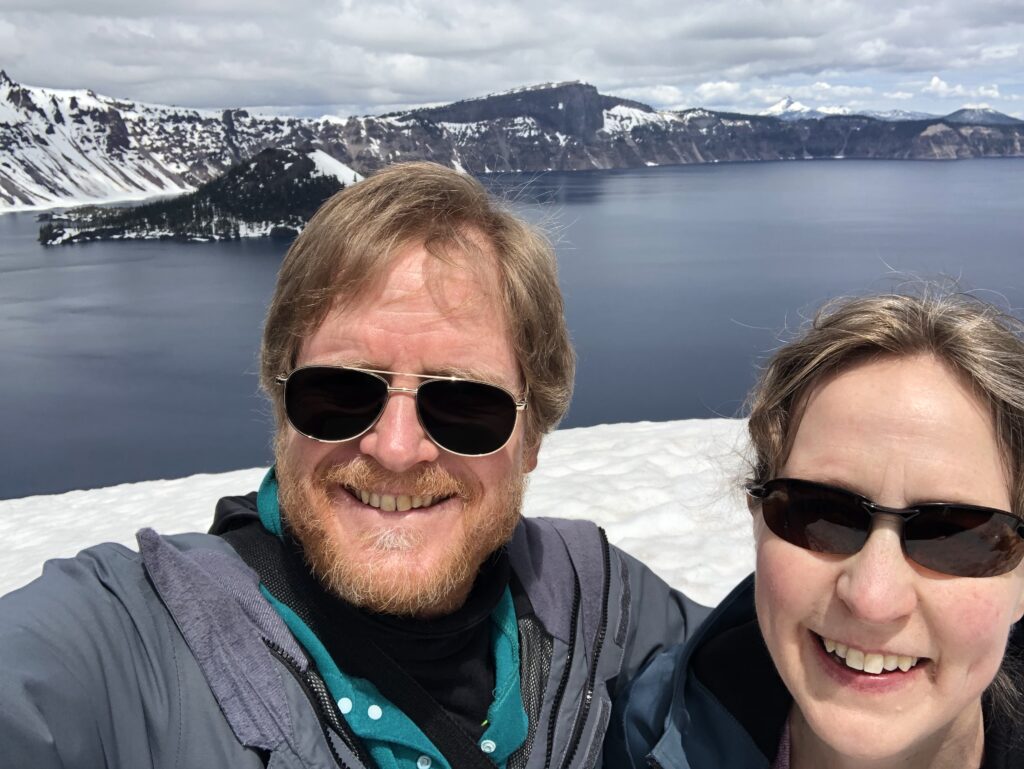
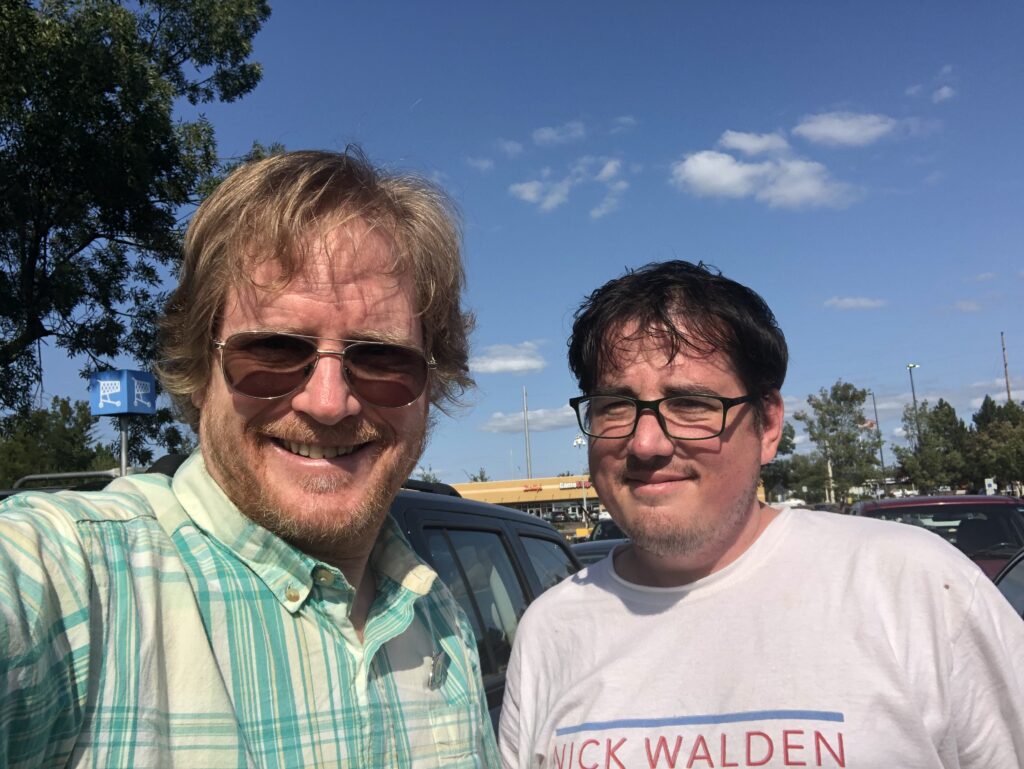
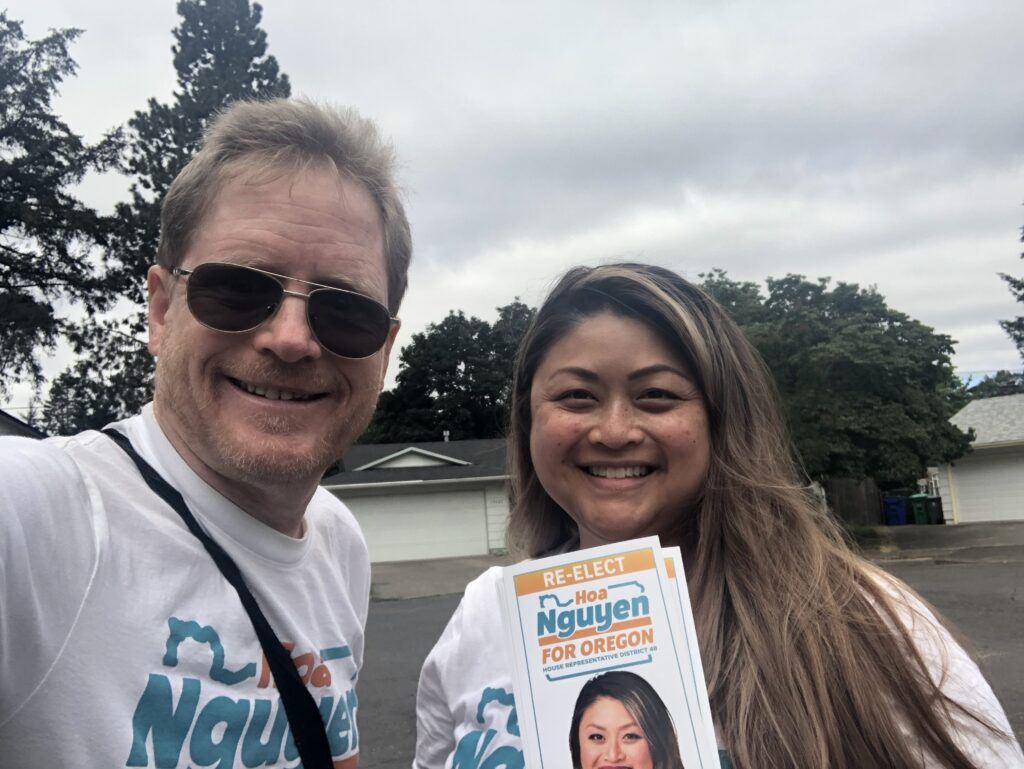
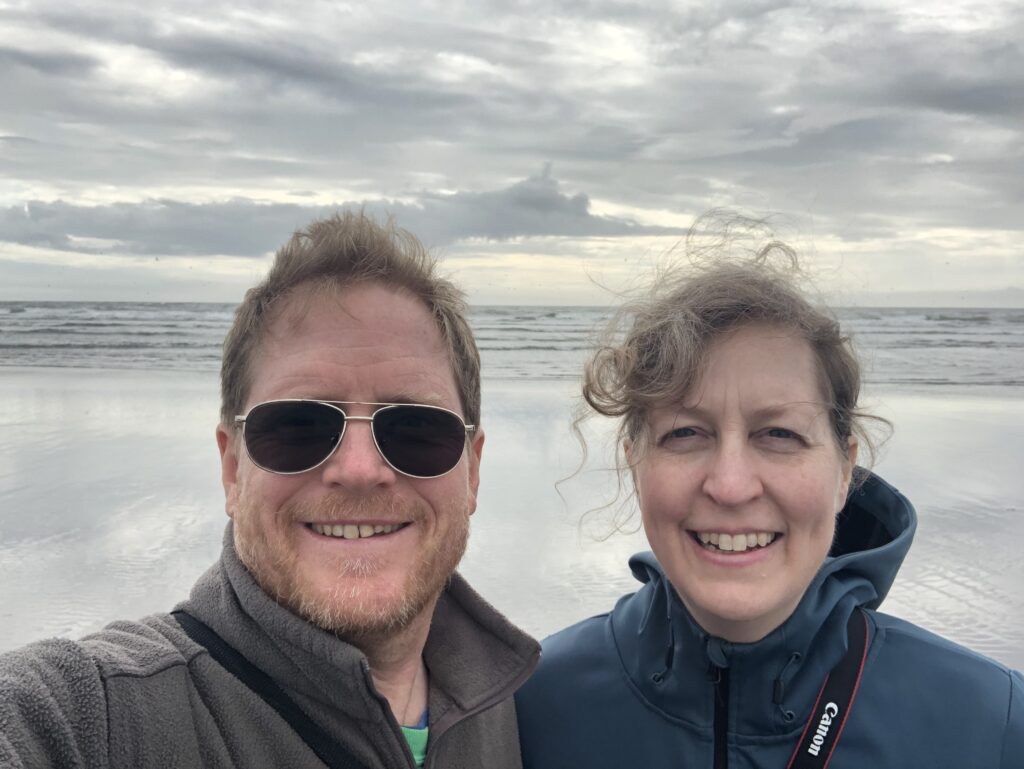
Photo of Brian Ettling taken on November 15, 2023.
“Freedom must involve unpredictability” – Author, American historian and professor Dr. Timothy Snyder from his 2024 book, On Freedom
A popular concept attributed to several motivational influences is “Step outside of your comfort zone. It’s where the magic happens.” The magic is what happened to me on September 25, 2025. Several weeks before, a friend and fellow organizer in Portland, Oregon, Timur Endur, sent this email to his contacts:
“I wanted to extend the invite to the Karaoke Night & Birthday Bash for my good friend (Oregon) state senator Khanh Pham. Senator Pham has been a leading voice for climate action, transportation & housing in the state legislature. I’m a co-host for the event and hope you’ll join me at Mekong Bistro for the event later this month!”
I had lunch with Timur last winter. I met him when he ran for Portland City Council in 2024. I trusted his judgement that this would be a fun party to attend. Even more, I saw Senator Pham post a video from a her previous bash karaoke fundraiser of a mutual friend, KB Mercer, joyfully dancing to the music at this annual party. Sadly, this KB passed away a few days in September 2024. After I watched that video of my friend dancing, I wanted to attend this lively karaoke birthday bash when it would occur in 2025.
The ironic part was Senator Pham and I got off to a rocky start when I met her on January 7, 2021 as part of my climate organizing. I requested a lobby meeting in September 2020 when she ran to be elected as a Representative to the Oregon Legislature in that November election. At that time, I volunteered with Citizens’ Climate Lobby (CCL). As part of my activism with CCL, I met with Oregon legislators to ask them to endorse CCL’s federal carbon pricing bill, the Energy Innovation and Carbon Dividend Act H.R. 763. I succeeded in persuading over 30 Oregon legislators to endorse that Congressional bill, including then House Speaker Tina Kotek.
In a lobby meeting with Oregon Representative Tiffiny Mitchell in September 2020, she offered to introduce into the Oregon Legislature a state resolution supporting the federal carbon pricing bill. Rep. Mitchell did not run for re-election in November 2020. She requested Senator Michael Dembrow to introduce this resolution on the Senate floor on February 4, 2021. The resolution became known as Senate Joint Memorial 5 or SJM 5. It had 10 legislative sponsors when it was introduced. I hoped Representative Pham could be the 11th.
I was impressed with Khanh Pham’s background as a community organizer in Portland. She was a founding leader and spokesperson for the groundbreaking Portland Clean Energy Fund Initiative, which was successfully passed in November 2018 by a 2 to 1 margin. It won in large part due to a to a broad coalition spanning environmental organizations, environmental justice groups, communities of color, labor, small businesses and neighborhood associations.
Then she helped start the Oregon Just Transition Alliance, which undertook a statewide listening tour to ask frontline communities what kind of Green New Deal made sense for them. When she won her state representative seat in November 2020, she was the first Vietnamese American elected to the Oregon Legislature. With her strong progressive and climate advocacy background, I hoped she would be an ally in my effort to get SJM 5 passed in the Oregon Legislature.
Our January 7, 2021 meeting felt like a disaster. She immediately refused to support the climate resolution I was advocating. She shared her biggest frustration that advocates of carbon pricing seem to emphasize it to a point that it sucks the oxygen out of the room for other climate solutions. When I humbly pleaded with her that most economists support carbon pricing to tackle climate change, she looked at me like I was mansplaining to her. Of the hundreds of legislative and Congressional lobby meetings I had over the last 11 years, it felt like my worst meeting of all. She acted openly hostile to me. I felt crushed.
I had to work around her opposition to try to organize to get SJM 5 passed in the Oregon Legislature. I almost succeeded. It passed out of the Oregon Senate on April 7th by a vote of 23 to 5, with 6 Republican Senators voting in support. SJM 5 ended up with 30 House sponsors, including 7 Republicans. However, the resolution died in June 2021 when House Majority Leader Barbara Smith Warner refused to allow it to have a hearing in the Rules Committee.
It was a heartbreaking loss for me. Even worse, at a town hall at the end of the session, Representative Pham referred to SJM 5 as a ‘waste of time.’ That criticism stung badly.
In the years afterwards, a thaw started to happen as we on the same side working on many climate bills. She had a fundraiser and forum on democracy that I helped organize in August 2024. She texted me to thank me for assisting in co-hosting the event. I attended two more of her community fundraising events in December 2024 and January 2025 because I believed she was one of the strongest climate champions in the Oregon Legislature.
Oregon Moves Pac and Safe Streets for All Community event and fundraiser for event for Senator Khanh Pham on January 27, 2025. Photo from Khanh Pham for Oregon Facebook page.
Thus, I was in the habit of attending her fundraising events when Timur sent me the email in early September to coax me to attend her birthday fundraiser on September 25, 2025. The birthday fundraiser would center around karaoke. I was always intrigued by karaoke, but I had never tried it. I RSVPed for this event soon after the email from Timur.
On September 25th, my wife decided at the last minute she would join me for this fundraiser. I was thrilled to have her with me. We were some of the first guests to arrive to the party. Senator Pham personally greeted all the guests after they signed in at the check in table. She was surprised to see me there. She inquired what brought me to the party.
I responded I saw how much fun our friend KB Mercer had dancing at Khanh’s birthday party from video Khanh posted after KB passed away. We both sighed with sadness that our mutual friend was no longer around. Her eyes then lit up with joy as she remembered KB dancing and bringing so much zeal to her previous birthday fundraiser. Senator Pham then asked if she could give me a hug, which I gladly allowed. She was pleased I was there.
Tanya and I enjoyed the tasty assortments of Vietnamese food available in this restaurant that was solely booked for Khanh’s party that evening. I mingled with friends while Tanya and I ate dinner. The party organizers announced they were looking for people to sign up for the karaoke. I decided on the spot to sign up on the list to perform a karaoke song. As I put my name on the list, I wrote down the song I wanted to sing, “September” by Earth Wind and Fire.
A couple of years ago, I learned in a National Public Radio (NPR) story that song was one of the most popular played songs in wedding receptions in the U.S. I made sure that song played at my wedding reception in November 2015. According to that NPR article, the song “September” ‘made its way into TV shows, commercials, sporting events and video games. In 2008, it played at both the Republican and Democratic national conventions. Taylor Swift recorded a lightly countrified cover in 2018.’
I knew I could not go wrong with that song. I then ran into Timur at the party. We were happy to see each other. It was the first time we talked since having coffee months before. I told him I signed up to sing karaoke. Even more, I wanted him on stage with me since he encouraged me to come to the party. Timur was cautious about my request at first. He asked me what song.
I replied, “’September’ by Earth, Wind, and Fire.”
He hesitated, “I don’t think I know that song. However, if you can get others to join us on stage, I will join you on stage.”
“Deal!” I remarked. “You know that song. You probably have heard it. It’s one of the most popular dance songs of all time. I will get you the lyrics to sing along.”
“Ok,” he responded, “I will see you on stage when the time comes.”
As the karaoke party progressed, I became nervous in the back of the room since I never performed karaoke before. I internally wondered what I signed myself up to do. At the same time, everyone on stage were full of joy singing karaoke. Plus, the dance floor had many of the many of the attendees cheerfully dancing to the songs.
I then heard this announcement, “Next up to perform Karaoke is Brian Ettling performing ‘September’ by Earth, Wind, and Fire.”
Gulp! It was showtime. I had a few butterflies in my stomach like it was the first day of school.
I walked on the stage with Timur joining me. We convinced a middle aged Asian American woman to sing with us. Plus, a 12-year-old girl joined us on stage.
The music started up. Most of the folks sitting in their chairs were drawn to the dance floor by the upbeat rhythms and melody. Senator Pham was on the dance floor blissfully moving to the song. I started singing the song with Timur and the others joining me. The people on the dance floor had so much fun dancing that they did not know how good or bad my singing was. The song was mostly easy to sing along. I even improvised some song lyrics.
I was back on stage and loving it. I used to be the center of attention when I gave ranger talks working in the national parks from 1998 to 2017. I acted in plays in college. I have given over 200 climate change talks as a public speaker in 12 U.S. states from 2011 to 2019. However, I fell out of habit giving public presentations in 2020 when the COVID pandemic lockdowns happened. I have done very little public speeches since then.
I forgotten how much I love being on stage. My wife Tanya smiled with pride as she took photos of me performing the song. I was back in my element! As each song concluded, the karaoke singers were encouraged to express birthday wishes to Khanh Pham.
When the song was over, I gladly wished Senator Pham a happy birthday on the microphone and thanked her for being one of the strongest climate champions in the Oregon Legislature.
She was delighted to hear my words. Later, she thanked Tanya and me for coming to her party when we decided it was time to head home. I had the time of my life performing karaoke at that party. I want to do that again sometime. I want to find another way to be on stage again!
We are living in a time when American democracy is in danger. Experts on authoritarianism, like Dr. Timothy Snyder, advise us to be unpredictable as individuals to help save our democracy. Well, I believe I had a fantastic time being unpredictable singing karaoke at a public fundraiser for a past political adversary now friend in September 2025.
Brian Ettling singing a karaoke version of “September” by Earth, Wind, & Fire at Oregon Senator Khanh Pham’s Birthday Karaoke Fundraiser on September 25, 2025. Photo by Tanya Couture.
A nighttime photo of the U.S. Capitol in Washington D.C. taken by Brian Ettling on July 22, 2025.
This is the third and final part of my blog about my trip to Washington D.C. July 19-23, 2023. The first part focused on my arrival in Washington D.C, the friends I stayed with in Takoma Park, touring the National Archives and Smithsonian National Museum of American History, and the Citizens’ Climate Lobby (CCL) Conference to prepare for the Congressional Lobby Day.
Part 2 is an account of my experience lobbying on Congressional Offices on July 22nd. Part 3 (below) is my recollection of the evening guided tour of the U.S. Capitol Building led by Congresswoman Val Hoyle.
Invitation for a Guided Tour of the U.S. Capitol led by Congresswoman Val Hoyle
For this July 22, 2025 CCL Congressional Lobby Day, had something different planned for Oregon CCL volunteers. Teresa Welch from Corvallis, OR asked her member of Congress, Representative Val Hoyle, to give a tour of the U.S. Capitol to the Oregon CCL delegation. Daniela Brod, Oregon CCL state co-coordinator, sent this email the day before on July 21st:
“Hello Oregonians in DC- We have just been presented the opportunity to take a tour of the Capitol building guided by Rep. Val Hoyle, Oregon’s Representative for the 4th District. We do not know the EXACT timing at this point, but we hear it will be tomorrow, Tuesday July 22nd, ‘Evening’. I assume this will be around 5 or 6pm. Don’t know though. Please respond here if you are interested with a ‘YES’”
I immediately responded with “Yes! Please RSVP me!”
Teresa then sent out an email on the morning of the July 22nd lobby day:
“Good morning, For those of you going on tonight’s tour of the Capitol with Rep. Hoyle, here is what you need to know. The tour will begin at 7pm from Rep. Hoyle’s office (1620 Longworth). Be sure you are in the building BEFORE 7pm, as the office buildings close to the public at 7pm. If you are late, you’ll need to contact one of your group who is already in Rep. Hoyle’s office, and they will have to ask Rep. Hoyle to come down and escort you inside. The tour will last about two hours. Wear comfortable walking shoes. Restrooms are available along the route. Have fun!”
Even with the normal excitement of the CCL photo on the Capitol steps and the Congressional lobby meetings, I felt the tug of anticipation for this Capitol tour with Rep. Hoyle at 7 pm.
After I finished my lobby meetings around 4:30 pm, I met up with two Oregon CCL friends. We walked to a nearby pizzeria called We, the Pizza to order slices of pizza before the evening tour. We ate our pizza on tables outside in front of the restaurant. It was a typical Washington, D.C. humid July day. But, not too hot that we could relax eating outside while the traffic and local D.C. pedestrians walked by us, with some stopping inside to order and pick up their pizzas.
We then walked back over the House Congressional Offices Buildings to go to Rep. Hoyle’s office in the Longworth House Office Building on the 6th floor. We arrived in front of her office around 6:30 pm. Others from the Oregon CCL team joined us inside her office around 6:45 pm. As we waited patiently, a gentleman from New York City joined us who was a survivor of the 9/11 attacks. Like the CCL advocates, he lobbied Congressional offices that day, but he advocated for federal funding for 9/11 survivors. He was friendly and graciously answered my questions about his memories of experiencing 9/11 in New York City. He told us that Rep. Val Hoyle struck up a conversation with him that day. She then invited him on this U.S. Capitol tour that evening.
As we waited inside the office, a large group from Ocean Spray Cranberries stood outside. Rep. Hoyle also invited them on the tour. Around 7 pm, Rep. Hoyle came out of her office delighted to start this U.S. Capitol Tour with everyone assembled. Included in this group, I met a middle-aged woman who was a lifelong best friend of Val Hoyle. Both of them grew up in Nashua, New Hampshire. Her childhood friend stayed in New England while Val moved to Oregon decades ago. They stayed close. Her friend was so excited when Val was elected to Congress since she could see her more often on the east coast.
Congresswoman Val Hoyle of Oregon leading a tour of the U.S. Capitol in the Cannon Tunnel on July 22, 2025.
Guided Tour of the U.S. Capitol Building led by Congresswoman Val Hoyle
At the beginning of the tour, Rep. Hoyle disclosed she likes giving these tours of the U.S. Capitol herself. She informed us the Republican House members tend to give the tours more than their Democratic colleagues. However, more Democratic members see the value of giving these U.S. Capitol tours themselves, instead of delegating them to staff or the Capitol Tour Guides, as a great way to connect with constituents and the public. In fact, Rep. Hoyle ran into one of her GOP colleagues leading a tour of the Capitol while we were in the middle of our tour. They were friendly and easy going briefly chatting with each other. They did not display the animosity that you see GOP and Democratic members of Congress acting towards each other on TV.
This tour lasted over 2 hours with Rep. Hoyle narrating the entire tour. She had some notes with her, but she mostly spoke without her notes with all the details she knew about the U.S. Capitol Building. She started the tour by showing us the artwork in the Cannon Tunnel, a curved tunnel connecting the House Cannon Office Building to the U.S. Capitol. Along one of the walls is displayed paintings from high school students across the U.S. Each state and territory is allotted two pieces of art. Rep. Hoyle marveled at the artwork remarked that nearly all of it looked like it was created by adults not high school students.
We then stepped into the lower-level visitor lobby of the U.S. Capitol Visitor Center. Just before we entered, we looked up at a glass ceiling with the U.S. Capitol Dome peaking right above us. On either side of the staircases leading into the Capitol Building stood a white 19.5-foot plaster replica of the bronze Statue of Freedom that sits on top of the Capitol Dome. Rep. Hoyle informed us that the statute on top of the U.S. Capitol weighs almost 8 tons.
The plaster statue was inspiring to see up close. It was a Romanesque looking woman with feathers on top of her head wearing robes. Her right-hand holds handle upon of a sheathed sword wrapped in a scarf. Her left hand she hangs onto a laurel wreath of victory and the shield of the United States with 13 stripes.
Congresswoman Hoyle then wanted us to notice the 18 statues placed around the Visitor Center. These 18 statues are part of the National Statuary Hall Collection. The legislatures of each U.S. state and the District of Columbia selected two statues of noted individuals from their state to be displayed throughout the Capitol. In the U.S. Capitol Visitor Center, I took photos and admired the bronze statues of Helen Keller from Alabama, Sakakawea from North Dakota, Kamehameha I from Hawaii, Frederick Douglas from Washington D.C, John I “Jack” Swigert, Jr. from Colorado, and Johnny Cash from Arkansas. Rep. Hoyle particularly liked the Johnny Cash statue. She proclaimed, ‘If Johnny Cash was from Oregon, we would have the Johnny Cash statue.”
We next entered the area known as the Capitol Crypt. It is the spaced of vaulted columns located one level below the Capitol Rotunda. It is long been referred to as the Crypt because it looks like areas in churches, which were often used for chapels and tombs. Directly beneath the Crypt is a spot where Congress intended to place the remains of George and Martha Washington. However, his last will stipulated his desire to be buried at home at Mount Vernon. Thus, No one was buried in the Capitol.
Even though the name, the crypt, makes it sound dreary and dark, this area was well lit with plenty of lighting, plus light grey marble floors and walls. It contained more state designated statues such as Billy Graham for North Carolina, John C. Calhoun for South Carolina, and Samuel Adams for Massachusetts. It held a large white stone bust of Abraham Lincoln and respected international leaders who defended freedom, such as Winston Churchill and Václav Havel former President, author, poet, playwright and dissident of Czechoslovakia. I admired all the stone statues and artwork on display in the U.S. Capitol Building. I spent a lot of time on the tour gazing at the artwork. The U.S. Capitol is a shrine to American democracy, but also a temple of sacred art showcasing the best of the American democracy ideal.
The plaster replica in the Capitol Visitor Center of the bronze Statue of Freedom that sits on top of the Capitol Dome.
The Shadow of the January 6, 2021 Insurrection that was felt during the Capitol Tour
We turned a corner from the Crypt and saw a sign for the exterior area for the office of Speaker of the House Mike Johnson. This is where the tour of the U.S. Capitol became a bit frightening and eerie for me. I remember the news reports of the violent January 6th insurrectionists smashing that same sign for Speaker of the House Nancy Pelosi. When the rioters smashed that sign, they smashed a piece of my heart for my reverence for American democracy.
We then went upstairs to be in the Capitol Rotunda area. I have vivid memories of the news stories with the January 6th insurrectionists walking through the Rotunda area unsure what to do. I was memorized by the life size paintings on the curved walls depicting the American Revolution and early colonial history. It was glorious to see the ceiling painting “The Apotheosis of Washington” in the ceiling or eye of the Rotunda painted by Constantino Brumidi in 1865. It shows George Washington ascending to the heavens in glory, surrounded by female figures representing Liberty and Victory/Fame. Back on the floor level, I was in awe seeing the statues of 8 Presidents Thomas Jefferson, Ulysses S. Grant, Dwight Eisenhower, Ronald Reagan, Gerald Ford, Andrew Jackson, James Garfield, and Harry Truman spaced around the Rotunda. In addition, the Rotunda had a Dr. Martin Luther King Jr. sculpture and the Portrait Monument to the women’s rights suffragettes Lucretia Mott, Elizabeth Cady Stanton and Susan B. Anthony.
As I was enthralled seeing all this artwork standing in the rotunda, I was sad to think about the January 6th insurrectionists possibly damaging this sacred art representing American history. It made me angry to think Donald Trump instigated the insurrection. Mobs of people responded to his call by violently invading the Capitol Building and crowding into the Rotunda. It was later revealed that the rioters caused curators to seek $25,000 to repair artworks damaged in U.S. Capitol Attack. Days after the January 6th insurrection, curators found fine residue that could wreak long-lasting damage on some of the fragile historical busts I saw, such as Speaker Champ Clark, Speaker Joe Cannon, and a statue of Thomas Jefferson. January 6th taught us that democracy is as delicate and fragile as the majestic Capitol artwork. In February 2021, the Architect of the Capitol outlined $30 million in damages from the Pro-Trump riot.
It felt creepy that Trump was inaugurated as President inside the Rotunda just months before on January 20th. That same month, former President Jimmy Carter lay in state in the Rotunda less than two weeks before Trump was sworn in President there. So much history in that room. In addition, I spotted a large bronze plaque dedicated:
“IN MEMORY OF THE PASSENGERS AND CREW OF UNITED AIRLINES FLIGHT 93, WHOSE BRAVE SACRAFICE ON SEPTEMBER 11, 2001,
NOT ONLY SAVED COUNTLESS LIVES BUT MAY HAVE SAVED THE U.S. CAPITOL FROM DESTRUCTION”
This plaque then lists the passengers and crew of flight 93. Overall, it was a joyful experience to tour the Capitol Building led by Rep. Val Hoyle. However, this plaque was a reminder of those who fought and sacrificed their lives to defend our nation and the central symbol of our democracy, the U.S. Capitol Building.
A highlight of the tour was standing on the floor of the House Chamber, also known as the “Hall of the House of Representatives.” The room looked and felt smaller than all the times I saw it on TV for the President’s State of the Union Address and other Congressional proceedings. It is such a sacred space that the security guard insisted that we all had to leave our cell phones and cameras outside the chamber in the Speaker’s Lobby. It was by the glass doors that I felt more sadness. I was standing by the spot where a U.S. Capitol Police Officer fatally shot Ashli Babbitt on January 6th. The United States Attorney’s Office of the District of Columbia investigation later concluded that the Police Officer did not commit any violations when he reasonably believed “it was necessary to do so in self-defense or in defense of the Members of Congress and others evacuating the House Chamber.”
Ashli Babbitt was part of the riot mob attempting to storm into the House Chamber as Congress counted the Electoral College votes to certify that Joe Biden won the Presidency over Donald Trump. Members of Congress were still in the U.S. House Chamber as rioters attempted to enter the Speaker’s Chamber and then the Chamber to possibly harm them.
It was a heartbreaking tragedy that Ashli Babbitt lost her life refusing to accept Joe Biden won the 2020 election. Instead, she believed the Big Lie that Donald Trump won the 2020 election, but it was stolen from him. She then participated in the January 6th insurrection to try to overturn the results of a free and fair election. She could still be alive today if she had made different life choices in January 2021. Trump asked the mob, including Ashli Babbitt, to come to Washington, D.C. on January 6th. Ashli was a responsible adult accountable for her own actions. Yet, Trump urging her and thousands of others to come to Washington, D.C. to protest the election results that ultimately caused the loss of her life. I quietly pointed out the spot where Ashli Babbitt died to a couple of CCL Oregon friends who were also on the tour. They did not know what to say when I noted that bit of history.
Congresswoman Val Hoyle of Oregon leading a guided tour into the “Speaker’s Lobby,” which leads to the Chamber of the U.S. House of Representatives.
I saw more reminders of January 6th during the tour. I saw a window that looks out into an outside porch that was probably broken and breach by the January 6th insurrectionists. I recognized from TV some of the hallways where the rioters walked through in mass and where the video footage showed on January 6th where members of Congress ran to escape. Rep. Hoyle did a wonderful job leading the tour and sharing many historical tidbits along the way. However, I finally had to ask her near the end of the tour if she knew much about the damage from the January 6th attacks. She stated she did not have any information. To her credit, she was first elected to Congress in November 2022 and did not assume office until January 2023. Thus, she did not have any comments or have any interest to say anything about January 6th.
The dark shadow of January 6th was present for those with searing memories of seeing it on TV, like me. We cannot forget the 5 members of the U.S. Capitol Police lost their lives, plus 140 Officers were injured, defending the Capitol that day from the insurrection. Besides January 6th, I felt the U.S. Capitol had not fully reckoned with its past by continuing to have statues of proslavery individuals such as John C. Calhoun and Sam Houston, and a statue to Jefferson Davis, who served as President of the Confederancy during the Civil War. In 2020, after the killing of George Floyd, House Speaker Nancy Pelosi called for the removal of statues associated with the Confederancy. She believed the statues, donated by states, pay “homage to hate, not heritage.”
Highlights of the Artwork and History of the Guided Tour of the U.S. Capitol
Even with the U.S. Capitol showing the shortcomings of recent and distant U.S. history, I was amazed by so much I saw during the tour. It felt sublime for me to stand in National Statuary Hall, the meeting place of the U.S. House of Representatives for nearly 50 years (1807–1857). This was the room where Abraham Lincoln served as a member of Congress from Illinois for a single term from 1847 to 1849. With its shiny white and black checkered marbled floor, grey glistening marbled columns with red satin curtains with gold edges draped behind the columns. Standing above was a curved bright white ceiling with gold coffered squares evenly placed to give it a more regal look. Even placed were statues from the states giving Statuary Hall its name. In this room, I liked seeing the statues of Civil Rights Leader Daisy Lee Gatson Bates, Robert Fulton, Amelia Earhart, Chief Standing Bear, Rosa Parks, and Barry Goldwater.
After we walked through Statuary Hall, Rep. Hoyle next showed us the old the Speaker’s Room of the U.S. Capitol. It is the room where former President and then Representative John Quincy Adams died on February 23, 1848. Today, it is known as the Lindy Claiborne Boggs Congressional Women’s Reading Room. Since 1962, the suite is exclusively used by the Congresswomen of the House. Women of both political parties use this room. Head shot photos of all the female members of Congress greeted us as we entered this room.
Rep. Hoyle then led us to a hallway that had busts of former Vice Presidents, such as Richard “Dick” Cheney and Albert Gore, Jr. It was a joyful moment for me to see the bust of Al Gore. I finally saw a bust or statue of a historical figure in the U.S. Capitol of someone I had met. It was one of the highlights of my life meeting and getting my photo with former Vice President Al Gore at the Climate Reality Cedar Rapids Training in May 2015.
When I saw the Academy Award winning documentary about Al Gore, An Inconvenient Truth, at the movie theatre in Ashland, Oregon in 2006, it inspired me to become a climate activist and organizer. I created this website, Climatechangecomedian.com in 2010. I started this blog in February 2011. I gave my first climate change evening program as a park ranger at Crater Lake National Park in August 2011. I joined CCL in May 2012. A few months later, I attended a Climate Reality Project Training led by Al Gore in San Francisco, CA in August 2012. In a sense, I was at the Capitol attending this tour because Al Gore inspired me to get involved in the climate movement and participate in CCL Congressional Lobby Days. His bust was in the Capitol because of his work as Vice President of the United States from 1993-2001. I will always be grateful to him for inspiring me and countless others to become active in the climate movement.
Bust of former Vice President of Al Gore at the U.S. Capitol. Photo taken by Brian Ettling
Another hallway had paintings commemorating the first people of color to service in Congress, such as Joseph Rainey – the first African American sworn into Congress in 1870, Patsy Takemoto Mink – the first woman of color and first Asian American woman elected to Congress in 1964, and Shirley Chisholm – the first African American woman elected to Congress in 1968.
After seeing all these hallways, rooms, and artwork in the U.S. Capitol, it was time to head back to Rep. Hoyle’s office to pick up my backpack and suit jacket. As I left Rep. Hoyle’s office, I thanked her for the tour, and she posed for selfie photo with me. I then asked her if she would be seeing my Rep. Maxine Dexter soon. She responded yes because they serve together on the House Committee on Natural Resources. I then inquired if she could thank Maxine for her time meeting with our group of volunteers earlier that day.
Rep. Hoyle then smiled and shot back sarcastically, “Her time!”
I then felt embarrassed and sheepishly replied, “Of course, I really appreciate for your time to give this tour this evening.”
Even though I flubbed badly this interaction with Congresswoman Hoyle, I will always be grateful for her time and enthusiasm to be part of her guided tour of the U.S. Capitol building.
I visited all 50 U.S. states and took many public tours of historical buildings, monuments, and national parks. This guided tour of the U.S. Capitol, which is an iconic symbol of American democracy, led by Rep. Val Hoyle, was one of the best public tours I experienced. If you get an opportunity to take a tour of the Capitol Building, especially with a member of Congress, do it!
I then left Rep. Hoyle’s office with some of the other Oregon CCL volunteers. We walked in front of the east side of the U.S. Capitol to head back to the Union Station Metro stop. The U.S. Capitol Dome light up the night with the bright lights shining on it like a beacon light for American ideals on this quiet July evening.
Final thoughts from my Trip to Washington D.C. July 19-23, 2025
My trip to Washington D.C. was completed. It was time to take the D.C. Metro back to Tom and Reena’s house in Tacoma Park, Maryland to visit with them for one last evening. This was my 11th time lobbying in Washington D.C. Each time I lobby there is an unforgettable adventure. I hope to lobby there again, but there’s no guarantees. This trip was probably one of my best lobby experiences with my first face-to-face Washington D.C. lobby meeting with my member of Congress, Rep. Maxine Dexter and the tour of the U.S. Capitol led by Congresswoman Val Hoyle.
The next day, Wednesday July 23rd, I was off to my next escapade. I was flying from Washington D.C. to Cincinnati, Ohio to meet up with my friend Mark Deeter. We then drove to Cedar Point Amusement Park northern Ohio to ride roller coasters on Thursday, July 24th. We then planned to visit the Rock and Roll Hall of Fame in Cleveland, Ohio on Friday, July 25th, before I headed back to Portland to reunite with my wife Tanya on July 26th.
Is it still worth it to travel to Washington D.C. to lobby for climate action in the era of Donald Trump? My response is ABSOLUTELY!
Brian Ettling with Congresswoman Val Hoyle of Oregon at her Congressional Office in Washington, D.C. on July 22, 2025.
Brian Ettling in front of the U.S. Capitol Building on July 22, 2025
This is the second part of my blog about my trip to Washington D.C. July 19-23, 2023. Part 1 focused on my arrival in Washington D.C, the friends I stayed with in Takoma Park, touring the National Archives and Smithsonian National Museum of American History, and the Citizens’ Climate Lobby (CCL) Conference to prepare for the Congressional Lobby Day.
Part 2 (below) is about my experience lobbying on Congressional Offices on Capitol Hill. Part 3 is my recollection of the evening guided tour inside the U.S. Capitol Building led by Congresswoman Val Hoyle.
The CCL group photo on the Capitol Steps at 8 am in the morning
These are long days on lobbying on Capitol Hill. I set my alarm to wake me up around 5:30 am so I could shower, put on my dress business suit, and eat a good breakfast. I needed to leave the house where I stayed by 7 am to walk or see if I could catch the bus to Takoma Park DC Metro station to head towards the U.S. Capitol Building. I reached the Union Station Metro stop by 7:40 am. The U.S. Capitol Building Rotunda Dome looks like a lighthouse beacon greeting us coming up from the escalators at Union Station. As soon as I left Union Station, I found myself in the middle of a throng of CCL volunteers, old friends and new, in our best business suits happy to see each other and eager to lobby for the day.
All of us CCL volunteers and staff needed to be there before 8 am sharp to be in the CCL group photo of around 800 volunteers on the northeast U.S. Capitol Building Steps that would be lobbying Congressional Offices that day. We created a sea of people covering and occupying the lower half northeast Capitol Building Steps. I participated in over 10 of these lobby photos from previous CCL Congressional Lobby days. It was a motivating way to start the day. In past years, the CCL volunteers break out into singing “This Land Is Your Land” with our excitement of being together for the traditional big group photo on the Capitol steps.
After CCL staff took the group photo, I mingled with old and new CCL friends. For this lobby day, I volunteered to be in CCL publicity photos of volunteers talking to each other with the Capitol Dome in the photo background. They mostly needed young women and people of color front and center in the photos. At the same time, as 57-year-old white male, it was still helpful for CCL for me to be in the background of some of the potential publicity shots.
2025 group photo of Citizens’ Climate Lobby volunteers and staff on the U.S. Capitol steps before our Congressional Lobby Day on July 22, 2025. Image source: Citizens’ Climate Lobby
My first lobby meeting was at 10 am at the Hart Senate Office Building with staff of Senator Jeff Merkley of Oregon. The Hart Office Building is basically two city blocks from the Capitol building, only about a 2-minute walk. After the publicity photos wrapped up, I had plenty of time to text and call my mom, my niece, and my wife Tanya to let them know I was by the U.S. Capitol Building getting ready to lobby Congressional Offices for the day. I took my traditional selfie photos on lobby day in my dress suit with the U.S. Capitol Dome behind my left shoulder. It was a beautiful clear summer day in Washington, D.C, and it was muggy and humid. Too hot to wear a suit jacket outside, except to be seen with it in photos. I chose to carry my jacket on my arm so I would not sweat as much before my Congressional lobby meetings.
The CCL Lobby Meeting with Staff of U.S. Senator Jeff Merkley
After chatting with various CCL friends in front of the Capitol Building, I started walking to make it in plenty of time to my 10 am Senate lobby meeting. I entered the Russell Senate Building, located across the street from the north side of the Capitol. The bad news is that it takes a couple of minutes to go through an airport like metal detector screening to enter inside any Congressional Building. All metal must be out of one’s pockets, such as keys, business card cases, wallet with coins, etc. The good news is that all the Senate Office Buildings on the Senate side connect with each other and the House Office Building on the House side all connect with below ground tunnels. The tunnels are open for anyone to use, not just members of Congress. They are very helpful shortcuts to get around the Senate and House Office Building, without going through the airport like security check points each time.
I made it to the front of Senator Jeff Merkley’s office around 9:30 am. I hate being late or last minute to any of these lobby meetings. Arriving early gave me plenty of time to relax until the rest of the CCL lobby team arrived between 9:45 to 9:50 am. We went into the Senator’s office reception area a few minutes before 10 am to announce we arrived for our 10 am scheduled lobby meeting. We were then led into a conference room to talk with Senator Merkley’s staff: Ben Schreiber, Director of Climate and Energy, and Kat Abrams, Legislative Correspondent.
CCL trains it volunteers to keep anything said by members of Congress and their staff confidential to build trust and a positive working relationship. I will say all the CCL participants were happy with the outcome of the meeting. We felt like we had a great exchange of ideas and insights from Ben and Kat. We learned a lot hearing Senator Merkley’s staff perspectives on the CCL priorities of permitting reform and the Fix Our Forests Act.
I started the meeting with an appreciation for Senator Merkley for all he has fought for to try to improve our democracy, especially the 2024 that he wrote Filibustered: How to Fix the Broken Senate and Save America. Ben and Kat were pleased that I brought a copy of the book with me.
I mentioned my dream for the past year since I read the book. I wanted to organize a public event with Senator Merkley, similar to what Portland CCL did on April 18, 2024, for Congressional candidates Maxine Dexter and Susheela Jayapal. At the April 2024 Climate Candidate Forum, Dexter and Jayapal shared their climate change thoughts and priorities if elected to Congress. With Sen. Merkley, I think I would be beneficial to discuss his filibuster book and his thoughts how we can improve American democracy, especially to pass effective climate policies.
Ben offered that I should email him after the meeting, and he would be glad to connect me with the staff in Merkley’s office who are focused on democracy issues. After the lobby meeting, Kat gave me the business cards of Merkley’s staff working on democracy policy. I followed up with reaching out to his staff about organizing such an event with the Senator. I have not heard little from his staff about such an event, but I am going to keep politely asking.
After the meeting, I asked if we could get a group photo with Ben, Kat, and the CCL volunteers. Ben and Kat readily agreed to be in the photo with us. They walked with the CCL volunteers to the hallway outside Senator Merkley’s office to be part of a group photo. Ben and Kat then chatted with us outside of Senator Merkley’s office for another 5 to 10 minutes. Ben was gracious to converse more about his energy and climate knowledge with his vast expertise serving as the Director of Climate and Energy for several years for Senator Merkley.
Brian Ettling, Citizens’ Climate Lobby volunteers, and staff of U.S. Senator Jeff Merkley in front of Sen. Merkley’s office on July 22, 2025.
In my 10 years of lobbying for CCL and attending 11 CCL conferences & Capitol Hill Lobby Days, I never saw legislative staff hang out with CCL volunteers for that length of time after the official meeting to continue the conversation. If they were not called back into the office for another meeting, I had the impression that Ben and Kat would have talked with us longer, possibly even gone out for coffee with us. From his generous use of time and willingness to extend the interaction well beyond the allotted meeting time, we had the impression that Ben and Kat enjoyed meeting with our group of CCL volunteers for the July 22nd CCL Lobby Day on Capitol Hill.
A Chance Encounter with Congresswoman Suzanne Bonamici from Oregon
After the meeting lobby meeting with Senator Merkley’s staff, I left the Senate Office Buildings to walk in front of the Supreme Court Building and the east side of the U.S. Capitol Building around 11:15 am to head to the U.S. House Congressional Offices for my three afternoon meetings. The next meeting I had was with my Representative Maxine Dexter and her staff at her office at the Longworth House Office Building at 1 pm. I made it through the security checkpoint around 11:25 am, with plenty of time to eat lunch and get ready for the 1 pm meeting.
A fascinating part of lobbying on Congressional Offices on Capitol Hill is you might just inadvertently interact with a member of Congress as they are passing in the hallway. In June 2024, I got to say hello and take a selfie with Congressman Jamie Raskin. In June 2023, I said hello to Senators Ted Cruz and John Kennedy in the hallway on the Senate side. They were both lost in their thoughts and had no interest to say hello to me.
After I entered Longworth, I opted to familiarize myself with the exact location of Rep. Dexter’s office so I would know exactly where to go for the 1 pm meeting. As I took the stairs up to find her office, I saw someone familiar walking down the steps with a group of staff. It was Congresswoman Suzanne Bonamici, who also represents Portland Oregon in Congress. She walked right past and then immediately turned around to point at me to say, “You look familiar.”
I responded, “I am Brian Ettling from northeast Portland, Oregon. Like you, I was at Congressman Earl Blumenauer’s retirement party last December. We have both attended various events in Portland over the years. I am here today as a volunteer with Citizens’ Climate Lobby.”
She replied, “We look forward to our meeting with you later on today.”
She then continued briskly walking with her staff to reach some destination. I didn’t have time to respond that I was not assigned to this CCL lobby meeting. However, I was thrilled that Representative Bonamici seemed to somehow recognize me.
Lunch at a Congressional Office Building and waiting for the 1 pm lobby meeting
Representative Dexter’s office was just a few feet away from my friendly interaction with Rep. Bonamici. After I was satisfied I knew the location of the office, I went down to the basement cafeteria to have lunch. The Congressional Cafeterias have the best food of any school, corporate, or organizational cafeteria I have seen. You can find most kinds of food that you are craving on any day, such as pizza, Mexican food, Asian food, a sprawling salad bar, various soups, made to order sandwiches, many different types of desserts, etc.
It was around noon, so the cafeteria was packed with people. There were business and industry lobbyists, Congressional staff, citizen volunteer lobbyists from other advocacy organizations, and CCL volunteers eating at several tables throughout the cafeteria. The CCLers were easy to spot since they all wore their white circular Citizens’ Climate lobby buttons. They tended to sit together to do last minute planning for their next lobby meeting. Televisions monitors mounted on the walls close to the ceiling had CNN and Fox News Channels on with the sound off. It was a sobering reminder that decisions made here daily directly impacts the up-to-the-minute news.
Photo by Brian Ettling taken on June 11, 2024 of an art image displayed in one of the Congressional Office Building in Washington, D.C.
Around 12:40 pm, I headed up the two flights up steps to be outside of Rep. Maxine Dexter’s office to greet my team to assemble outside the office around 12:50 pm. All of us wanted to be in front of the office at least 10 minutes before the scheduled meeting at 1 pm to converse about any last-minute details. The outer door to Rep. Dexter’s Congressional Office was open and we could see the receptionist right by the door.
I shepherded my lobby team to a side corridor away from where the office staff might hear us. Once the group gathered, I mistakenly advised them that this was scheduled to be a face-to-face meeting with Rep. Dexter. However, my experience lobbying for the last 10 years for CCL in Washington D.C. is that members of Congress always run into last minute meetings and schedule changes that prevents a direct meeting with CCL. Thus, I gave it a very low probability that she would meet with us. I tried to stress again like in the prep meeting the day before to listen carefully to the staff’s responses to our questions, especially their sticking points and objections, to make sure they feel fully heard before we respond to our cherished talking points. Everyone had a nervous excitement, especially me for this meeting to start and be successful.
CCL Lobby Meeting with my Congresswoman Maxine Dexter and her staff
Right before 1 pm, we walked inside Rep. Dexter’s Congressional Office to the reception area. We introduced ourselves from CCL and stated we had a 1 pm meeting with staff. The receptionist led us to a large circular 8-person table that we all barely fit around. We asked the Energy and Environmental Aide Gillian (Gil) Mead how much time she had scheduled with us. Gil responded, “That depends upon Congresswoman Dexter who will be joining us any moment.”
She gave me and others that she recognized in the room hugs as she went around the table to greet everyone. I was extremely surprised and ecstatic to see Rep. Dexter. I never had a face-to-face meeting with a member of Congress in my 10 years of lobbying with CCL, let alone my member of Congress. Even more, it felt even more of an elevated high wire situation for me since I led this meeting. I want to stress that our conversations in our lobby meetings are confidential to build and maintain trust with members of Congress and their staff.
I will share this: as we talked our CCL priorities such as permitting reform and the Fix Our Forests Act, Congresswoman Dexter came across as acutely knowledgeable, detailed oriented, and with informed well stated opinions on all these subjects. I was there to learn her positions, and she gave us copious verbal information. I had a hard time taking notes because I was still stunned she joined us in this meeting. Our official notetaker could not keep up with all of Rep. Dexter’s comments.
Despite all my preparation with my lobby team to do the CCL methodology of being polite, motivational interviewing, and showing appreciation, gratitude, and respect, the meeting tone shifted. To my horror, someone on our lobby team wanted to argue with Rep. Dexter about the finer points of the Fix Our Forests Act. It felt like I was starting to watch a garden hose lose control and get everyone wet. Congresswoman Dexter responded like a pro. All her years of being a doctor practicing as a lung and critical care physician showed up here. She had an excellent bedside manner and a calming way to relate to people. She asked the spirted person to tell her more why she felt that way. Maxine truly listened to the CCL volunteer in a heartfelt way while I felt mortified that the volunteer let their emotions in the moment get a bit over the top.
I attempted to regain control of the meeting by saying, “I hope we can continue to have an ongoing conversation into the future about permitting reform and the Fix Our Forests Act.”
Rep. Dexter agreed that she would like to do that.
At the beginning of our lobby meeting, I asked Rep. Dexter how much time she had available to meet with us. She replied, “15 minutes.”
At 15 minutes, we had members of our team still asking her questions. I felt it was time to wrap up to respect her time and schedule. Congresswoman Dexter still seemed like she liked answered our questions and engaging with us. However, her staff shifted awkwardly in their chairs and made big pointing gestures at their watches to her that the meeting must end.
I interjected that we did not want to take up more of her time. I squeezed in a quick question of which Republicans she likes to work with across the aisle. She enthusiastically shared names of several GOP House members she worked with on bills. I then asked if we could get a photo with her and she was happy to oblige. We took a group photo in the hallway outside of her office.
Brian Ettling and Citizens’ Climate Lobby volunteers meeting with Congresswoman Maxine Dexter (center) at her Washington, D.C. Congressional Office on July 22, 2025.
Debriefing from the CCL Lobby Meeting with my Representative Maxine Dexter
We then said our goodbyes. I then walked the CCL team down the hallway away from the office where they could not hear our debriefing. I asked the team what they thought about the meeting. They all seemed positive about the meeting. I felt disappointed and peeved that one of our team had a testy exchange with Rep. Dexter over the Fix Our Forests Act, plus I felt we were not respectful enough of their time when they clearly wanted finish up the meeting. As delicately as I could, I suggested that we really should in the future to be cognitive when the member of Congress or staff tell us they have 15 or 30 minutes to work as a team to wrap up the meeting at their 15- or 30-minute deadline. In their excitement, they pushed back to say that Rep. Dexter and her team were still answering our questions at the 15-minute mark. I responded, “Yes, but the staff were all pointing at their watches, plus Rep. Dexter and her staff were shifting in their chairs like they needed to end our meeting.”
The group did not really see my point of view. I was able to get all of them to sign the thank you card. I filled out the rest of the card thanking Congresswoman Dexter and her staff for the meeting and sharing a quick recap of the CCL priorities in the thank you card. I then dropped off the thank you card with Rep. Dexter’s receptionist and headed to my next lobby meeting.
After I dropped of the thank you card, I saw Rep. Dexter pass by me in a hallway walking at a fast pace with her aides trying to get to the next item on her schedule. Part of me wanted to thank her again for the meeting and apologize for over eager volunteer looking to challenge her on the Fix Our Forests Act. Another part of me wanted to just hide and make sure she did not see me since our group took up more than our allotted time, plus she might not have wanted to think about our group anymore that day due to our overly passionate volunteer.
My remaining two CCL lobby meetings of the day
I had two more lobby meetings that afternoon. The next one was with Congresswoman Val Hoyle’s Congressional staff, at 3pm EDT on July 22, Longworth House Office Building. My last meeting of the day was 4 pm Cannon House Office Building, a House Congressional Office Building located next to Longworth connected by basement tunnels.
The meeting at 4 pm was scheduled to be a face-to-face meeting with Congresswoman Andrea Salinas of Oregon. I met Rep. Salinas years ago when she was a representative in the Oregon Legislature. I knocked on doors for her in May 2022 when she ran for Congress. I attended one of her fund raisers in July 2024. At the June 2023 CCL Lobby day, I spotted her in a hallway as she darted from one meeting to another. She recognized me and we briefly chatted about CCL priorities as she briskly walked. She knows me so I looked forward to this face-to-face meeting.
Neither my 3 pm nor 4 pm meetings were face-to-face with the members of Congress. Like all my previous years lobbying on Capitol Hill, the member of Congress could not make it due to scheduling conflicts with other meetings or last minute changes with committee hearings. I was not disappointed Rep. Salinas could not attend because I was still decompressing from the excitement of meeting with my Rep. Dexter earlier that afternoon.
In the last two lobby meetings, the team leader asked me to be the notetaker. This is my least favorite lobbying role. I always try not to be the notetaker if I can help it. I never felt like I could write down quickly all the information that the Congressional staff shares with us. At the same time, I am a team player. I wanted these lobby meetings to succeed. For these last two lobby meetings, we had new volunteers who did not feel comfortable taking notes. I wanted them to have an enjoyable first-time lobbying experience. I know what it involves to take good notes. We strictly needed to capture the opinions, perspectives, and advice of the members of Congress and their staff for the CCL Government Affairs Team. Again, it annoys me that I can never jot down fast enough what the Congressional staff tell us in the lobby meetings.
Brian Ettling, the CCL lobby team from Oregon meeting with staff of Congresswoman Andrea Salinas at her Washington D.C. Congressional Office on July 22, 2025.
Both lobby meetings went smoothly and uneventful. The Congressional staff in those meetings were friendly, kind, and enthusiastic to meet with us. Like most Congressional staff I met over the years, they had great people skills. They had a reverence and joy working on Capitol Hill, especially meeting with constituents and citizen lobbyists, like the volunteers with CCL.
Normally, after the lobby meetings, I would walk two blocks from the Congressional Office Buildings to the Capitol South Metro Station. I would then take the DC Metro to the Omni Shoreham for the CCL evening reception. In all my past CCL lobby days, I looked forward to these receptions to see CCL friends one last time and eat tasty hors d’oeuvres. While eating the appetizers, munching on the cupcake desserts, and chatting with friends, we would hear speeches from a member of Congress and new CCL volunteers recounting their adventures lobbying Congressional Offices in Washington D.C. for the very first time.
This lobby day would be different. I found out the day before the Oregon CCL delegation, including me, were invited to be part of a group tour of the U.S. Capitol Building led by Congresswoman Val Hoyle of Oregon on that evening of July 22nd. Stay tuned for my next blog, part 3, to read about my recollection of the this tour.
Photo by Brian Ettling taken on July 22, 2025 of the U.S. Capitol Building in Washington, D.C.
Brian Ettling by the U.S. Capitol Building on July 19, 2025.
This year, I recently received sad inquiries from friends when they found out about a trip I took in July. As soon as they hear that I briefly traveled last summer to Washington, D.C. to lobby members of Congress for climate action, they give me that melancholy look like all is lost. They then proceed to ask me: ‘What was it like to lobby in Washington, D.C. in July?’
I share my friends’ concern that President Donald Trump halted all federal actions on climate change this year with his executive actions, budget cuts, and attempting to a stop major clean energy projects. Just recently, Trump called climate change a ‘con job’ at his speech to the United Nations on September 25th. However, I will not let Donald Trump stop me from lobbying to tackle the threat of climate change.
I happily responded, “I had a fantastic time lobbying in Washington, D.C. this summer.”
My friends look at me dumbfounded. I then share why it was a wonderful trip.
Over the past 10 years, I lobbied Congressional offices in Washington, D.C 11 times. I love lobbying on Capitol Hill for climate action. All those trips were fabulous experiences. I blogged about those journeys in 2015, 2016, 2017, 2019, and 2023. This trip was no different.
Below is the part of my blog about my trip to Washington, D.C. July 19-23, 2023. The first part focused on my arrival in Washington, D.C, the friends I stayed with in Takoma Park, touring the National Archives and Smithsonian National Museum of American History, and checking in at the Citizens’ Climate Lobby Conference to prepare for the Congressional Lobby Day.
Part 2 is my story lobbying on Congressional Offices on Capitol Hill on July 22, 2025. Part 3 is my recollection of the evening guided tour of the U.S. Capitol Building led by Congresswoman Val Hoyle on July 22, 2025.
Arriving in Washington D.C. to see the U.S. Capitol before a thunderstorm
I arrived in Washington, D.C. on late Saturday afternoon, July 11th. I took a five-hour nonstop flight on Alaska Airlines from Portland, Oregon to Washington National Airport in Arlington, Virginia. The airport is located just south of the National Mall and the Pentagon. Thus, one can get a close bird eye’s view of the Lincoln Memorial, Washington Memorial, the White House and the Capitol Dome greeting you if you are in a window seat as the plane is approaching the runway of this airport. It’s as if the iconic white monuments want to say, ‘Welcome to your Capitol City!’ as the plane descends with its the wheels out make a touchdown on the airport’s runway.
After I deboarded the plane, I headed straight for the DC Metro, the rapid transit public trains that service the Washington, D.C. Metro area. As these commuter trains approach the stations every few minutes, they seem to stretch a long distance with 6 to 8 grey to silver looking train cars. In the underground stations, the loud echo inside the cavernous waiting platforms makes it seems like the trains are roaring like a lion as they meet up with the hordes of local commuters and visiting tourists depending on this public transportation.
When I visit Washington D.C, I stay with friends in Takoma Park, Maryland, which borders upper northeast section of Washington, D.C. On my way to visit them, I always take a temporary diversion to get off at the Union Station Metro stop. I then walk 4 blocks to the U.S. Capitol Building to take a selfie of myself with the white gleaming U.S. Capitol Dome behind me. Immediately after that, I texted my wife and close family members, as well as letting the whole world on social media, that I am excited to be in Washington, D.C. to lobby for climate action.
When I stood near the Capitol Building on July 19th this year, a few lightning bolts landed in the area. It delighted me to be in Washington, D.C. However, the sky was in a different mood as an energic summer thunderstorm would be unleashed any minute. After I took my selfie and texted family that I was standing next the U.S. Capitol Building, I quickly scurried back to the Union Station Metro stop to try to beat the impending downpour of rain.
I made it to the Takoma Park Metro stop where my friends Tom and Reena offered to pick me up in their car. As soon as I departed from the train, it rained hard with a voracity I had not seen in a long time. I texted Tom and Reena 10 minutes before I arrived at the station so they could pull up to the Metro parking lot just as I was getting off the train. When I walked towards the parking lot, they were not there. I had to wait in the access tunnel at the Metro stop because it rained so hard. I texted Tom again. I messaged him on Facebook. I called their landline phone. 20 minutes later with the continual hard rain still coming down, I saw no sign of their car. I dialed the landline again. Tom picked up the phone. He felt embarrassed he had not heard my calls and texts. He quickly scrambled to get to his car and pick me up at the train station.
Staying with my friends Tom and Reena in Takoma Park, Maryland
Traveling to Washington, D.C. to lobby for climate action is expensive, especially flying from the West Coast. Even more, the hotels in the city command a hefty price. I was fortunate that a friend gave me his airline points on Alaska Airlines to fly to Washington, D.C. In the spring, I contacted my friends Tom and Reena to see if I could stay with them. If they were not available for me to stay with them, I would not have been able to afford to travel to Washington, D.C. Fortunately, they responded in the spring that they would be happy for me to stay with them.
Over the years, Tom and Reena became my once-a-year Washington D.C. family. I lost track how many times stayed in their home. I cherish my conversations with them about U.S. politics, Middle East peace (they have advocated on that issue for decades), their involvement with Braver Angels, talking about our families and mutual friends, our travels, the latest news on Washington D.C, and their friendly sweet but food aggressive cat Botang. The time I spend with Tom and Reena in their home is so fulfilling that I stay up too late chatting with them. I burn the candles at both ends because I wake up early for the all-day climate lobbying conference and then the next intense day of lobbying Congressional Offices on Capitol Hill. I joke I should either come to Washington D.C. to just lobby and stay at a convenient hotel or visit Tom and Reena. Unfortunately, I cannot afford to take separate trips.
This time, they offered me to stay in their remodeled studio room above their garage, a separate building from their house. This room looked like a brand new and expensive Air B&B with a sofa that expanded into a bed, bathroom with a shower, kitchen, and kitchen table. The catch was that I had to collapse the bed back to a sofa each day and put all my luggage in the closet. Reena is a licensed couples and family therapist who sees clients during the week in the place where I stayed. Thus, she needed it to look like her professional office and a comfortable place for her clients to attend their therapy sessions. I even teased Reena that it made me seem like she was hosting a fugitive. We both laughed. Our joke was if the police came their door looking for me because of my political lobbying and activism, she could claim that I wasn’t staying there and that she had ‘never heard of me.’
I woke up on that Sunday morning relaxed and refreshed in that room. I went to their nearby co-op to buy food for my breakfasts for my entire stay. I stopped by their house around 11 am to inform them that I planned to spend time in the Washington Mall. I would then pick up my registration materials for the climate lobbying conference when they opened after 3 pm that day. It was a sunny summer day in the Washington D.C. area. It surprised Tom and Reena that I started the day so late to sightsee on the Washington Mall. I almost responded I was sluggish to start my day because I felt so at home in their guest quarters.
Exploring the National Archives on my first full day in Washington D.C.
I walked from their home to the DC Metro through their community of Takoma Park. The city of Takoma Park is a middle-class professional suburb of Washington D.C. With Norman Rockwell style brick homes and colonial style houses, it looks like the place you would want to raise a family and escape from the hustle and bustle of urban Washington D.C. It has a quiet feel. Yet, there are trendy boutiques, cafes, and restaurants in the fifteen-minute walk from Tom and Reena’s home to the DC Metro. It had a neighborly feel like fictional Mayberry, North Carolina from the Andy Griffith Show. I wanted to say hello to everyone I encountered, and they were happy to respond. Takoma Park is famous for its far-left progressive vibe. As a result, it prides itself on the nicknames of “Berkeley of the East” and “The People’s Republic of Takoma Park.”
Tom and Reena moved to Takoma Park after the 2020 COVID pandemic diminished. This was my third time staying with them there. Walking and spending time in Takoma Park was a highlight of my recent trips to Washington, D.C.
Like all my other visits to Washington, D.C, I had time to explore the national monuments of the Washington Mall during the day before the climate lobbying conference. I usually walked by the White House, Washington Monument, Vietnam Memorial, and the Lincoln Memorial. However, this year it felt too hot and humid to go for a long walk outside. To beat the heat, I decided do something different to go inside at the National Archives to see the original copies of the Declaration of Independence and U.S. Constitution. Afterwards, I intended to see the modern cultural exhibits at the Smithsonian National Museum of American History.
With the threat to our democracy from the autocratic breakthrough of Donald Trump, I was curious to see America’s founding documents to reflect upon how our country will prevail in these dangerous times. Even more, I came to Washington, D.C. to lobby my members of Congress to petition them to act. The American precedent to petition our leaders started with the Declaration of Independence and U.S. Constitution. Like the other federal buildings on the Washington Mall, the National Archives looked like an imposing Roman or Greek grey stone temple with towering columns to hold up the building’s exterior. To get one in the mindset to go inside the National Archives, a sitting Roman statue, known as the Guardianship statue, was next to the front steps with the words etched in the stone, “Eternal vigilance is the price of liberty.”
Photo by Brian Ettling of the Guardian Statue in front of the National Archives. Photo taken on July 20, 2025.
Once inside the National Archives, I walked around the Exhibit of the Record of Rights. The exhibit had great quotes from Chief Joseph, Congresswoman Barbara Jordan, President Dwight D. Eisenhower, and others on the significance of freedom and equality. In the center of the entrance to the exhibit was one of the four original copies of the 1297 Magna Carta, the first document of its kind to state that the king is not above the law and every man is entitled to a fair trial. The Magna Carta is considered as one of the most important legal documents in the history of democracy. In addition, it was a guiding source for the U.S. founding fathers for drafting the Declaration of Independence and the U.S. Constitution.
I next went to the Rotunda for the Charters of Freedom which held the U.S. founding documents. The mammoth gates were open in the front of the room. I assumed they closed to protect the documents from thieves when the National Archives are closed in the evenings and weekends. The left side of this area had a huge mural painting of the founding fathers gathered around Thomas Jefferson holding the Declaration of Independence, known as the Declaration Mural. The right side had enormous mural painting of the founding fathers standing around holding copies of the U.S. Constitution with George Washington in the center, known as the Constitution Mural. Underneath the Declaration Mural, written displays explained and showcased the documents that lead to the Declaration of Independence. The center of the room under three large temperature-controlled cases displayed the Declaration of Independence, the U.S. Constitution, and the Bill of Rights, known collectively as the Charters of Freedom.
A steady stream of people lined up under the Declaration Mural to see the Charter documents. I got in line to see them for myself up close. Because it was a steady line of individuals to look at the documents, I could not linger long admiring and studying them up close. I did not want to cause a delay for the onlookers. Looking at the originals up close, it was a bit disappointed to see how faded they were. On the other hand, the original Declaration of Independence document will 250 years old next year on July 4, 2026. The Constitution and the Bill of Rights are 14 years younger than the Declaration of Independence. Those documents now live more in our hearts, norms, and precedents than on the disappearing ink of this national treasure.
I was happy to see the big crowds at the National Archives. It gave me hope our American democratic experiment might continue past the threat of Donald Trump and the MAGA movement looking to trample over it. Granted this was a Sunday afternoon in the middle of summer vacation season. Yet, it felt like many people, including the international visitors at the National Archives, still cared about these documents and the democratic values they represent.
The main attraction at the National Archives, Rotunda for the Charters of Freedom, where the Declaration of Independence, U.S. Constitution, and the Bill of Rights are displayed.
Seeing the Smithsonian National Museum of American History
I then went to the Smithsonian National Museum of American History. I made a beeline to the Entertainment Nation Exhibit to see modern cultural icons, such as Archie bunker’s chair, Dorothy’s (Judy Garland) ruby slippers from the 1939 film The Wizard of Oz, and puppets from The Muppet Show. I felt elated seeing all those cultural touch zones. Then I was enthralled to see so much more. I took many photos admiring so many other spectacular items, such as the R2-D2 and C-3PO costumes from Return of the Jedi, Prince’s guitar, the costume worn by Lin-Manuel Miranda as Alexander Hamilton in Hamilton: An American Musical on Broadway, 1992 U.S. Olympic gold medal figure skating champion Kristi Yamaguchi’s ice skates, the sign post from “M*A*S*H”, and the jacket, hat, and bull whip worn by Harrison Ford as Indiana Jones in the 1981 film Raiders of the Lost Ark, a bandana from country music artist Will Nelson, etc.
As I left the Smithsonian, I chatted with a tourist traveling with his family from the state of Washington. He recommended that I travel to the top of the Old Post Office Building, which is just a couple of blocks from the Smithsonian, to get a bird’s eye of view of Washington D.C. It took some time to wait in line to take the two different elevators to the observation deck. The view was a pleasant view of the city. However, it was windy at the top, which made the experience feel queasier with the heights. Plus, the view from the top of the Washington Monument is much higher and gives the best aerial view of the capital city.
Attending Citizens’ Climate Lobby (CCL) Conference to prepare for lobbying
As with my previous ten visits to Washington D.C, I was there to attend a Citizens’ Climate Lobby (CCL) Conference and lobby Day on Capitol Hill. CCL prides itself as a nonpartisan, grassroots advocacy climate change organization focused on national policies to address climate change. They like to enable individual breakthroughs in the exercise of personal and political power, such as lobbying Congress, on specific effective climate policies. This year, CCL wanted us to lobby Congress to support clean energy permitting reform and the Fix Our Forests Act to reduce wildfire risk, improve forest health, and protect local communities.
Before we lobbied on Capitol Hill on Tuesday July 22nd, CCL had an all-day conference on Monday, July 21st to learn more about the specific lobby asks for permitting reform and the Fix Our Forest Act. Even more, CCL had various trainings to help us be more skilled citizen lobbyists. When meeting with Congressional staff, CCL wants us to establish a likable rapport, listen intently to find common ground, while we confidently ask members of Congress to prioritize our climate policies. Over 800 CCL volunteers from nearly every U.S. state came to this conference to lobby over 400 Congressional Offices.
Since this was my 11th CCL Conference and Lobby Day, I made numerous friends with CCL from across the United States that enjoy reconnecting with at these conferences and lobby days. Friends from New York, Pennsylvania, Georgia, North Carolina, Minnesota, California, Maryland, Alaska, Hawaii, Virginia, Missouri, and so many places. I made time to socialize with these friends at the hotel bar and restaurant meals in the limited free time.
Brian Ettling arriving on Sunday, July 20th to pick up his registration packet at the Citizens’ Climate Lobby Conference at the Omni Shoreham in Washington, D.C.
The conference was held at the majestic Omni Shoreham, an upscale hotel located in northwestern Washington, D.C. Numerous plaques commemorate the history of this landmark hotel. It hosted numerous Presidential Inauguration Balls from President Franklin D. Roosvelt 1933 to President Bill Clinton playing the saxophone during his Inauguration Ball held there in 1993. President Harry Truman came there to play all night poker games while he was President. The Beatles stayed there in 1964 while they were in Washington D.C. to perform one of their first American concerts. The gravitas and the regal history of the hotel lend well to responsibility of lobbying Congressional offices to lobby for climate action at the U.S. Capitol the next day.
During the lunch, dinner, and evening breaks at the conference, CCL encouraged us to meet with our lobby teams to prepare for our scheduled Congressional lobby meetings happening the next day. At these prep meetings, we brainstormed on an action the member of Congress took that we would share our thanks and strategize on how to ask them to support the CCL priorities. We then assigned various meeting roles such as appreciator, notetaker, timekeeper, deliverer of the CCL leave behind document, asker of the primary and secondary CCL priorities, photographer, organizer for the thank you card, and follow up after the meeting to the requests and questions of the Congressional staff or member of Congress. These prep meetings were typically lively assuring a new person that their lobby experience will go well, others who have strong opinions how the Congressional Office will respond to the asks, and jockeying to consider who is best suited for each meeting role.
Before the conference, CCL assigned me to participate in four lobby meetings. They were all for Oregon members of Congress: Senator Jeff Merkley, Rep. Maxine Dexter, Rep. Andrea Salinas, and Rep. Val Hoyle. The meeting schedule indicated these would be staff meetings without Senator Jeff Merkley, Representatives Maxine Dexter, and Representative Val Hoyle there. It noted that the meeting with Andrea Salinas would be face-to-face with some of her staff present. It is encouraging when we see that the member of Congress might be joining us. However, in my 10 previous lobby days on Capitol Hill meeting with numerous Congressional Offices, I never saw a member of Congress show up to a CCL lobby meeting because changes in their committee schedule or other meetings forced them to attend those commitments instead.
I was the designated leader for the Congresswoman Maxine Dexter meeting. Because conflicts with other lobby prep meetings and another event, only two of my lobby team was able to join me for dinner to prepare for our meeting. I knew we had some very long-winded talkers in my lobby group who were very passionate about permitting reform and the Fix Our Forests Act. I advised the two people present that we wanted to balance listening to the concerns and objections of the Congressional Office to our asks to make sure they feel completely heard while we advocated for our CCL climate priorities. These two individuals talked a lot during our prep meeting. I worried they did not fully comprehend my advice. In addition, I shared my observation from 10 years of lobbying with CCL on Capitol Hill that there would be a slim chance that Rep. Dexter would join us since members of Congress frequently have schedule changes that force them to skip the CCL lobby meetings. I cautioned to not expect Rep. Dexter to join us but be pleasantly surprised if she does.
After this lobby prep meeting and the others I had that evening, I went back to Tom and Reena’s house in Takoma Park to visit with them and try to get some sleep before the big CCL Congressional lobby day on Capitol Hill on Tuesday, July 22nd.
Stay tuned for Part 2 of this blog: san account of my experience lobbying on Congressional Offices on Capitol Hill on July 22, 2025. Then Part 3 is my recollection of the evening guided tour of the U.S. Capitol Building led by Congresswoman Val Hoyle on July 22, 2025.
Brian Ettling near the Washington Monument in Washington, D.C. on July 20, 2025.
Photo of Brian Ettling taken on September 28, 2025
“Fight for the things that you care about, but do it in a way that will lead others to join you.” – Supreme Court Justice Ruth Bader Ginsburg (1933-2020)
Most people, including me, are bad at persuading others to support your cause. We mistakenly think that if we just give someone the facts, we will sway them to agree with our point of view.
For years, I loved the quote by British climate communicator George Marshall: “Science is not what persuades people. It’s the stories they hear from the people they trust.”
Before I share my 5 steps, allow me to share a recent story where I was somewhat successful persuading someone on the spot. Yet, I feel like I failed. Then I will recount my frustration of attending recent Congressional town halls in Oregon with disruptive audience members not allowing my member of Congress and other attendees to speak. I don’t feel like these hecklers are effectively winning, influencing people, and inspiring others to join their cause. Their disorderly tactics motivated me to write this blog.
A Brief Conservation with a Climate Denier in Salem, Oregon
On Sunday, August 31st, I blew an opportunity to significantly persuade someone. I drove from my home in Portland, Oregon to the State Capitol Building in Salem, Oregon to give oral testimony to the Joint Legislative Committee on Transportation. In my oral testimony, I expressed how I saw climate change working in the national park. Thus, I urged the lawmakers to pass a climate friendly transportation package that fully funds public transportation in Oregon.
I woke up that morning to an email from Helena Birecki, the Chapter Chair of the local Climate Reality Portland OR Chapter. The email simply stated, “Transportation-interested folks. Please read and consider.” I considered myself a passionate advocate on public transportation, so this email caught my eye. Helena included an email from Cassie Wilson, Legislative Manager for 1000 Friends of Oregon. In her message, Cassie wrote,
“There is a public hearing tomorrow (Sunday, August 31 at 12pm) on the bill, HB 3991. We understand that it is Labor Day weekend and many folks are offline or otherwise occupied – but if you are able to join us and submit written testimony or sign up to testify virtually or in-person, your efforts would be greatly appreciated.”
I traveled to the State Capitol several times in the spring of 2025 to lobby legislators to support a legislative package that fully funded public transportation. The legislators and their staff I lobbied were receptive to fund public transit in the 2025 transportation package. However, the bill package failed to pass at the end of the session because it did not have enough Democratic support. I found it infuriating because the Democrats had a super majority (60%) of seats in both the House and Senate chambers. Yet, the bill died because they did not have enough votes to pass it before the legislative session ended on June 30, 2025.
All the other times I traveled to Salem during the legislative session the winter and spring in 2025, I carpooled with other climate advocates. The Interstate 5 route from Portland to Salem is a grind to drive with heavy traffic during weekday rush hour. The good news: it was Sunday of Labor Day weekend, so the traffic would be light. The bad news: it was too short of a notice to arrange for a ride to Salem, so I needed to drive myself and figure out where to park.
I arrived inside the Capitol Building after 11 am, with an hour to spare before the hearing was scheduled to start. A large crowded assembled outside the hearing room of primarily conservative citizens eager to testify against any tax increases. I made a beeline for the bathroom since I had last used it two hours before the drive to Salem, finding a free parking space, and walking 10 blocks to the Capitol Building.
While I washed my hands inside the men’s restroom, a friendly thirty something young man asked me if I was there to testify for the transportation package. I affirmed that that was why I was there. He was eager to tell me that his grandfather was once the Governor of Oregon. He then shared that he felt like this special hearing and session on Transportation was illegal and not the way that legislative business should be done in Oregon. He could not wait to voice this opinion to legislators during the hearing, especially if he had a chance to give oral testimony. In addition, he was against raising taxes to fund transportation in Oregon.
He thought I would agree with him, but he was curious what I would say in my oral testimony.
I responded, “I am very worried about climate change, so I am going to testify that I think public transportation should be fully funded.”
As soon as the words “climate change,” he replied, “Can I share with you my words that I like I assure folks that they don’t have to worry about climate change?”
I was in a sour mood driving down to Salem to give oral testimony in the middle of Labor Weekend when I would have rather been hiking with my wife. Thus, I retorted, “I am anxious to draft my testimony in the few minutes before this hearing. I am not interested in getting into a debate about climate change.”
He replied, “I am not interested in debating either. Can I just share my information with you?”
In exasperation, I sighed and said, “Sure.”
He proclaimed, “People worry about climate change, but I want to put you at ease that forest fire smoke and volcanoes emit a lot more carbon dioxide (CO2) than humans.”
I countered, “That is not true. That was debunked many years ago by scientists. In fact, humans are currently emitting 100 times more CO2 than volcanoes.”
He was flabbergasted, “Really? Do you mind if I look this up using AI (artificial intelligence) to determine which one of us is correct.”
I answered, “Yes. Go for it!”
He looked up the answer on his iPhone. AI showed I was basically correct that humans emit a lot more CO2 than volcanoes. He joyfully responded, “Thank you so much! I did not know that!”
He had a big smile and reached out to shake my hand. I gladly shook hands with him. I asked him what his name was. I might have even given him one of my business cards. I wished him the best of success at the hearing and then ended the conversation. I was singularly focused drafting my oral testimony before the hearing began.
While I composed my words for my oral testimony, the Capitol security opened the doors to allow the public into the hearing room. That same fellow walked up to various legislators at the dais before the hearing officially started to shake their hands and introduce himself. He loved interacting with people even if he gave off vibes of some social awkwardness.
Brian Ettling giving oral testimony to Oregon Joint Committee on Transportation on August 31, 2025. Image source: Oregon Legislature Information System (OLIS) video recording.
During the hearing and afterwards, I regretted I did not get his phone number to have an ongoing conversation with him. He was politicking and attempting to entice legislators and citizens to his conservative point of view. Yet, in my conversation with him, he had an openness to learn more information and a flexibility to adjust his opinion when it did not correspond with his ideology. I felt like a blew it that day to stay engaged with him.
To shift his thinking about climate change would probably require an ongoing sustained effort. However, I was not feeling it that Sunday. I was narrowly focused on delivering my oral testimony and immediately heading home. He probably veered back to his conservative thinking on climate change after I left, especially to stay in the good graces of his family, friends, and other conservative peers. Years ago, I read the book, How to talk to a Science Denier by Lee McIntyre. One of Lee’s tips is that it really takes a long-term effort of gaining trust and rapport with someone before you have a possibility of changing someone’s mind.
I shared this story because I had a positive discussion with that young man that day. However, I feel like I fell short because I overlooked him. I did not fully appreciate the opportunity I had in the moment to persuade him in the long term. I give this example as a situation of how folks like me who like to blog and write about persuading others don’t always get it right.
Feeling Frustrated by Gaza Protestors at local Congressional Town Halls
I decided to write this blog after my wife Tanya and I attended a town hall for our member of Congress, Rep. Maxine Dexter, on Saturday, September 6th. Rep. Dexter likes to hold these in person town halls at a nearby school gymnasium or auditorium about once a month. As a climate organizer, I love attending local Congressional and legislative town halls to bring attention to the issue of climate change.
The frustrating part of these town halls is that they are often disrupted by activists trying to stop the Israeli genocide of Palestinians in Gaza. My wife and I as well as most of the audience members are very unhappy about how Israeli is conducting the war in Gaza. Our members of Congress, such as Rep. Dexter, Senator Jeff Merkley, and Senator Ron Wyden, all seem to disapprove of the Israeli war on Gaza. However, no words or actions never seem to be enough to the local activists attending these town halls. Instead of listening to the member of Congress speak and waiting their turn to ask a question, they shout down the elected official and don’t give the audience a chance to hear what the Senator or Congresswoman has to say on any subject.
Composite photo from Brian Ettling when his wife Tanya and he attended the town hall for Congresswoman Maxine Dexter in Fairview, Oregon on September 6, 2025.
For my wife, other audience members, and me, the activists on Gaza often come across as annoying and uncaring. They are so focused on Gaza that they don’t seem to care all about other issues constituents want addressed at the town hall such as threats to our democracy, climate change, immigration, women’s rights, healthcare, etc. They appear so singularly passionate about Gaza that they don’t realize that they might be alienating others that could potentially ally with them. They are so loud and disruptive that others attending the town hall and myself feel even less inclined to do anything to partner with them and speak out on the Gaza situation.
Personally, I want a two-state solution that honors the Israelis and Palestinians to live in peace in that region. Like New York Times Columnist Thomas Friedman, I believe in “Two states for two people.” I strongly think the Palestinians living in the West Bank and Gaza are entitled to full human rights and an independent state. At the same time, I believe there should be an Israeli for the Jews living there. I detest Israeli Prime Minister Benjamin Netanyahu. I think he is an autocrat destroying Israeli democracy. I applaud Last Week Tonight with John Oliver’s takedown of Netanyahu on its September 28, 2025 episode. I am very angry about the West Bank Israeli settlers and the military destroying homes and farms while attacking Palestinians in the West Bank.
My wife and I mourned deeply the Hamas attack on Israeli on October 7, 2023. There is so much pain and trauma in that region because of world events like the Holocaust, the eastern European Pogroms, the Nakba in Palestine, etc. I see that region as very complicated. I don’t have the answers. I recently read Ta-Nehisi Coates’ book, The Choice, where he writes a deeply critical perspective on Israeli comparing the occupation of the West Bank to apartheid and the American south under Jim Crow. I did not read anything in the book that I found myself disagreeing with what he wrote. In fact, he ends the book by admonishing American culture and media for not providing the Palestinian perspective when we hear stories about Israeli.
I want to be clear that protests, including disruptive protests, are meant to make us feel uncomfortable. In 2016, I supported NFL quarterback Colin Kaepernick’s taking a knee protest during the playing of the U.S. national anthem before football games to protest racial injustice, police brutality, and oppression in this country. A good protest should make one angry and then have an internal reflection on why they are angry and uncomfortable. Thus, I want to be respectful of the activists trying to draw attention and action to the horrific situation happening in Gaza. I feel their pain and their need to be heard. If I was in their shoes, I would feel the same way.
On the other hand, I don’t think they are being effective by being disruptive and disrespectful at Congressional town halls. I am scared about our democracy, climate change, and immigration policies of the Trump Administration. They don’t seem to care about those issues at all. Even more, they don’t seem to care about Israelis living in Israeli when they have chants like “from the river to the sea, Palestine will be free.” I don’t want Gazans starved and bombed out of Gaza and Palestinians pushed out of the West Bank. Nor do I want Israelis evicted from Israeli.
Days after the October 7, 2023 Hamas attack, my wife Tanya and I went to a “We refuse to hate” interfaith service held at an Islamic Mosque in southwest Portland on October 23, 2023. Nearly every local religion was represented by various faith leaders, such as Muslim, Jewish, Catholic, Baptist, etc. They talked about how they wanted peace for that region and to stop the killings. We would attend another event like that in a heartbeat. However, I don’t see the activists for ending Israeli war on Gaza wanting to work for a true peace for the Israeli Palestinian conflict. Their answer seems to just be for Israeli to go away. I want a genuine peace for Israelis and Palestinians. Thus, I don’t have much patience for the disruptive protesters.
At the September 6th town hall for Representative Maxine Dexter, my wife Tanya and I made signs before the event saying, “Let Maxine speak!” During the town hall, a protester about the Gaza situation interrupted the Congresswoman and kept shouting over Rep. Dexter as she spoke. The person sitting next to us turned around to say, “I think you made your point.”
I got my sign out from under my chair and chanted “Let Maxine speak!” until the protester quieted down. Yes, citizens should come to these town halls to express the issues they want their member of Congress to prioritize. At the same time, they should not drown out others who are there to advocate for other vital issues, such as our democracy, climate change, and protecting immigrants. I don’t see how we are going to build for a lasting Middle East Peace and human rights for the Palestinians without a healthy American democracy and a livable planet.
This is why I want to share my 5 Steps to Persuade Someone to Support Your Cause:
1. Listen fully
On Saturday, July 13, 2024, I knocked on doors in Fairview to urge voters to support Oregon Legislator Rep. Zach Hudson in his re-election campaign. I canvassed one door where a man in his 30s answered. He identified himself as a Palestinian American very upset about the situation in Gaza. He had friends and family killed by the Israeli Army. He said that was the only issue that mattered to him in this election. He wanted to know how Rep. Zach Hudson felt about this issue before he could even consider voting for him.
His hurt over the situation in Gaza was very palatable and vivid in that moment. Thus, I made sure that I completely listened to what he said. I was fully present in the moment to make sure he felt heard, and I felt his pain. This was the only conversation in the world that mattered to me in that moment.
2. Acknowledge their perspective
I responded that he had every right to feel the way he did. I shared that if I was in his situation, I would feel the same way. I said it in a humble way where I sincerely meant it. I deeply cared about his pain at that point in time and was intent on doing something about it.
3. Agree with them
I shared that I am also outraged by the over-the-top response of Israeli to their war on Gaza. I believed that Israeli had no right to the level of bombings and killings in Gaza. It was simply indefensible. The response by Israeli made me angry, but I did not know what to do about that situation. I expressed that I was open to learn all that I could from him.
We both agreed that Hamas should never have attacked Israeli on October 7, 2023. At the same time, Israeli’s very violent response was not justified.
4. Take Action to show that you care
I immediately knew that my words were not enough. Even more, this man wanted to know that his legislator cared before he would even consider voting for him. Thus, I knew what I had to do. I asked this man if I could call Rep. Zach Hudson to speak to him directly about his question. The man said, “Absolutely!”
I reached for my iPhone and called Zach. He answered immediately. I told Zach that I had a voter at a door that was outraged about the Israeli response in Gava. I asked Zach if he could talk to him on the phone. Zach said, “Yes! Put him on the phone!”
The voter then explained to Zach that he was a Palestinian American deeply hurt by the Israeli war on Gaza. He wanted to know Zach’s opinion on this.
Zach acknowledged that the Israeli response on Gaza was way too violent and extreme. Zach felt there should be a U.S. arms embargo on Gaza. He was not afraid to say that publicly and in the legislative resolutions about that.
The man then smiled. He looked at me. He handed back my phone and announced: “That’s all I needed to hear! He has my vote!”
5. Thank them
I thanked the voter for his time and sharing his story with me. The man thanked me for connecting me with Zach. He was very appreciative that I took his story, his family trauma, and his vote seriously.
I knocked on over 4,000 doors during in 2024 to urge voters in the metro east Portland area to vote. This was one of my most memorable experiences.
Final Thoughts
This interaction with this voter and my impromptu response taught me a lot how to Persuade People to Support Your Cause:
Listen Fully
Acknowledge their perspective
Agree with them
Take action to show you care
Thank them
I can’t guarantee that these 5 steps will work in every situation, but they worked in the story that I just shared.
On the other hand, I will share what doesn’t work to persuade someone to support your cause or views:
Shaming
Yelling
Lecturing
Mocking
Sarcasm
Talking down to someone in a condescending tone
Rolling your eyes
Sighing
Being snarky
Interrupting conversations, especially in a public meeting
Shit posting online
I want to end with the podcast interview that Political Analyst Nicolle Wallace had with American documentary filmmaker Ken Burns on the September 1, 2025 episode of her podcast The Best People. They were talking about the best way to learn about American history while persuading people. As they concluded their interview, Ken Burns quoted the novelist Richard Powers said, “The best arguments in the world won’t change a single person’s point of view. The only thing that can do that is a good story.”
He went on to say, “When you say you can talk to anybody, what you mean is that I don’t have to say that ‘you’re wrong!’ Because when you tell someone that they are wrong, it’s over. Just as when they tell us we are wrong, it’s over.”
Whether or not you use these techniques in this blog, tips I shared in another recent blog, or advice from others, there’s some universal truths to communications. Make sure that you fully listen to someone so that they feel heard, find common ground, show that you care about them, and just maybe they will be persuaded by your point of view.
Best of success communicating with others! I hope this blog was helpful.
Childhood photo of Brian Ettling taken around 1980.
As an adult, I experience sheer moments of terror whenever I use a key that does not open a door, mailbox, or lock where I was told this is the correct key to unlock it. My heart starts racing. My mind goes into a panic mode like I might be in danger any moment if I don’t unlock this quickly. I start cursing. Tears are welling up in my eyes. I am on the verge of crying. I start pacing a couple feet around the lock wondering why I am in this situation. Why me? There’s no one around to assure me that things will be ok. I tell myself that I must be stupid if I cannot solve this lock with this key and quickly. I start questioning the unfairness of life itself. I overthink that anyone else in my situation would have solved this by now. Finally, I reach a state of exhaustion with my body and mind reach from this heightened state of fear. I move away hoping I can talk to someone, and they can help me solve it.
This happened to me recently when my wife and I had a key in our apartment mailbox instructing us to open a bigger adjacent mailbox to receive a package. The key instructed us to a mailbox called P2 with this key because we had a package that would not fit in our mailbox. When I inserted the key, the mailbox would not open. When I inserted the key upside down, the same result. When I tried again to put the key inside the key slot more slowly to try to catch an unlocking release, the lock would not budge. I then went into total panic mode.
My panic attack in Washington D.C. in 2011
In October 2011, my friend Judy was happy to have me stay at her home in Washington D.C. for several days. She was a good family friend of someone I had just dated and broken up with. Judy and I had only met twice while I dated Beth in 2010. We developed a good rapport in the two times I interacted with her while hanging out with Beth’s family. I shared with Judy that I heard that Washington D.C. is a terrific city, but I had not been there in over 30 years. She immediately invited me to stay with her if I ever had a chance to visit there.
When I arrived on October 3rd, the weather was balmy overcast autumn weather. Not too hot or cold, ideal for walking around to explore a city with a light jacket, if that. Judy worked for the city government of Washington D.C. Judy had a lot of pride living in the city and working for the D.C. government, with very captivating stories to share. However, she thought I might arrive home before she would from work, so she gave me an extra house key to open her side entrance door. I held tightly to the key with my other keys as I explored the city during the day to walk by the White House, the Washington Memorial, Vietnam Memorial, Lincoln Memorial, etc.
One afternoon, I arrived at her house before she did. I tried the key to open her side door. It didn’t work. I tried pushing in the key upside down. No luck. I tried very gently moving the key inside the lock so that the grooves would catch the lock. Nothing. After about five times of failure, anxiety happened. I started cursing, crying, yelling about life itself. The houses were only a couple of feet apart from each other. The side door was next to Judy’s neighbor’s front door. Her neighbor came out inside very worried about me from all the commotion. I pretended like I was ok, but I clearly was not. I decided to go on a long neighborhood walk until Judy came home. After an hour or two of getting more steps in the streets around her home, I went back to the house to be relieved to see that Judy was there.
Judy’s neighbor was a friend of hers and she chatted with Judy in my absence. Both were concerned about me. Her neighbor could clearly see that I was not a robber or a threat to Judy’s home when she interacted with me. Her compassion for me gave me comfort. Judy then took the time to show me how it is an old lock that must catch in a certain way for the lock to release. I then practiced with the lock while she made dinner for the both of us.
Brian Ettling sightseeing by the north side of the White House on October 3, 2011.
Panic attack at working at Crater Lake National Park in 2007
In 2007, I was a seasonal park ranger at Crater Lake National Park. During the summer, I led evening campfire ranger talks at the park campground amphitheater. By September, the park starts turning chilly at in the evenings. It becomes too cold to sit in the wooden benches at the amphitheater, even with blankets, to hear a 45-minute ranger program. The campground elevation was at 6,000 feet adding an extra chill to the air. Our lead ranger, David Grimes, decided in late September that I would hold my evening program on a weekend night at the Community House, located at Rim Village.
The Community House sits near the Rim Gift store and a half mile down a very long parking lot is the Crater Lake Lodge. Rim Village is nestled close to 1,000 feet above Crater Lake at a point where one can see five miles across to the north side of the lake. The view from Rim Village offers an expansive view across the almost six-mile width of the lake. One can easily see the cinder cone volcano of Wizard Island located on the west side of the lake and the tiny rock ship formation of Phantom Ship located on the east side of the lake. Rim Village can be very busy with tourists during the day admiring views of the lake.
In the evenings, after the gift store shuts down for the day after 7 pm, things get eerily quiet on the Rim except for a light whistling sound of the wind. The Crater Lake Lodge looks majestic almost a mile down the road with the window lights reflecting out the wooden structure. With the wilderness forest around the expansive lake below, the building looks like a historical ship providing a cozy place for its guests to eat dinner in the dining room, relax in the Great Hall, or just snuggle up in their rooms. Rim Village lies at over 7,100 feet above sea level. It feels like it is high up on a mountain and very isolated from the rest of civilization.
With the frigid evening temperatures in the Mazama campground located seven miles sound of the Rim, we still had public National Park Service flyers announcing the evening program at the rim. We hope that campers would make the fifteen mile drive up to the rim to see the evening program. However, we hoped to entice some of the guests from the lodge to attend this ranger talk. This program was scheduled to start at 7 pm. I always enjoyed arriving an hour before the start of my evening programs to ensure the lights, projector, projection screen, chairs, and everything was set up working well. I wanted it to be an inviting space when guests would arrive up to 30 minutes before the program started.
When I arrived before 6 pm, the key on my government set of keys that should unlock the door did not work. I looked closely on the etched number on the medal lock to make sure it matched the number on my key. They seemed to match, but no success. I tried other keys in my set of government issued keys. The lock refused to let me in. I drove my car down to Dave Grimes residence to see if he had another key that I didn’t know about. He was surprised to see me when he was sitting down to dinner. He gave me one of his master keys. I drove three miles back up to Rim Village. Again, no success.
I tried every key again with no results. Then a couple of visitors showed up. I was reaching panic mode by this point. I looked forward to giving this ranger evening program all week in this large wooden cabin like building. The lock still would not give in to me no matter which key I used and tried turning it clockwise or counterclockwise. A kind middle aged couple showed up for my talk and I had to apologize for the situation. With the cooler autumn temperatures that evening, they were not interested in staying with me while I struggled with the lock. Another guest from the lodge showed up to see me in a losing fight with this door. My frustration was very evident at this point. It felt like life was being cruel to me for no reason.
She didn’t know what to say. She said the most convenient thing she could think of: “If you really don’t want to do the ranger program, you don’t have to do it.”
Her words crushed me and made me feel defiant at the same time. I retorted, “It’s not that I don’t want to do the program. I really want to do this program for you. It’s just that the lock won’t let me in.”
She soon left because this was not the entertaining ranger interaction that she hoped for that evening. I felt like a complete failure because there was no one working in the park to help me with the key situation that evening. The next week I learned that the park maintenance workers changed the locks on the doors. However, they never bothered to inform my supervisor Marsha, the lead interpretation ranger David Grimes, or anyone else. This situation was not my fault at all. However, my past led me to blame myself and how life seems to hate me.
Image of Brian Ettling working as a park ranger at Crater Lake. Photo possibly taken around 2007.
My searing memory of my dad physically abusing me as a child
With the recent incident with the mailbox and other examples of how I responded when I can’t open a lock, I think I might have PTSD (Post Traumatic Stress Disorder) relating to my childhood. I can trace these events back to two incidents that happened when I was a child.
My parents, an older sister, and a younger sister lived in a three-bedroom home in south St. Louis County, Missouri. It was a one-story home that sat above a large basement. We had a sliding glass door in the back part of the basement that led to the back yard. It was very heavy for a kid to open when I was just 6 to 7 years old. We moved to the house from the city of St. Louis in 1973, when I was almost 5 years old. Two times when I was growing up, my dad asked me to walk through the basement to open the sliding glass door for him from the outside.
Both times that I did it the latch was stuck on the inside and would not budge. My dad went into an explosive rage. When we could finally get the door open, he kept hitting me. I felt so vulnerable. There was no place for me to hide. I was all alone. There was no one to defend me from his rage and physical abuse. For years after that, my mom did not want to believe that it happened. No one in my family wanted to believe me.
I hated my dad after that happened, and I still hate him for this to this day. Growing up, part me hoped that my mom would divorce him or that he would die. He was a terrific dad in that he provided well for our family by working two jobs over 60 hours a week. We had a good home, and we never lacked for food. My parents took us on great family vacations. They gave me everything that I asked for as a child, such as Star Wars toys, a new 10 speed bicycle, new clothes for school, etc. My dad was affectionate in his own way. Yet, my trust in him was gone after he physically abused me.
That’s what my dad was like when I was a child. He had an explosive temper occasionally. When I between the ages of 5 to 8 years old, he would threaten my sisters and I that he would “go get his belt” if we did not eat all the vegetables that were offered. I remembered flinching and briefly shaking around my dad growing up because I was so scared of him.
I know that my dad loves me deeply. He now lives in a nursing home in St. Louis. He has dealt with stage 4 bladder cancer for 12 years that robbed his ability to walk. Earlier this year he was diagnosed with dementia. He has a hard time remembering the names of my sisters now and he does not know the names of his four grandchildren anymore. My wife Tanya and I visit him twice a year in our visits to St. Louis to see our families. I write cards to him that I send in the mail regularly, and I call him once a month or so to see how he is doing.
For the last seven years, I have not known when I visited him if it would be the last time if I saw him alive. I always tried to give him a quality visit when I am in town. My mom, Tanya, and I enjoy playing the card game Hearts with him at his assisted care living facility. In April 2024, I showed him photos after Tanya, and I visited to St. Louis to see the total eclipse in southern Illinois the day before. He requested a copy of one of my solar eclipse photos, which I mailed to him two months later. My mom framed the photo, and it hangs on his wall.
One of my favorite quotes from Dr. Martin Luther King, Jr. is
“It is pretty difficult to like some people. Like is sentiment and it is pretty difficult to like someone bombing your home; it is pretty difficult to like someone threatening your children; it is difficult to like congressmen who spend all their time trying to defeat civil rights. But Jesus says to love them, and love is greater than like.”
This quote connects with me because I love my dad, but I struggled since my childhood to like him. The emotional and physical abuse he inflicted upon me as a child left deep scars and trauma inside me.
Image of Brian Ettling. Photo taken around 1975
2018 Supreme Court Cavanaugh nomination hearings triggered my abuse wounds
In the last few days of September 2018 and the first week of October 2018, I felt shaken by the live oral testimony of Christine Blasey Ford who accused Judge Brett Kavanaugh of sexual assault. This happened during the U.S. Senate Judiciary Committee hearings to nominate Kavanaugh for majority approval by the committee and then the Senate to serve on the Supreme Court. It angered me how Kavanaugh and his Republican defenders attacked Blasey Ford’s credibility and blamed a partisan “frenzy.” He loudly proclaimed that the assault never happened. Yet, an investigative article in Slate showed “There’s an Entry on Kavanaugh’s 1982 Calendar That Supports Ford’s Story Better Than His Own.“
The media coverage of this story motivated me to post this on Facebook on October 4, 2018:
“#WhyIDidntReport #whyididntreportit Take a good look at my picture. I was physically and verbally abused as a child by a family member. No, I was not sexually assaulted like so many women sharing their stories right now, but I can still relate. I was around 10 years old and a family member asked me to open the walkout basement door. The latch got stuck. This person started screaming at me like it was my fault. He/she then kept hitting me across my backside. This incident happened twice. To this day, I do not know what I did wrong. I have really struggled with depression over the years. I get panic attacks if I cannot figure out objects or if something gets stuck. I am very reluctant to ask for help to this day, even from my spouse, worried I will be screamed at. My family does not want to believe that this happened and it makes it very hard for me to be around them, even to this day.
Why didn’t I report it? I did not know who to turn. My family did not want believe me. I was around 10 years old. I did not know how to call the Police or Child Protective Services. The Kavanaugh incident with Christine Blasey Ford has me very triggered right now. Kavanaugh’s response at his hearing reminded me very much of my family member who abused me: arrogance, yelling, not answering the questions, Kavanaugh not thinking he did anything wrong, Kavanaugh not acknowledging reality or the hurt he may have caused, etc. I believe Christine Blasey Ford because I recognized her pain from my life.
Kavanaugh MUST NOT BE CONFIRMED TO THE SUPREME COURT. We definitely need undecided Senators to show PROFILES IN COURAGE right now to vote against his nomination. For folks living in Maine, Alaska, Arizona, North Dakota, West Virginia, and Tennessee: Please call your U.S. Senator and ask your senator to vote against Brett Kavanaugh. It’s the least you can do for victims of assault and abuse.”
Image of Brian Ettling. Photo taken around 1979.
I received countless supportive comments from friends from that Facebook post that provided much comfort and positive support for me. Unfortunately, the U.S. Senate confirmed Kavanaugh to the U.S. two days after this happened. To me, Kavanaugh’s emotional and bitter response, especially lashing out against Blasey Ford and the Democratic Senators who believed her, showed me that he was unqualified to serve on the Supreme Court.
Character matters in selecting our leaders and judges who set the course of American politics. Kavanaugh is one of the three Supreme Court Justices that Donald Trump elevated to the high court in his first term. Now many commentators who follow American politics and the Supreme Court closely worry that it is backing Donald Trump’s power grab to become a dictator and squelch American democracy. As part of the conservative 6-3 majority on the Supreme Court, Brett Kavanaugh is helping Trump fulfill his autocratic ambitions to rule the U.S. like a tyrant.
Authoritarian Parenting as a contributing factor to the decline of American Democracy
In the summer of 2025, I followed Parkrose Permaculture YouTube videos showing the commentary of Angela Baker of Portland, Oregon. In two of her May 2025 videos, she talked about authoritarian parenting as a contributing factor to the decline of American Democracy.
“Authoritarian parenting uses strict rules, high standards and punishment to regulate the child’s behavior. Authoritarian parents have high expectations and are not flexible on them. The children might not even know a rule is in place until they’re punished for breaking it.”
As a side note, I felt like my Dad’s behavior of physical and emotional abuse when I could not open the basement sliding was an example of “not even know a rule is in place until they’re punished for breaking it” that falls under the definition of authoritarian parenting.
Within the CBC article, Jonathan Weiler, professor of global studies at the University of North Carolina at Chapel Hill, stated: “When these (research) questions (trying to uncover authoritarian parenting) were first being asked in 1992, there was a pretty even split among Democrats between those who answered these questions in an authoritarian direction and those who answered them in a non-authoritarian direction.”
But all of that had changed by 2020, with the rise of Donald Trump in American politics and the social upheaval of the global COVID-19 pandemic.
“People who identified as Democrat were far more likely to answer these parenting questions in a non-authoritarian way and people who identified as Republican were far more likely to answer these questions in an authoritarian way.”
Angela had this conclusion in her May 15th video:
“When I say that the Republican party is now a party of fascism, they are the authoritarian party. They’re no longer the small government party. They’re the party of social control. They’re the party of the dictator, Donald Trump. That seems to play out when you look at what kinds of people identify as Republicans. People who very much align with authoritarianism, are very much susceptible to fascist propaganda, are very much susceptible to authoritarianism. This is why I say that parenting children well in 2025 is a radical act. The way that we view children’s relationship with adults and the kind of behavior we expect out of children absolutely shapes our entire world view. It all comes back to how we treat kids, what we think about children as human beings in society. (Authoritarian as well as) Evangelical parenting that has dehumanized and controlled children focused on obedience has primed this entire nation for the reality that we are living in 2025.”
“Once you see the connection between how we parent children and how people become pro-authoritarian, you can’t unsee that connection.”
Her emphasis on authoritarian parenting struck a nerve with me with my earliest memories of my dad. He had authoritarian parenting tendencies to “do as I say,” screaming and physically hitting, primarily with spanking, when we misbehaved. He even punished me without warning and no fault of my own when I could not get the basement sliding glass doors open. He would warn by sisters and I when we were young children that he would take off his belt to hit us or use a wooden paddle stored in a closet on us if we didn’t eat all our food at the dinner table.
My dad was a working-class man working two union jobs to provide a middle-class standard of living for my mom, two sisters, and me. He always voted Republican for President. My dad regularly listened to Rush Limbaugh starting when he gained prominence on the radio in the 1990s until Limbaugh died in 2021. My dad believed many of Limbaugh’s false conspiracies such as Iraq having weapons of mass destruction leading to the 2003 American Invasion of Iraq. My dad proudly voted for Donald Trump for President three times.
My dad’s physical abuse on me as a child left deep wounds and our differences in politics as adults caused bitter tensions. I can see now that my dad used authoritarian parenting when I was a child. The physical abuse and authoritarian parenting played a role with my lifelong struggle with depression, lack of self-esteem, an inability to make decisions, and isolating myself from the world for periods of time.
How do we overcome authoritarian parenting that harms our society and democracy?
First, we must become aware of authoritarian parenting. I never heard of it until the recent Parkrose Permaculture videos. This is probably one of the most painful blogs I wrote. If one is comfortable sharing their story, we must be more open talking about child abuse. It is very awkward and scary for me, but it is good to put names and faces to stories of child abuse. Child abuse victims cannot just be statistics.
Second, we must be honest that authoritarian parents can lead to authoritarian fascist rulers in the United States, such as Donald Trump. Research I cited above backs up this claim. We must teach children and adults how to identify people running for political office and elected leaders who are lying to us and have authoritarian traits. A top reason Donald Trump was elected President twice, in 2016 and 2024, was because too many people ignored or chose not to speak out about his authoritarian nature.
Third, if we are parents or want to be parents, we must choose to not be authoritarian parents.
I think that Angela Baker from Parkrose Permaculture said it best,
“This is why I say parenting well in 2025 America is a radical act. to treat your children with dignity and humanity and to give your children the freedom to become who they are as people, to raise them in a way where they get to hone their own good judgment, develop critical thinking skills, make their own decisions, and they are raised free of shame and coercion. That is a radical, radical thing in the United States.”
Now, I am going to do something radical. Yes, my dad physically and verbally abused me as a child. It left deep wounds that I am trying to heal from to this day. At the same time, he provided for my mom and two sisters a good home. My parents, especially my dad, paid for my college education. My parents, including my dad, took my sisters and me on fantastic vacations that led to my love of traveling and inspired me to work in the national parks. Over the last 12 years, my dad told me that he was very proud of my work as a climate organizer. We even made a YouTube video together in 2015 to promote climate change action. He tells me he loves me every time we talk on the phone or when I visit in St. Louis. Because of all the love my dad showed me, even with the trauma of abuse that still lingers in me, I am going to write him letters and call him to let him know that I love him.
Maybe this is how we can overcome authoritarian parenting and authoritarian leaders in the United States: with a strong nonviolent determination to rise above it with a courageous love.
LeRoy Ettling and his son Brian Ettling. Photo taken on March 31, 2014.
Bayoumi starts by writing: “key chapter in the fascist playbook has always been to convince the public that it is living in such a state of mortal danger and unbridled chaos that the only chance of survival is to cede individual rights to the determined will of the Dear Leader.”
Trump clearly manufactured a crisis with sending National Guard troops to Washington D.C. and authorizing a federal takeover of the city on August 12th. He claimed he was cracking down on ‘violent crime and homelessness.’
On August 18th, the podcast On with Kara Swisher interviewed Jason Stanley, author of How Fascism Works, to ask him, “Is Donald Trump a Fascist?” The podcast posted 12-minute video of this conversation “Why Trump is a fascist.” Professor Stanley thinks Donald Trump fits the fascist definition because he is “declaring emergencies (constantly),” such the federal takeover of Washington D.C, which he thinks fits the strategy of fascists.
Kara Swisher’s interview with Jason Stanley inspired me to create and post this Facebook meme on August 20th:
A social media meme created by Brian Ettling on August 20, 2025
I received little to no reaction on my social media (Facebook, Instagram, and BlueSky) when I posted that meme. On Wednesday, August 27th, I decided I should contact a White House correspondent to see if they would answer my question: ‘When will a White House Correspondent ask Donald Trump directly: “Are you a fascist?”
Unfortunately, I did not know any White House journalists or how to contact them. I had a stroke of luck when I posted my lasted blog, “My Top 5 Tips to Restore Our Democracy,” on Bluesky on that Wednesday afternoon. Immediately after I shared it on that social media platform, I noticed this BlueSky post @contrariannews.org, “(White House Correspondent) April Ryan wants to hear from you! Call in with your questions and comments, and she’ll read them LIVE on The Tea, Thursdays at 5pm ET. 📞 202-240-8617”
Within minutes, I called that number and left voice message. I thanked April for her hard work as a journalist and basically read my meme to ask: ‘Why won’t a White House Journalist ask Donald Trump: “Are you a fascist?”’
I planned to watch The Tea when it was live streamed on YouTube on Thursday, August 28th at 5 pm ET. However, I spent all day creating my own YouTube video, “My Top 5 Tips to Restore Our Democracy.” Thursday evening, I clicked on the August 28th YouTube video episode of The Tea to check with April Ryan to see if she had answered my question. I had no idea if she would respond. Maybe she would have received thousands of voice messages with more compelling questions than mine. I had a feeling though that she might answer my question on the air.
I listened to April’s interviews with president of the Chicago Teachers Union Stacy Davis Gates and former Philadelphia Mayor Michael Nutter. April primarily asked them about how Trump’s federal takeover of Washington D.C. impacted our democracy. After these interviews concluded one hour into the livestream (1:00:29), April said, “Before we go, I think we have a message from someone who wants to speak. Let us hear them.”
To my delight, my entire voice message then played live. April pleased and had a big smile when I complimented her hard work as a reporter and a White House correspondent. She laughed at the audacity of my question inquiring if a reporter would ask Trump if he is a fascist.
Due to the threat of copyright infringement, I can’t post a video clip of April’s response. She took a few minutes to give a thoughtful response to my question. She replied,
“That was so kind, and I am glad you asked that question. Let me say this. A lot of the people who go into that room are journalists. But a lot of those people are also whose who are loyal to this administration. There are journalists, commentators, and opinion people. I am not allowed in there because I am being retaliated against. But, you know, the problem is if someone does ask that question, they might not get back in. And that’s what’s happening with a lot of this. We’re not hearing those hard-hitting questions anymore of (Press Secretary) Karoline Leavitt or the President on a continual basis. There’s definitively retribution. You don’t have to ask (former U.S. National Security Advisor) John Bolton (The FBI raided his home on August 22nd). It’s real.
But, do we need to ask now? For real? Or, do we see it and believe it? Because what’s the old saying: ‘If it looks like a duck, sounds like a duck, waddles like a duck, and tastes like a duck, it’s a duck.’
But, it is a more nuanced situation than just whether you ask it or not. If we ask it, what is it going to prove? Because you judge a person by their actions, not just what they say. So the actions may prove that. That’s where we are at now because during the first administration we were like, ‘Well, is he or isn’t he? I don’t know.’ In the second administration, I think we know. I believe we know. I am about 99% sure that we know. And with that said, we are going to overcome someday.”
I really appreciated the time and thoughtfulness that April gave my question. It was a shame that I could not have been in the same room with April to have a conversation about this. Yes, I agree with her that we already know the answer that Trump is a fascist. He gave us plenty of evidence with his actions over the past 10 years. His incitement of the January 6th insurrection when he lost a free and fair election is all the information that we need.
If I had a live chat with April, I would have acknowledged all her points as fair and logical. At the same time, I would have replied, “Why ask the President any question if we know his response?”
My understanding is that the White House Press asks the President a question to get his answer on the record on a particular topic. Even more, the White House Correspondents know that American people want answers from the President on a specific subject, such as ‘Is Donald Trump trying to hide the Jeffrey Epstein files?’
Of course, Donald Trump is going to say, ‘No, I am not hiding the Epstein files.’ The issue of Trump’s involvement with Jeffrey Esptein’s sex trafficking of underage women still seems murky and unanswered. This is why we have a White House Press to hold the President of the United States accountable when he does not want to answer inconvenient questions.
Donald Trump’s actions in his second administration looks like it is checking all the boxes of the fascist warning signs, such as an “Obsession with crime and punishment.”
Photo by Brian Ettling. A protest sign next to a tent I saw in front of Union Station in Washington, D.C. on July 19, 2025.
Indeed, Illinois Governor J.D. Pritzker, held a press event on August 25th where he spoke “very plainly” about “ringing an alarm” that “What President Trump is doing is unprecedented and unwarranted. It is illegal. It is unconstitutional. It is un-American.” This was regarded to reports that Donald Trump had plans to deploy the military to Chicago.
To the local and national press covering this press conference, Governor Pritzker did not mince words “To the members of the press who are assembled here today, and listening across the country, I am asking for your courage to tell it like it is.
This is not a time to pretend here that there are two sides to this story. This is not a time to fall back into the reflexive crouch that I so often see, where the authoritarian creep by this administration is ignored in favor of some horse race piece on who will be helped politically by the president’s actions.”
To his fellow governors, Pritzker warned that any consideration to pull “your National Guards from their duties at home to come into my state against the wishes of its elected representatives and its people, you would be failing your constituents and your country. Cooperation and coordination between our states is vital to the fabric of our nation and it benefits us all. Any action undercutting that and violating the sacred sovereignty of our state to cater to the ego of a dictator will be responded to.”
Governor Pritzker gave a perfect example of calling out Trump directly as a dictator and speaking truth to power. This is the action that is needed for our times right now. It is ringing the alarm bell to call Donald Trump an authoritarian, a dictator, and a fascist. Furthermore, it is vital to say it right to his face, especially for a White House Correspondent. Yes, even if the White House would banish you from ever asking Donald Trump a question again.
Yes, we need to ask Donald Trump the question, “Are you a fascist?” although we already know the answer. It’s time we stop acting like this is normal times. Donald Trump and enablers will not choose to let up on their quest for total power. We must confront them, find ways to restrict them, and diminish their fascist control over our country.
As former Vice President Al Gore remarked for decades and on April 21, 2025, “We have to deal with the democracy crisis in order to solve the climate crisis.”
As I shared my story many times in my blog, I saw climate change working as a park ranger working in the national parks. I then became a climate organizer. However, we cannot solve the climate crisis if we don’t have a democracy.
The largest influencer trying to destroy our American democracy and block climate action over the last 10 years in Donald Trump. For a livable planet and nation, we must call Donald Trump what he is: a fascist. Furthermore, it’s time to put the spotlight on him to directly to ask him “Are you a fascist?”, even if we already have the answer.
“Do what you can, with what you’ve got, where you are.” – a quote widely attributed to Theodore Roosevelt. He credits it, in his Autobiography, Chapter IX, to Squire Bill Widener of Widener’s Valley, Virginia.
Many people, including me, wonder what we can personally do to stop the daunting wave of authoritarian fascism of the current Trump Administration. Personally, I have felt depressed about this since Donald Trump won the November 5, 2024.
Yes, I strongly believe and tried to live by this Joan Baez quote for the last 13 years: “Action is the antidote for despair.”
Since that election, I have contacted and met with my state legislators, member of Congress, attended numerous town halls, spoke out on social media, and attended protests in Portland and Gresham, Oregon. Yet, I still feel overwhelmed and sad much of the time.
Recently, I saw a video that I sparked me back to action. Author, professor, and former Secretary of Labor Robert Reich recently posted on YouTube: “Five Ways to Fight Trump’s Fascism.” I thought the video gave spot on tips. Some of them I recommended myself in previous blogs and social media posts. I will probably recommend them in the future. No perfect list exists on what you should do right now. The main thing is to step up your game and TAKE ACTION!
Robert Reich’s video inspired me to create my own list of my personal top 5 tips to restore our democracy right now. Let’s be clear: my list is not meant to be the be all, end all list. That’s ok. You may disagree with some or even all the items on my list. I look forward to your comments and responses. However, don’t just criticize me and do nothing. ACT! If you want to create your own list that is better than mine. Great! That’s what I want. If you decide to make a better list than mine, act on it, and it inspires others to act, then that’s the win-win-win situation I want. Whether you love, hate, or are indifferent to my list, just act! That’s all I want in the end.
Now that I said it, here’s my list:
Check on your family, friends and neighbors
Remember Self Care!
Speak Out
Listen to others!
Thank people who are organizing
My Personal Top 5 Tips to Restore Our Democracy Right Now
1. Check on your family, friends, and neighbors to see how they are doing
You don’t know the state of mind of your family, friends, and neighbors unless you knock on their doors, call them, text them, or even email them. Don’t just assume they are ok. They might be struggling with depression, anxiety, despair, loneliness, and a lack of energy to feel happy or even contribute to society right now. I love this Dale Carnegie quote:
“Perhaps you will forget tomorrow the kind words you say today, but the recipient may cherish them over a lifetime.”
To be candid, I struggled since depression since I was a child. I especially felt triggered with feelings of sadness, lack of motivation, trouble focusing, and nihilism since the November 5, 2024 election. Yes, I present myself in public as jovial, enthusiastic, and hopeful in public. At home though, I often feel worried and anxious about the state of our democracy.
Yes, I attempt each day to think of others with writing letters, emails, phone calls, and texts to let family and friends know that I love them. This often masks my feelings of inadequacy, lack of self-confidence and esteem, and frustration with the world. I knocked on over 3,600 doors in the purple legislative districts in the suburbs of Portland, Oregon last summer and fall to urge voters to vote for Oregon legislative Democratic candidates. All the Oregon state level candidates I knocked on doors for won. Yet, Donald Trump still won the Presidency and Republicans won the U.S. Senate, House, and control of Congress. I felt exhausted by November 5, 2024. I don’t know what more I could have done. Yet, what I did was not enough because Donald Trump won. It still feels like a crushing blow nearly a year later.
On top of that, I feel irritated that I volunteered super hard for several climate and environmental organizations over the last 14 years, yet it never led to a full-time paying job. I blogged about this in in January 2025, “I struggle with climate despair, in a different way.” In April and May 2025, I worked again as a paid canvasser for East County Rising to knock on over 1,720 doors to try to persuade voters to vote for local school board candidates and a ballot measure to increase the bond for Mt. Hood Community College. Many of these local school board candidates won and the Mt. Hood Community College bond measure won by 131 votes out of over 42,169 votes cast, 50.16% victory.
I have traveled a lot this summer, but I have still not found a paying job with climate or democracy organizing. After 14 years of banging my head against the wall, I feel tired and burned out. I have little desire to volunteer for more climate and environmental groups when it continues to box me in as a volunteer. I went to a social meet up of an Oregon environmental group in the first week of August. I was continuously introduced as “Brian the Super Volunteer.” Damn it! I am tired of being labeled this way.
When I shared my dilemma with a friend when traveling in Washington D.C. in July, he responded, ‘Why would they want to pay you when they can work you for free?’
Great point! However, outside of getting paid to work on election campaigns, I am tired of volunteering for free. It has me unmotivated to fight for our democracy when we need citizens fighting for our democracy the most. No, I am not ok. I am more than happy to check in on you. At the same time, don’t forget to check in on me! I am feeling down right now.
2. Remember Self Care! Take care of yourself first!
We have all heard this message from flight attendants during the safety speech as the plane is leaving the gate: “In case of a sudden loss of oxygen, oxygen masks will be released overhead…Be sure to secure your own mask before assisting others.”
We all know that we must take care of ourselves before we can help others. Since January 2025, the current news has been a constant stream of terrible updates about the threat to our democracy. We were all subjected to the Steve Bannon philosophy to “flood the zone with shit.”
It feels head spinning and deflating, which is their point, if you have not figured that out yet. As I have said for the last 8 years,
It is vital that you find a way in these dark times to maintain hope. Yes, I am just as mad, outraged, and sickened as you are by current events. However, we must not become so hopeless that we are then useless. Our family, friends, neighbors, community, and nation need us right now. To save and restore our democracy, you must take care of yourself first. When it feels like the world and our nation is spinning out of control, take time to breathe and for yourself.
I can think of many ways you can do this:
Go for a hike or a neighborhood walk. My wife and I go for walks daily and on hikes on our weekends together. Often, I leave my phone at home, so I am not distracted by current events, text alerts, and other distractions from my phone.
Play joyful songs. Music that reminds you of fun times in your youth or as a young adult. Our home internet was not working from July 23rd to August 10th. It was 18 maddening days being disconnected to the world. I compensated for this by playing the CDs of songs of my favorite musicians such as Willie Nelson, Stevie Wonder, and Rush.
Find an entertaining film, documentary, or TV series to watch. Last weekend, my wife and I watched a 3 and a half hour 20025 PBS American Masters documentary, No Direction Home: Bob Dylan . I was never a Bob Dylan fan. However, I respected that nearly all the major music performers I love were influenced by Bob Dylan. Yes, the politics of the 1960s were highlighted in this film. Thus, I could not totally escape the turbulent events then and compare them to today. At the same time, the documentary gave me a new appreciation of Bob Dylan as an artist wanting to do things his way and not to be just pigeonholed as an insightful folk singer.
Get together with friends and family to just hang out, have dinner, talk, and even play boardgames together. Sure, talk politics if it helps you or them to vent. But, don’t get trapped or mired down in the vortex of just talking politics.
If you find yourselves stuck in that conversation of the terrible state of the world, ask them, “What is something that gives you hope?” Try to elevate that conversation to a more positive and hopeful place for their sanity and yours.
As many people say these days, these next four years will be a ‘marathon not a sprint.’ Yes, be active in speaking out, organizing, and protesting. At the same time, don’t let it consume you. You don’t have to attend every protest march, political event, constantly contact your elected officials, continuously post political memes on social media. Take a break now and then for your health and your loved ones’ wellbeing.
Fifteen years ago, I struggled with how I would communicate about climate change in a fun manner that could inspire folks to act. My friend Naomi Eklund and I had a conversation about this in Ashland Oregon in November 2009. She clearly saw how I struggled with this dilemma. She asked me bluntly, “What do you really want to do with your life?”
I blurted out, “Fine! If I could do anything, I would like to be the Climate Change Comedian!”
Naomi nearly fell out of her chair laughing and replied, “I want you to go home right now and grab that website domain. I did. My friend John helped me build a website months later in the spring of 2010. The website, www.cimatechangecomedian.com, is still around today.
I then made some goofy YouTube videos with my wife Tanya and my parents, Fran and LeRoy Ettling. Those videos led to an appearance on Comedy Central’s Tosh.o in August 2016. After that 2009 conversation with Naomi, I discovered a way to talk about climate change using humor that made it fun for me to advocate on that very serious and dire subject.
If you need a quick ‘pick me up’ funny video, maybe watching my Climate Change Comedian – Web Redemption – Tosh.0 video will help. Or maybe not. At least, it might get you thinking about selfcare and humor or lack of it for a few minutes to get your mind off the news. Let me know if you like it or not. If you don’t like it, the joke is on you because I still get residual checks from the show now and then. I am still, as they say, ‘laughing my way to the bank.’ Ha Ha!
TV host Daniel Tosh and Brian Ettling taken on April 13, 2016. Image source: Brian Ettling
3. Speak Out!
Let your family and friends know that you are very worried about our democracy. Please share your thoughts in person when you chat with people and on social media.
35 years ago, a friend gave me a keychain as a joke, “Everyone has the right to my opinion!” I lost that keychain, but it still makes me laugh everything I think about it.
Dictators, autocrats, and tyrants count on people not speaking out against them. Don’t let them win! Speak out and speak up as often as you can.
When you speak out, it gives others the courage to do the same. Don’t underestimate this superpower!
4. Listen to others!
Be curious to hear about what others say with an open mind.
This may seem like this counterintuitive to my previous tip but strive to be a great listener. Be genuinely curious about what other people want to say.
Learn to have these sentences handy in a conversation with another person: “Tell me more” “I am curious: What led you to think that?” “Let me make sure I heard you correctly. What I heard you say was…”
If a family member or friend is silent, ask them: “What are you thinking right now?”
One of my favorite unattributed quotes is, “People don’t care how much you know—until they know how much you care.”
If you want to be a better listener, it’s something that all of us can work on to be better. In 2023, political commentator David Brooks wrote a book I recommend, How to Know a Person: The Art of Seeing Others Deeply and Being Deeply Seen. In the book, he stresses that none of us are as good at conversations and listening as we think we are. We all have room for improvement.
In 2022 and 2024, I knocked on thousands of doors in the eastern suburbs of Portland Oregon to try to persuade local voters to support Democratic legislative candidates. When I canvassed, my phone app showed me the Democratic or even independent household names that I needed to chat with them to urge them to vote for their Democratic legislator. Now and then, the person we targeted would not answer the door. Instead, I would encounter a burly white man or older white woman who was a staunch Trump supporter. They could tell by the t-shirt I was wearing with the legislator’s campaign on it and my scruffy beard that I am a Democrat.
Brian Ettling canvassing for Oregon Rep. Hoa Nguyen’s re-election campaign on August 14, 2024. He convinced a voter a few minutes before to post a lawn sign on their property.
These Trump supporters were somewhat miffed to see me. At the same time, they wanted to directly express to me their anger with Democrats and their loyalty to Donald Trump. These were delicate conversations for me to engage. It almost felt like I was trying to diffuse a bomb. In those incidents, I would listen to them with an open heart. I attempted to ground myself in a Zen state devoid of any hostility. I did my best to hear them out. Look to understand what they said to me, even with saying annoying remarks, such as ‘people like you and all Democrats who don’t like Trump have “Trump Derangement syndrome.”
I strove for a calm presence. A big reason was that the Democratic or independent voter I wanted to chat with was probably home. Those targeted voters were probably busy, unavailable, or not interested in answering the door. I treated these MAGA folks like family, like they could be my mom or dad or aunt and uncle that I adored. I knew that if this conversation with the Trump voter became a heated argument, I would probably lose the actual targeted voter.
Often, these Trump voters would confess to me that they could not talk to their adult children and grandchildren about politics. It was too volatile to discuss in their family. I would have empathy for them and respond, “That is a shame.”
When these Trump voters saw that I was not a threat, they would start to like and have a trusting rapport with me. We would chat about the weather. They would tell me that they had a respect for me knocking on doors on a hot day. Some even offered me water. As the conversation started winding down because I had more doors I wanted to knock, I told them, “I enjoyed my conversation with you today. This will probably be one of my best conversations. In fact, I will probably have some Democratic voters later today who might agree with me on everything but will immediately slam their door in my face when they see me.”
Trump supporters then would say, “Wow! That’s awful!”
It felt like a huge success to turn a conversation from animosity to empathy. No, I didn’t change their minds about politics. However, I enabled them to think of at least one liberal Democrat as fellow human beings that they could possibly develop a friendship.
What can be better than that?
5. Thank People who organize for our democracy
“If the only prayer you ever say in your entire life is thank you, it will be enough.” – attributed to 12th century priest and mystic Meister Eckhart
When I was a canvasser knocking on doors in the eastern Portland suburbs in 2022 and 2024, it felt like very hard work, even soul crushing work at times. It was not just the extreme heat of the summer, using hats and sunscreen to not get sunburned, downpours of rain going into autumn, aggressive dogs charging at me, tripping and slipping on people’s porches, and other obstacles. The worst part was all the doors slammed in my face. Few of the people who slammed their doors in my face were Trump supporters or hardcore conservatives. Most of the folks who refused to talk to me were Democrats and progressives who felt angry simply because someone knocked at their door.
Photo of Brian Ettling taken on March 31, 2024.
I tried to plead with some of these folks that I was not knocking at their door for the fun of it or to annoy them. I was there because I was very worried about climate change, women’s rights, protecting immigrants, Black Lives Matter, and our democracy. A few understood this message when I clearly stated it to them, but most could not see past their anger. I pleaded with some that I just wanted to hear their point of few, but they still told me to go away.
One of the hardest parts of canvassing was the lack of access to bathrooms. It is odd because every home I knocked on had a bathroom, probably even more than one. However, understandably, the people don’t know me, so why should they trust me to use their bathroom. As you are reading this, if you suddenly get the urge to use the bathroom, no problem. You walk a few steps to the bathroom and relieve yourself. Not so for canvassing. When that urge to the bathroom starts to tug at me, I had to get creative. Most of the time I could ignore until I went for a lunch break and drove to a nearby grocery store on McDonalds. Occasionally, I would find a port-a-john in the area where I canvassed, which felt like a miracle from heaven. Now and then I could find secluded woods or trees to go behind to empty my bladder.
My worst day of canvassing was Election Day, November 5, 2024. I canvassed in a middle class subdivision in southeast Portland of homes built in what looked to be in the late 1960s or 1970s. Very few folks were home. It was lightly raining with a bit of a wind. It was overcast and gloomy. The temperature was probably in the upper 40s, feeling cold and damp outside. It was a day where you would rather be inside. I was drinking water to keep myself hydrated. However, the colder temperatures meant my body did not seem to absorb the water as much as the hot summer and warm autumn days. As I knocked on doors for about an hour, I was slowly getting an urge to use the bathroom. The problem was that I was not parked near my car.
Suddenly, the need to use the bathroom became acute. I started walking briskly back to my car, but I did not make it to my car in time. My bladder could not hold it any longer and I peed in my pants. I was so angry. Months of canvassing to try to get people to vote and this happened on the last day. I went home to change clothes and I was in a very dour mood. I knocked on several more doors in a different part of Portland, but I felt like I had enough of canvassing for that election season. I sacrificed all I could for our democracy and had nothing left to give. The lack of accessible bathrooms in my months of door knocking finally caught up me.
On the other hand, a couple of times while canvassing in 2022 and 2024, the people I canvassed let me use the bathroom in their homes. When that happened it felt like one of the kindness and most generous gifts anyone ever gave me.
On the Pacific Crest Trail, the long-range backpacking hikers refer to “Trail Angels” to people who freely help them with water, food, shelter, supplies, and transportation on their journey. The few people who offered me food, water, or restrooms felt like angels from heaven to me. Their kindness was beyond words. It provided so much solace compared to the other people slamming their doors in our faces.
If you can, I encourage you to be an Angel to people organizing for political action. Yes, often times they want to engage you when you are preparing dinner, setting your baby down for a nap, getting ready to go to work, coming home from a long day of work, working at home in the middle of a crucial Zoom call, spending quality time with family, trying to knock out household chores in between a long work schedule, sleeping or napping due to an unusual work schedule, etc. No canvasser wants to disturb you when you are busy. We totally understand that you have a hectic life. We have no control over what is happening in your life when we knock on your door. At the same time, I invite you to be kind to political canvassers.
Like you, political organizers, want a better world.
Therefore, when a volunteer or campaign staff calls you or texts you, thank them for their work. If someone asks you to sign a petition for a ballot measure for a future election, thank them for their efforts.
Please consider thanking a political canvasser, organizer, or candidate knocking on your door.
If you have time, feel like you are in a good mood, and discern that you feel safe with the political canvasser at your door, think about these suggestions to help them in their work:
A. Offer them water or snacks. I always had a water bottle sling with a liter of water with me. However, there was a few times that I ran out of water on a hot day. Or, I got thirsty if I talked a lot to voters at other doors. Thus, that bottle of water was beneficial. I ate the same food daily: sliced carrots, an apple, egg salad sandwich, and a blueberry or raspberry fig bar from Costco. Thus, it felt like a breath of fresh air when someone offered me a snack.
B. Ask if they would like ice for their water bottles on a scorching hot day. On cold days, see if they would like some coffee or hot tea. It was such a booster to get ice in my water bottles when I was canvassing during a heat wave. On a rainy day in October 2024, someone insisted that I sit on a bench on their dry porch while the rain pounded. They then ran inside to make a hot cup of coffee for me. I never drink coffee. I do not like the taste of it. However, I savored that cup of coffee on that cold day with the drenching rain.
C. If you feel safe and the canvasser looks trustworthy, invite them in to use your bathroom. Nearly all people would not feel comfortable letting a person they don’t know inside their home to use the bathroom. I totally understand that concern. I would have to think hard about letting a stranger inside to use my bathroom. But a few people offered me a chance to use their restroom in my years of canvassing. Thus, it is something to think about.
D. If you have a friendly dog or cat, ask the canvasser if they would like to meet them. Most cats are shy and leery about meeting new people. Many dogs are protective of their homes and only know to bark at strangers. On the other hand, I met some very friendly cats and dogs when I canvassed. Some animals have a deep love for people and want to meet someone new.
One African American woman in low-income housing was holding a beautiful kitten when I knocked on her door. We had a pleasant conversation, and I commented that the kitten was cute. She then asked if I would like to hold the kitten. I immediately said yes and held the kitten in my hands. This woman even took a photo of me on my iPhone with the kitten. It was such a blissful moment.
Brian Ettling awkwardly holding a kitten while trying to do political canvassing in Gresham, Oregon on September 16, 2022.
I reflected on this story yesterday with my wife and she responded and teased me, “In the photo, it looked like you were almost strangling the kitten.”
I laughed and replied, “Yes! That’s true! That’s because I had never held a kitten before and I didn’t know how to hold a kitten.”
Bottom line: Be kind to a political organizer and canvasser. They will never forget your kindness.
Again, here’s my list for My Personal Top 5 Tips to Restore Our Democracy Right Now:
Check on your family, friends and neighbors
Remember Self Care!
Speak Out
Listen to others!
Thank people who are organizing
As I wrote in the beginning of this blog, this is not meant to be the definitive list on this subject. I will probably come up with other totally different lists to save our democracy tomorrow and in the future. This is only meant to start a conversation. I want you to think of ways to save our democracy, even if it is totally different than my list. Then, after you come up with your list, share it with me. Put your list into action and let me know how it goes. Or, you can try implementing my list. See if it helps you to move the needle to restore our democracy.
As a climate organizer, I find it to be one of the most empowering things I can do to give oral testimonies to legislative and regulatory committees to urge them to enact strong climate policies. Thus, I want to share the text, videos, and even stories from giving these oral testimonies.
1. September 2023 Oral Testimony to NHTSA about CAFÉ standards
As a climate organizer in Portland OR, I volunteer with MCAT (Mobilizing for Climate Action Together) which is affiliated with OLCV (Oregon League of Conservation Voters). With my interest in mass transit, I joined MCAT’s Transportation Committee in January 2023.
On September 20, 2023, one of the leaders of the MCAT Transportation Committee, Rich Peppers, sent out an urgent request, ‘We’re looking for 2 or so people who’re willing to testify, remotely, in favor of national EV policy at a hearing on September 28th (next week) but with the registration deadline within two days, by this Friday, Sept. 22nd. The national League of Conservation Voters (LCV) wants testimony from around the country to demonstrate the need and urgency. If you’re willing to sign up, please let me know so I can report it back to (OLCV).’
LCV led this effort to urge OLCV to recruit a couple volunteers to testify in favor of federal clean car policy. LCV thought it was crucial that the NHTSA hear from citizens across the country, and OLCV wanted Oregon to show up strong.
The next day, I decided to volunteer to give online testimony for this hearing. I signed up to give live testimony at the NHTSA website. After I signed up, I realized I was not sure what to say. I created a rough draft of my testimony. I then approached OLCV staff to give me feedback for my draft testimony. Julia DeGraw and Britney VanCitters from OLCV graciously proofread my testimony so I felt ready to give it at the hearing on Thursday, September 28th.
While I waited much of the day to give my testimony, I kept editing down my words before I gave it on that Thursday afternoon. I did not know if I could get a recording of my oral testimony afterwards, so I took my iPhone and recorded myself as I gave it live. I then uploaded the video to YouTube so you can see it.
Here are the written remarks of my testimony:
Thursday, September 28 Testimony to NHTSA about CAFE standards
My name is Brian Ettling, and I am here as a private citizen in Portland, Oregon. For 25 years, I worked as a seasonal park ranger at Crater Lake National Park, Oregon, one of America’s most scenic treasures. Crater Lake is not close to any major cities or industrial areas, so it prides itself as having some of the cleanest air in the U.S.
Unfortunately, I saw climate change while working at Crater Lake with a diminishing annual snowpack and more intense wildfire seasons. The smoke from the wildfires was hazardous to breathe at times and forced visitors with health issues to cancel their vacations. Scientists tells us that the largest source of climate change pollution in the U.S. now is vehicle tailpipe emissions from burning gasoline and diesel. Air pollution from burning these fuels kills around 9 million people a year globally and negatively impacts the health of millions of Americans.
In 2017, I quit my Crater Lake seasonal ranger job to become a climate change organizer to reduce that threat and deadly air pollution. Sadly, I left the high air quality of Crater Lake to live by a major busy street in northeast Portland, Oregon.
Recently, I was alarmed to read a New York University study that living by a busy urban road can raise the risk of premature death by 20 percent. The American Lung Association reports that adults living closer to a busy road or highway—within 300 meters—may risk dementia. The Environmental Protection Agency’s website states that “research has demonstrated that exposure to pollutants emitted from motor vehicles can cause lung and heart problems and premature death.”
Thus, I am scared about the long-term health impacts of living next to a busy road. My wife and I frequently open our windows in spring, summer and fall to cool down our apartment, which lets in the dirty emissions from nearby vehicle traffic.
With my fears of inhaling toxic vehicle pollution, I urge NHTSA to finalize the strongest possible CAFE standards. Vehicle manufacturers have the technology to meet strong standards. Many recent analyses have shown that strong fuel economy standards will save consumers money at the pump, provide access to the most efficient versions of gas-powered vehicles, and encourage transition to more zero-emission vehicles. This is a win-win-win for healthier air and a safer climate, better health outcomes, and more money saved by consumers.
Thank you for this opportunity to testify.
I felt edgy waiting hours to give this testimony. Many people signed up nationwide to provide oral testimony. Some did not show up, which pushed up my time to testify. On the other hand, it was fun to testify in the comfort of my own home. Overall, I felt pleased to give this testimony to increase the CAFE standards to decrease harmful greenhouse gas pollution
2. January 2024 Testimony to the Joint Oregon Legislative Transportation Committee
On January 6, 2024, the Oregon Legislative Joint Committee on Transportation scheduled a public hearing in Gladstone OR, a community in the southern part of the Portland metro area. The hearing was to get public input on possible tolling, congestion pricing, and possible funding for the replacement I-5 bridge that connects Portland to Vancouver WA. The MCAT Transportation Committee supports tolling and congestion pricing to reduce vehicle emissions on Oregon’s highways, especially in the Portland area.
I decided to start 2024 on a good note by giving oral testimony at this hearing. My friend from MCAT, Catherine Thomasson planned to attend this hearing. She agreed to give me a ride so I would not have to drive my own car there. When we arrived, nearly everyone from the Gladstone area came to strongly object to any thought of the state of Oregon administering tolling or congestion pricing.
I was one of the very few people who came to testify in favor of tolling and reducing emissions from vehicle traffic. I had to wait several hours to testify at this hearing. It was well worth the wait. The audience grumbled during my oral testimony. Someone even yelled from the audience as I was giving my testimony, “Did your ride your horse here today?”
I like going against the grain if I think that society is heading in the wrong direction. I love speaking out for what I think is best, especially for climate action. Thus, it was an honor to give oral testimony that day.
Unfortunately, I was not able to get a photo of myself testifying. The Oregon Legislative committees are normally excellent capturing video recordings of their hearings. However, for whatever malfunction, the recording did not have a video during the last couple of hours of the hearing. Just the audio was recorded. Thus, you can hear what I have to say at 1:45:44 of the recording. However, you cannot see me. That was a disappointment that of no video my hearing.
Oral Testimony to Joint Committee on Transportation on January 6, 2024
My name is Brian Ettling, and I live in outer northeast Portland. For 25 years, I worked as a seasonal park ranger at Crater Lake National Park, Oregon, one of America’s most scenic treasures. Crater Lake is not close to any major cities or industrial areas, so it prides itself as having some of the cleanest air in the U.S.
Sadly, I saw climate change at Crater Lake with a diminishing annual snowpack and more intense wildfire seasons. The smoke from the wildfires was hazardous to breathe at times and forced visitors with health issues to cancel their vacations. Scientists tell us that the largest source of climate change pollution in the U.S. and Oregon now is transportation caused by vehicle tailpipe emissions from burning gasoline and diesel. Air pollution from burning these fuels kills around 9 million people a year globally and negatively impacts the health of millions of Americans and tens of thousands of Oregonians.
In 2017, I quit my Crater Lake ranger job to become a climate change organizer to reduce that threat and deadly air pollution, the leading cause is transportation. Thus, today I urge you to design our transportation system to optimize safety, climate, maintenance, as well as reducing congestion. We should use a variety of funding sources to replace the gas tax as that decreases due to greater fuel efficiency and electrification.
Let’s shift from fuel tax to multiple other mechanisms, such as Congestion pricing VMT or Vehicle Miles Traveled tax graded for vehicle efficiency Road user fees, such as local tolling projects. EV purchase or registration fees Vehicle weight tax Cordon charges Parking charges Tire fees.
If we don’t expand highways, we have enough funds to build a better transportation system. As a state, we also need to be investing more in light rail, bus, and passenger rail transportation to assist Oregonians who can’t drive, don’t like to drive – like me, and shouldn’t be driving – like me (FYI: I drive slow so don’t drive behind me after we leave this hearing today. I tend to cause my own traffic congestion. I drive a green Honda Civic). Anyway, we need to invest, not just in roads, but in other multimodal options to reduce vehicle congestion and deadly pollution.
I love taking Tri-Met (MAX and buses) in Portland instead of driving and taking Amtrak to cities outside of Portland. If you saw my driving, you would agree we should be investing more in that and not roads. Thank you for your time!
Photo by Brian Ettling of the Oregon Legislature Joint Committee on Transportation Hearing in Gladstone, Oregon on January 6, 2024.
3. February 8, 2024 Testimony to the Oregon House Committee about the COAL ACT
As a member of MCAT, I became aware of Divest Oregon in early 2022. They are “a statewide grassroots coalition of individuals and organizations representing unions with PERS (Oregon Public Employees Retirement System) members, racial and climate justice groups, youth leaders, and faith communities with the goal of calling the Oregon State Treasury to account for its funding of climate devastation rather than prudent investing in a sustainable future.”
For last several years, Divest Oregon pushed hard for bills to divest Oregon’s Treasury from fossil fuel investments. During the Oregon Legislative of 2022, Divest Oregon advocated for Treasury Transparency bill (HB 4115-3). The bill mandated that the Treasury disclose all of the assets they manage. Prior to the drafting of this bill, the Oregon Treasury did not list public equity nor fixed assets investments on their website, especially if their investments involved corporations extracting, distributing, or selling of fossil fuels.
The Transparency bill passed the Oregon State House and then ran out of time to be considered by the Senate during the short 2022 Feb-March session. Even though the bill died in the Oregon Senate, Divest Oregon still felt like they scored a victory. After they filed a public records request and got a bill submitted to the legislature, the Treasury posted the investments in the two missing asset classes.
For the 2023 Oregon Legislative session, Divest Oregon lobbied for the passage of Treasury Investment and Climate Protection Act (HB 2601). After this bill was introduced in the Oregon House in January 2023, the House Speaker referred it to the House Committee Emergency Management, General Government, and Veterans. The bill had a couple of public hearings. But the bill died in the committee.
According to Divest Oregon, HB 2601 died because the Oregon State Treasury publicly opposed the transparency legislation and successfully lobbied behind the scenes to stop the bill. However, it was not just the OR Treasury, led by Treasurer Tobias Read, that objected to the bill. One of the big three public employee unions, the American Federation of State, County and Municipal Employees, sided with the OR Treasury and State Treasurer Read in opposing the bill.
After the defeat of the 2023 bill, Divest Oregon changed tactics to work with Treasurer Read on a bill that he could support. In the latter half of 2023 when the Oregon Legislature was not in session, Divest Oregon proposed the COAL Act (Clean Oregon Assets Legislation) for the 2024 OR Legislative session to divest the Treasury from any coal investments.
Divest Oregon organized a lobby day at the Oregon state Capitol in Salem on January 10, 2024 that I participated. The legislature was not in session, but the legislators had a workday at the Capitol with committee and lobby meetings.
This was a very productive lobby day at the Capitol for me. I was part of a lobby meeting with Representative Hoa Nguyen who agreed to sign on as a co-sponsor of the COAL Act. I then participated in a lobby meeting with my Senator Kayse Jama and his Chief of Staff Kien Truong. I thanked Senator Jama for being a Chief Sponsor of the COAL Act. I then led a lobby meeting with Abigail Kirshy, the Chief of Staff for my Representative Andrea Valderrama, to urge her to support and co-sponsor the COAL Act.
Brian Ettling (top center) in a lobby meeting with Oregon Representative Hoa Nguyen (top right) as part of the Divest Oregon Lobby Day on January 10, 2024.
After our morning lobby meetings, Divest Oregon had all the lobby participants reassemble in a meeting room of a nearby church for lunch. The champion of the bill, Representative Khanh Pham spoke to us to thank us for our lobbying efforts that day and we got a group photo with her. This lobby day showed that the COAL Act seemed to have strong momentum and support in the legislature to pass during the month-long short session.
On February 8th, I returned to the Oregon Capitol to lobby with MCAT for their first of three Thursday lobby days. We had meetings with legislators and their staffs to urge them to prioritize climate policy and funding bills during this short legislative session. That afternoon, the House Committee on Emergency Management, General Government, and Veterans scheduled a hearing for the COAL Act (HB 4083). Since I was already present in Salem for the MCAT lobby day, I choose to attend this hearing and to testify in favor of this bill.
I was part of a carpool for this MCAT lobby day. I successfully talked everyone in this carpool to attend this afternoon hearing at 1 pm. They were enthusiastic about watching this hearing and supportive of me giving testimony. Fortunately, the MCAT lobby day was scheduled to wrap up before 1 pm, so this hearing was not in conflict with any scheduled lobby meetings.
When I arrived at the hearing for this committee, Oregon Treasurer Read and Representative Khanh Pham were the first two public officials to testify in support of this bill. Unlike the 2023 Treasury Investment and Climate Protection Act that Treasurer Read opposed, it was a positive sign that he fully supported the COAL Act. This was a great signal to legislators on this House Committee that Treasurer Read and Oregon Treasury was fully onboard this bill.
After Treasurer Read and Representative Pham gave their testimony, the committee opened up the testimony for the general public. I signed up online to testify the day before. I was surprised when the Committee Chair, Representative Dacia Grayber, called my name to testify.
I then walked up to sit at the table and speak into the microphone to give my oral testimony to the committee. The committee limited our testimony to less than two minutes. I was relieved my testimony was at one minute and 40 seconds, well below the two-minute limit.
Our carpool group soon left for the drive back to Portland soon after my testimony to try to beat the rush hour traffic. They were all complimentary of my testimony and seemed impressed with the personal story I shared.
Here is the video of my testimony and below that is the written remarks of my oral testimony.
COAL Act Testimony to the Oregon House Committee on February 8, 2024
Representative Grayber and members of the Committee:
My name is Brian Ettling and I live in NE Portland.
I am here today because of my dad, LeRoy Ettling, pictured here with my Mom.
For the past 11 years dad has struggled stage 4 bladder cancer. Because of the cancer, he lost his ability to walk and now lives in an assisted care facility.
In 2013, my Dad had a huge tumor and kidney removed. The doctors thought my Dad was a smoker since his cancer is consistent with a life-long smoker. My dad was always a non-smoker.
However, we lived for about 33 years a couple of miles from a coal fired power plant in St. Louis, Missouri that had no modern pollution controls, increasing the risk of his cancer.
Scientific research has known for decades that burning coal is a known human carcinogen that impacts the health of workers and the surrounding communities.
Burning coal is bad for our health and it is also a waste of our taxpayer dollars.
I read that the Oregon Public Employees Retirement System (PERS) and the Oregon Treasury Short Term Fund have between $700M and $1B invested in coal over the past 3 years in publicly traded funds.
To be blunt, Coal is an investment loser. According to Divest Oregon, PERS coal investments underperformed by $340 million dollars, compared to if the state had alternatively been invested in the S&P fossil fuel free index fund instead.
I ask you to pass the COAL Act bill for my Dad, all of our families and our kids.
Thank you!
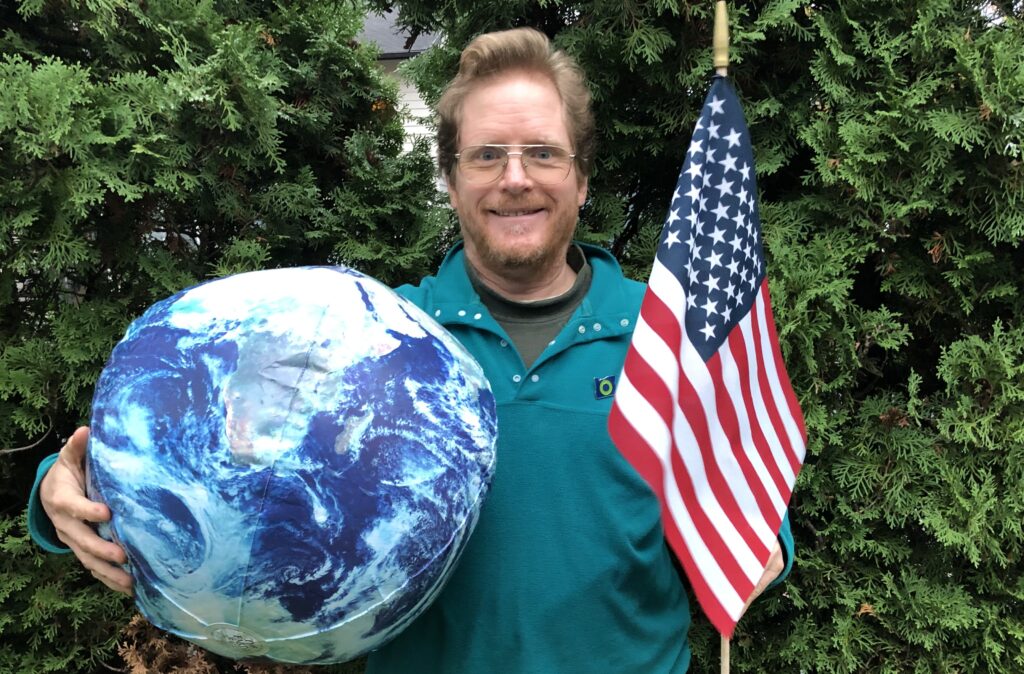
4. February 13, 2024 Testimony to Joint Transportation Committee about WES Study Bill
A few days later, I learned the Joint Transportation Committee scheduled a hearing on the WES Study Bill (SB 1572). I strongly supported this bill for the OR Legislature to require the Department of Transportation, in partnership with the Westside Express Advisory Committee, to study extending the Westside Express Service (WES) commuter line from Wilsonville to Salem.
The WES Commuter Train currently runs from Beaverton, a western Portland metro community, to Wilsonville, a community just south of the Portland metro area. I lobbied in Salem many times. In addition, I drove from Portland to Salem on other occasions to give climate presentations in Oregon or pass through Salem with my wife to sightsee and visit friends in other parts of the state. Driving from Portland to Salem or the other direction during the intense rush hour traffic I found to be very frustrating. My wife works near our apartment in outer northeast Portland. Yet, she has co-workers who commute from Salem each day.
For years, I believed that Oregon must have more commuter train service from Portland to Salem to reduce the heavy traffic on this route. Thus, I fully supported of this WES study bill to investigate the feasibility of extending the WES commuter train to Salem. I followed this bill closely from when I first heard about it in the last week of January 2024. After receiving an MCAT Transportation Committee action alert about this bill, I called and emailed the Chairs and Vice Chairs of this committee to ask them to schedule a hearing on this bill in one of their first committee meetings during the February legislative session.
In the first week of February, I then received a notice from Oregon Legislative Informative System that the Joint Transportation Committee scheduled a hearing on the WES Study Bill on Tuesday, February 13th. I was not planning on traveling to Salem to attend this hearing in person. I had no interest in fighting the traffic, the wear and tear on my vehicle, the cost of gas to drive there, and time expense of several hours to go in person to be at this hearing in person. I was excited I could sign up for to give online oral testimony in the comfort of my own home.
Here is the video my online oral testimony for the WES study bill. Below that is the written testimony I read for my oral testimony.
February 13, 2024Testimony for WES Study Bill to Joint Transportation Committee
Members of the Committee.
My name is Brian Ettling. I live in northeast Portland.
I am here to represent MCAT (Mobilizing for Climate Action Together) Transportation Committee. We stand with 1000 Friends of Oregon, Climate Solutions, No More Freeways, and the Environmental Center to strongly support SB 1572, which establishes a task force to study the feasibility of extending the Westside Express Service (WES) commuter rail to Salem, incorporating additional local stops. This initiative is crucial to creating a more connected, efficient, and sustainable transportation system in Oregon.
We urge you to pass SB 1572 because investing in an expanding commuter rail services and infrastructure:
• Advances Oregon’s Vision for a Truly Multimodal Transportation System.
• Creates options other than driving that will help ease the frustrating congestion that many of you face regularly on your commute to and from Salem.
• Can significantly reduce traffic-related accidents, injuries, and fatalities on our roads by encouraging less driving, which is linked with higher levels of safety for all transportation users.
• Offers an effective alternative to car usage, potentially lowering harmful vehicle pollution and improving Oregonians’ air quality, thereby contributing to a healthier planet. Expanding rail access is critical to meeting our climate goals.
• Is a cost-effective approach to transportation. It presents long-term savings on road maintenance, eases the need for road expansions.
• Provides greater access to jobs, education, and healthcare, especially for individuals without a car. One in four of Oregonians can’t drive due to age, disability, or cost.
The proposed expansion of WES will stimulate economic growth, encourage transit-oriented development.
Again, please pass SB 1572.
Thank you for your time.
5. February 22, 2024 Testimony to the Oregon Senate Committee about the COAL Act
One week later, on Thursday, February 22nd, MCAT held another lobby day at the Capitol to meet with legislators and staff to urge them to pass climate policy and funding bills during the last two weeks of this legislative session.
By this point, the COAL Act had successfully passed out of the House Committee on Emergency Management, General Government, and Veterans. On Monday, February 19th, the Oregon House voted to pass the COAL Act on a party line vote of 33 to 24. This bill then moved to the Oregon Senate where it was assigned to the Senate Committee on Energy and Environment. This Senate Committee scheduled a hearing for the COAL Act on February 22nd at 1 pm.
Ironically, I planned to be at the Capitol for this MCAT Lobby Day on February 22nd. Like the February 8th lobby day, MCAT planned to have all the lobby meetings finished before 1 pm. Therefore, I decided to sign up to give oral testimony for the COAL for this Senate Committee. Like the lobby day on February 8th, I succeeded in persuading the carpool group that I commuted with to Salem to stay longer so I could give oral testimony.
Before I entered the Committee room to testify, Doyle Canning enthusiastically said hello me. She was the Legislative Director for Rep. Khanh Pham, the Chief Sponsor for the COAL Act. Doyle remarked she liked the testimony I gave about the COAL two weeks ago. She wondered if I signed up to give testimony at the committee hearing starting in a few minutes. I assured her that I planned to testify. She said my previous testimony would be great if I gave it again. I appreciated her compliment, and then I informed her that I prepared new testimony for this hearing. She was delighted I was testifying, and she looked forward to my testimony. She commented, ‘Whatever you say in your testimony, if it is like the previous time, I know it will be good.’
I appreciated her kind words because I love giving oral testimony on climate bills, but I still get nervous hoping I prepared well. It did not take long for my name to be called to testify. Not as many members of the general public looked to give testimony as when the hearing was held in the Oregon House Committee two weeks prior.
Like my oral testimony in the Oregon House for the COAL Act previously, I thought it went well. I was thrilled I spoke around one minute and 40 seconds. This was well below the two-minute limit the Committee Chair set for oral testimony. It was about the same amount of time as my COAL Act oral testimony to the House Committee two weeks before.
Here is a video of my oral testimony with my written remarks below the video:
February 22, 2024COAL Act Testimony to OR Senate Energy and Environment Committee
Senator Sollman and members of the Committee:
My name is Brian Ettling and I live in NE Portland.
I was a seasonal park ranger for 25 years from 1992 to 2017 at Crater Lake National Park, Oregon.
I loved my park ranger job but, sadly, I saw climate change while working there, I observed a diminishing annual snowpack and a more intense fire season with more smoke in the summertime. I became so worried about climate change that I spent my winters in my hometown of St. Louis, Missouri organizing for climate action as far back as 2010.
On December 11, 2012, I noticed this headline in the St. Louis Post-Dispatch, “Poor, Black and Breathless: Asthma Strikes Many Here.” The front-page article stated 1 in 5 children, primarily children of color, struggle with chronic lung diseases, such as asthma, in the St. Louis area. That was twice the national average of U.S. children with asthma.
How do children get asthma? Primarily from dirty air pollution. Around that same time, I learned that St. Louis burned twice as much coal, over 80%, than the national average.
Scientists estimate the air pollution from burning coal, oil, and natural gas kills around 9 million people globally a year, including in Oregon. Burning coal also disproportionally impacts the health of seniors, children and communities of color, such as Xavier Miles, who was 8 years old when this photo was taken.
Burning coal is an investment loser for Oregon’s Treasury, it’s like investing in arsenic.
I ask you to pass the COAL Act bill to divest in coal investments for our families and our kids.
Thank you!
On March 7, 2024, The Oregon Legislative session ended with mixed results for me in my efforts giving oral testimony to legislative committees. The bad news is that the WES study bill died in the Joint Ways and Means Committee after successfully pass out of the Joint Committee on Transportation. I am still not sure why this bill did not pass.
In the local legislative town halls that happened since the end of the 2024 Legislative session, I attended these town halls to ask the Portland area legislators why the WES study bill did not pass and urged them to reconsider the WES study bill in the 2025 Legislative session. The legislators looked genuinely stumped when I questioned them why the WES study bill did not pass. Some of them did not seem to know about the bill. Other legislators thought it would probably be re-introduced as part of the massive 2025 transportation package for Oregon. Either way, I plan on being a squeaky wheel and steady advocate to make sure that the WES study bill will be seriously considered by the Oregon Legislature in 2025.
The good news is that the COAL Act passed the Oregon Legislature and was signed into law by Governor Tina Kotek on April 4, 2024. As a climate organizer, it was a thrill for me to be part of an effective campaign to reduce investments and dependence on the dirtiest of fossil fuels, coals, that contributes ton climate change.
Final Thoughts
Along with lobbying U.S. Congressional and Canadian Parliamentary Offices, talking directly with my members of Congress and Oregon legislators, planning three large climate events, giving climate change talks in 12 U.S. states, completing climate change speaking tours across Oregon and Missouri, writing climate change opinion editorials published in newspapers, and participating in climate change radio and podcast interviews, I feel like giving oral testimony to Oregon Legislative committees to support climate bills is one of the most empowering climate actions I have done. It is intimidating to give oral testimony to legislators. I spend a lot of time writing my testimony in advance. I then frequently practice it with a timer so I can speak it under the allotted two minutes. This means I keep editing my testimony down to keep it under two minutes.
I am always relieved when my testimony is over. To be honest, it is nerve racking to give oral testimony. When preparing, I strive to share a compelling story, with solid supporting facts, and a sticky message to persuade legislators to support specific climate bills. This might be a stressful experience for some climate advocates that they may choose to forgo. However, I am grateful for the times I gave oral testimony over the last six years. I think it is satisfying.
Stay tuned! I will give more oral testimony to legislators during the 2025 legislative session. Thus, at some point, I will write a part 3 blog to giving oral testimony to legislative committees.
Photo of Denali taken by Brian Ettling in July 1988.
“Don’t hold your breath at seeing Denali. It’s probably not going to happen. Professional photographers wait days, if not weeks, to get that perfect picture of the mountain that you see on postcards.”
This was the friendly advice of local Alaskans when my parents, younger sister and I traveled to Alaska during a three week vacation in July 1988. When we started our trip in Fairbanks, we struck up conversations with local Alaskans while we visited for a couple of days. Our family is outgoing and gregarious. We loved chatting with strangers when we were on vacation. In turn, the resident Alaskans were curious about our family. They inquired where we were from in the lower 48 states and what we hoped to see in Alaska.
For anyone conversing with us, my parents shared the full trip itinerary that they had a Lutheran Marriage Encounter Convention to go to in Anchorage. Thus, they hired a travel agent to assemble this trip to fly to Fairbanks, take the Alaskan Railroad south, stopping in Denali National Park for a couple of days, then reaching our destination of Anchorage to stay with friends and attend the convention. With the locals, I got straight to the point. I hoped to see Mt. McKinley in Denali National Park or on the train ride down to Fairbanks. They rolled their eyes because most visitors they encountered really wanted to see the mountain. Their typical response:
‘Good luck! The mountain is typically shrouded behind clouds. People living in areas with views of it can go for weeks without seeing it. Don’t get your hopes up high. Most visitors don’t get to see it, except for the images they take home on the postcards they buy.’
I sensed an ingrained skepticism with Alaskan residents thinking that tourists like me would not have a visible view of the mountain, nor should we expect to see a view just because we traveled far to see Alaska. My stomach churned as they cautioned me that my odds were low in seeing the mountain. I appreciated their honest sincerity, but I hoped they were wrong.
The Prominence of Denali or Mt. McKinley?
Denali is on my mind these days because President Donald Trump. When he became President on January 20, 2025, Trump proclaimed in his Inaugural speech that the name of mountain Denali would be changed back to Mt. McKinley. He did this in response to President Barak Obama endorsing his Secretary of the Interior Sally Jewell to change the name from Mt. McKinley to Denali in 2015. Denali means “the high one” or “The great one” by the Native Alaskan people known as the Koyukon Athabascans. Ironically, President William McKinley never saw it when it was named after him in 1896. He had no significant historical connection to the mountain or to Alaska. I doubt Donald Trump has ever seen the mountain. If he did, he would understand why most Alaskans call it Denali. I saw it. It made a huge impression on my life.
Prompted by the passage of a resolution by the Alaskan Legislature in 1975, Governor Jay S. Hammond formally requested the Secretary of the Interior direct the U.S. Board of Geographic Names to change the name to Denali. For many decades, Denali was still the common name used in the state and was traditional among Alaska Native peoples. Thus, I will use the name Denali to refer to the mountain for the rest of this writing, in deference to the people of Alaska.
Denali deserves respect for its massive size. According to Alaska.org, “From its base to its summit, Denali rises about 18,000 feet, about one third more total height than the same measurement for the world’s tallest peak, Mount Everest. That makes Denali the tallest mountain in the world—measured from base to peak—that’s wholly above sea level.”
Talking my parents and younger sister into visiting Alaska
Growing up in St. Louis, Missouri in the 1970s and 1980s, I dreamed of seeing the snowcapped mountains in the western United States. Missouri has no towering jagged snowy mountains, just the rolling hilly mountains of the Ozarks.
While in high school, I decorated my bedroom wall with a poster of Mt. Shuksan, located in North Cascades National Park, Washington. When I hung the poster, I had no idea of the name of that mountain or where it was based. I endlessly stared at this poster of a broad sided craggy mountain with several glaciers resting on it and pockets of snow clinging to it. I knew I wanted to see mountains like this someday when I had an opportunity.
My parents participated in an organization called Lutheran Marriage Encounter when I was growing up. They first went on a weekend marriage encounter retreat in 1975. They enjoyed attending the annual national and international conventions that took place over the years in various locations such as Los Angeles, Minneapolis, Dallas, Denver, St. Louis, etc. In early 1988, I overheard them saying that the 1988 Marriage Encounter Convention would happen that July in Anchorage, Alaska. I immediately asked them if all of us could go to Alaska on a family vacation while they thought about traveling there to attend this convention.
My parents love to travel like I do. They were immediately sold on the idea. I graduated high school in May 1987. I was on a gap year getting ready to start college at the end of August 1988. During that year, I worked as a cashier at a nearby gas station to save up some spending money for college. I used some of my earnings to go on trips, such as with a friend to see Pittsburgh, Pennsylvania in February 1988. In September 1987, my mom went along with me on an Amtrak train trip from St. Louis to see New York City to Boston and back. After the Pittsburgh trip, I was eager for my next big trip.
As soon as my parents mentioned Alaska as a summer destination for them, I knew I wanted to go there. I figured it would be the perfect family vacation. I will always appreciate that they quickly agreed with me that we should go there as a family. My older sister Lisa lived on her own in St. Louis and was no longer interested in joining family vacations. My younger sister, Mary Frances, was a junior in high school, still living at home. She seemed fine with the idea of traveling to Alaska with us.
God bless them! My parents welcomed my ideas in planning this trip. My dad was a passenger and freight train fanatic. I suggested that we take an Amtrak train from St. Louis to Seattle, Washington and then fly to Alaska. On the return flight from Alaska, we would take Amtrak from Seattle back to St. Louis. My parents liked that idea. If we went to Alaska, I thought we should really see Alaska. Not some puny trip to Anchorage.
With my dad’s passion for trains, we agreed we should fly to Fairbanks and then take the Alaskan Railroad down to Anchorage, stopping at Denali National Park for a couple of days in-between. This was 1988 before the internet, when travel agents exclusively organized trips like this. My parents went to the travel agent in the strip mall near our home. She did her magic to put together an itinerary for everything we had in mind and even for things we had not thought about. She suggested a rafting trip on the Nenana River near Denali National Park.
Photos by Brian Ettling of the Alaskan Railroad taken in July 1988.
The idea of travel agents now sounds about as quaint now as rotary phones, fax machines, television reception using rabbit ear antennas, smoking in restaurants and airplanes, corner pay phones, Blockbuster Video renting movies on VCR tapes, etc. But that’s the world I remember in the 1980s. The travel agent’s office was a world of its own. Inviting posters on the wall of Florida beach scenes with palm trees, European Castles, and cruise ships floating near tall Alaskan glaciers. There were no booking airline tickets, hotel reservations, car rentals, and outback excursions at home back then. One was at the mercy of their local friendly travel agent. Fortunately, this travel agent pieced together a fabulous trip to Alaska for our family in July 1988.
The getting ready for journey to Alaska and the cross-country train trip
I knew this might be the only time I seeing Alaska, so I bought a new camera. I purchased a Pentax K1000 35 mm film camera. Digital cameras did not exist then. If one wanted to take photos, you had to put a spool of film in the camera which shot a maximum of 24 or 36 photos. If you were lucky, the extra amount of film at the beginning or end of the roll might allow you to snap an extra photo or two. The key was not exposing the end of the film roll to light when installing it or taking it out of the camera. Hence, the half overexposed photo of the Alaskan Pipeline you will see scrolling down this blog.
My best friend Scott and his dad Ty recommended the Pentax K1000 camera. I admired both for their photography skills. In addition, I purchased a 100 to 200 mm zoom lens that was compatible for this camera. I figured the zoom lens gave me a better opportunity to photograph distant mountains or wildlife that I might see in Alaska. Scott and Ty thought I made a good choice with the zoom lens to try to get quality photos from this trip.
Unfortunately, I only shot about one roll of film before this trip. I took photos of downtown St. Louis and from Bee Tree Park near my parents’ home. This local park had picturesque cliff views of the Mississippi River. The photos turned out crisp and clear from my practice photos. Unfortunately, I did not spend enough time learning the shutter speeds to take superb photos. Most of my photos from that Alaska vacation were blurry since the shutter speeds I used were too slow. It was a crushing blow when the developed photos were ready to be picked up at my neighborhood Walgreens. Looking back now, I still captured some good memorable photos from the trip. However, it’s the memories of that fantastic trip that sustains me to this day.
We started the trip with an Amtrak train from St. Louis to Chicago, Illinois. My parents were perpetually late for nearly everything growing up. I remember it was a stressful experience barely catching this train on time. I was internally furious at them for making it such a close call that could have ruined the entire trip. At the same time, I was so relieved we made the train before it left the station, and we were successfully on our way!
From our connection in Chicago, we started heading west on Amtrak. We had sunny skies in Denver, Colorado. We had lovely views of the Rocky Mountains in Colorado. It made me eager to imagine how much higher the mountains might be in Alaska.
In Salt Lake City, Utah, our train split up. One train engine pushed half the cars to San Francisco, on a train route known as the California Zephyr. A different locomotive engine pushed our passenger cars with a destination of Portland, Oregon. We traveled on a train route named The Pioneer. It was my first time seeing Oregon. One of the highlights of this cross-country train route was traveling through the Columbia River Gorge.
The Gorge was impressive with towering hills and mountains on either side as the wide Columbia River straddled the Oregon and Washington border. I distinctly remember getting a quick peak of the 12,000-foot-high Mt. Adams as the train rode west of Hood River. My wife Tanya and I moved to Portland, OR in 2017. I feel nostalgia for that first train ride now when we drive through Hood River on I-84. This freeway goes along the same route through the Gorge as The Pioneer did, and I get that same fast glimpse of Mt. Adams that I saw from the train in 1988.
Photo of Mt. Adams from Hood River, Oregon area from July 2024. It’s a similar view of the mountain that Brian saw from the Amtrak Train traveling through Hood River in July 1988.
That train ride through the Gorge gave me a yearning to see more of Oregon. It motivated me four years later in 1992 to take a seasonal job at Crater Lake National Park in southern Oregon so I could see more of the state. Sadly, The Pioneer Amtrak route was discontinued in 1997. However, current efforts are trying to enable Amtrak to bring back that train route.
The train made a stop in Portland that allowed us to stretch our legs on the train platform before we rode onto Seattle, Washington. From Seattle, we caught our plane to Fairbanks, Alaska. The plane ride was not memorable except my younger sister sat near a smoker. Mary Frances did not like to be around cigarette smoke. She claimed she was allergic to it. My sister and mom asked the flight attendant if the passenger could stop smoking since it caused problems for them. The passenger did not care and he smoked even more cigarettes. Thank goodness the rules changed years later, and one cannot smoke on commercial flights anymore.
Having a quirky time in Fairbanks
We arrived in Fairbanks late in the afternoon. The airport looked geared for a small town dumped in the middle of nowhere. We rented a car to explore Fairbanks for a during our two night and one full day visit. We ate a delicious Alaska salmon dinner at an outdoor local establishment with picnic tables along the small Chena River. The fish was cooked on open flame barbeque pits. It was some of the best tasting fish of my life. This area was called Pioneer Park. It had old western style store fronts and homes, commemorating early Alaskan pioneer and gold rush history. The food was so tasty that we went back for a second night for dinner.
After dinner on the first day, we stopped by a grocery store to get some items. A store clerk named James who was about a couple years old than my sister struck up a conversation with her. My sister was impressed that he was friendly, kind, easy-going, attractive, and he wanted to get to know her. He asked her out on a date for the next evening. She was thrilled for a chance to go out on a date with a local Fairbanks young man. She asked my parents if it was ok to go out the next evening and my parents were fine with it. We all thought it was funny that my sister caught the attention of a local resident.
On our arrival day in Fairbanks, we were amazed it was still daylight at 10:30 pm. My dad and I took a drive to see the famous Trans-Alaska pipeline. It is 800-mile-long oil pipeline. It runs from Prudhoe Bay on the northern edge of Alaska to the town of Valdez in southern coastal Alaska. At the Valdez Marine Terminal, oil is loaded onto tankers for shipment to global markets. Construction of the pipeline took three years from April, 1974 and finished in June, 1977.
I remember seeing the Alaskan Pipeline on the TV news as a child. It seemed to be a big deal for American ingenuity at the time. Plus, the U.S. staggered with ongoing oil crises in the 1970s. The Organization of Petroleum Exporting Countries (OPEC) boycotted American markets in 1973-74, plus gasoline price spikes due to inflation. The pipeline seemed to be an answer to American oil production woes. According to the ConocoPhillips website, this pipeline was “the world’s largest privately funded construction project when it was built, at a cost of $8 billion.”
In its own way, the pipeline was an iconic engineering marvel. It set a standard for design which endures to this day. Its distinctive zig-zag looks allow the pipe to flex in the event of an earthquake. More than half the pipeline runs above ground, cradled by metal supports, so the hot oil does not melt the permafrost that is prevalent along the route. I vaguely remember as a child that it was controversial with environmental protesters trying to stop it. With all the effort to construct this pipeline, keep the oil flowing, heat the oil so that it does not freeze in the frigid Alaskan winters, and maintain the pipeline, I wonder now if it would be cheaper to switch to clean energy. Just a thought.
My dad and I noticed how quiet it was by the pipeline since we outside the developed area of Fairbanks. It was silently doing its job, without any protesters or signs of workers fiddling with it, at this spot. We were curious to see the Alaskan Pipeline since it made so much news when it was completed in 1977. With its meandering design stretching out to the horizon, it seemed like America’s modern answer to the Great Wall of China. Even more, my dad and I appreciated that we could look at it at 10:30 pm with plenty of daytime on this long July Alaskan day.
Photo of Brian Ettling (top) by the Alaskan pipeline. Photo of the Alaskan pipeline at the bottom. Sadly, half of the bottom photo was over exposed somehow. Both photos taken near Fairbanks Alaska in July 1988.
We then went to the local grocery store to see people shopping. It was busy like it was 5 pm, rather than almost 11 pm. We laughed as I remarked to my dad, “Don’t these people ever sleep?”
The next day, we explored a museum in Fairbanks where they were constructing a totem pole outside. We went to a shopping mall where they had adult Bengal Tigers and one cub in tiny cages that looked like jail cells. We wondered: What did these tigers do wrong? One tiger in the cage was trying to sleep off the experience in this brightly lit mall. Another tiger just paced back and forth in the cage that was way too small. Even more oddly, they had a bamboo booth set up to get photos with the with the Tiger cub.
That evening, Mary Frances went on the date with James. It was after 10:30 pm. My sister was not back at our hotel room. My mom sat on a bed worried. My dad anxiously paced the small hotel room, like the tiger in the cage that was too tiny we observed earlier that day. He exclaimed, “I should not have let her go out on this date, especially to stay out this late!”
I sarcastically replied, “Gee, Dad, you should not have told her that it was ok to stay out until it got dark!”
Fortunately, they laughed at my joke. It broke up the tension in the confined hotel room.
A few minutes later, my sister strolled in the room. Mary Frances said she had a lovely evening with him. James asked her about our vacation plans. She told him that we would be in Anchorage later that week. He indicated he would drive from Fairbanks to Anchorage when we there to meet up with her. We thought that was funny Fairbanks to Anchorage is about 360 miles apart or a 6-and-a-half-hour drive without stopping. My sister thought it was flattering and endearing. At the same time, my sister thought there was zero chances of seriously dating this guy. First, he lives in Alaska, and she lives in Missouri. Talk about a long-distance relationship! Second, she was still a teenager in high school not really interested in seriously dating anyone yet.
When we were in Anchorage later this trip, James showed up driving all the way from Fairbanks hoping to spend time with her. My sister, my parents, and I all thought it was amusing and odd. Mary Frances met up with him again. However, that was a very long drive to find out she was not going to be his girlfriend.
Exploring Denali National Park
The next day, we boarded the train in Fairbanks to head to Denali National Park. I was amazed how sparse civilization was and no sightings of people from Fairbanks to Denali. The pine trees stretched for miles, but they all looked stunted and puny. They had an enchanting deep green color. However, a tall tree in an Alaska only seemed to stand about 5 to 7 feet tall.
We arrived at the train station in Denali. We then traveled the main park road in the park the only way one could: with a group of fellow tourists on packed board an old school bus. We had a naturalist guide narrating the tour while driving the bus. He had a long deep brown hair and beard. He looked like a cross between Jesus and someone who had spent years living as one with the Alaskan wilderness. He was a terrific storyteller. He may have influenced me more than he or I ever knew. Just over 10 years later in the Everglades, I would be narrating tours there while having a very long hair and beard.
This naturalist did a fabulous job at pointing out the wildlife and slowing down the bus so passengers on both sides could see the animals. We had a wolf strolling down the road alongside the bus for a several yards. A distant moose grazed within a low patch of trees watching us as we observed her. We then spotted a grizzly bear mother and two cubs in a grassy plain a couple hundred yards from us.
Photos by Brian Ettling of a wolf in the middle of the road and a mother grizzly bear in a grassy field taken on a bus tour in Denali National Park in July 1988.
Our naturalist guide drove us to the end of the road where Denali would greet us on a clear day. However, it was an overcast day with the tops of all the nearby mountains shrouded. I started to believe that the resident Alaskans were correct: It is nearly impossible to see Denali when you are in Alaska. I crossed my fingers I might have better luck later this trip.
The next day we went rafting on the Nenana River. My parents, sister, and I loved the rafting trip. It was the first time we had ever seen a Bald Eagle. It glared down at us from a tree not far from the raft. The water was calm and relaxing. The color of the water was gray, opaque, and chalky. This was my first time seeing a glacier fed river and it fascinated me. This was not a white water or white-knuckle rafting trip. I recall the rafting trip as serene, relaxing, and mellow.
The rafting guide advised us to not go swimming since the temperature of the water from being a glacier fed river was only a few degrees above freezing. He warned that we could get hypothermia fast since the water was so cold. The murky color of the water and the sudden knowledge of the frigid water temperature canceled any temptation for us to go swimming.
Our guide was young, just a few years older than me. I turned 20 years old during the trip. He liked his job and told many funny jokes. The way he enjoyed his job made me wonder if I should look for recreational jobs in the outdoors or a national park. I was not interested in a rafting job, but I was intrigued to work someday in a scenic area leading narrated tours.
Like the previous day, it was overcast with no mountain peaks in sight. The Denali National Park naturalist guide from the day before and the rafting guide that day affirmed that is very unlikely to see Denali since it is covered in clouds most of the time. I still hoped that all the Alaskans I encountered about this would be wrong.
After the rafting tour, we ate dinner at Grande Denali Lodge. As my mom, sister, and I waited outside for my dad who was in the restroom, we saw hordes of people getting off and on buses and even the train. Most of them were senior citizens. One of them even farted and did a weird dance afterwards to shake it off. My mom made a joke that for now on when she saw crowds of seniors, she would start referring to them as The Alaskan Crowd.
Denali can’t hide itself forever, or can it?
The next day we boarded the train to start heading south to Anchorage. The train trip would take several hours to reach Anchorage, if not most of the day. The train would spend a great deal of time traversing around the east edge of Denali National Park. It was another overcast Alaskan day. It appeared doubtful I would see the mountain. The Alaskans I met were not with me on this train, but they would have laughed at me straining my eyes looking out the train window to get any kind of sight of Denali.
Then it happened an hour into the train trip. The clouds parted! The mountain was out! We had a blue sky with a few small clouds in front of Denali, but not enough to block the view of it.
Brian Ettling photo of Denali taken from the Alaskan Railroad in July 1988.
Denali was a huge glistening white marvel of nature, rising twice as high as the mountains in front of it. I never saw anything more gigantic in my life. Most iconic mountains such as Mt. Hood, the Matterhorn, Mt. Fuji, the Grand Tetons, etc. look more like they rise to a very fine pointy church steeple top. Not Denali. It looked like a mammoth wall of rock, snow, and ice. It gave the impression that it was a lofty Himalayan Mountain that got lost and ended up in the middle of Alaska all lonesome by itself.
I could not stop taking photos of it. I remember my Dad was ecstatic to see the mountain like me. Fortunately, I used a fast enough shutter speed on my camera to get decent photos of the mountain. The local Alaskan experts were wrong! I could actually see the mountain!
I was glad the Alaskans warned me that I would probably not see Denali. It made the experience of glimpsing the mountain on the train that much sweeter. The train was beneficial because as it went along the curves, we got various looks of the iconic peak, revealing an enormous size from different angles. It finally got to the point where I could only see Denali from the back of the train. Even more, the clouds were moving back in to obscure the mountain again.
It was as if Mother Nature and Denali said to me, “Yeah. I will give you one quick view of the mountain, but that’s it!”
Brian Ettling photo of Denali taken from the Alaskan Railroad in July 1988.
Seeing Portage Glacier just outside of Anchorage, Alaska
Obviously, seeing Denali was the highlight of the trip. The rest of the Alaskan trip was fun after we arrived in Anchorage. We liked exploring the Anchorage Museum showcasing Alaskan history, art, culture, and science. My favorite artwork was large landscape painting of an Alaskan wilderness scene. A rushing river flowed through it with tall hills with dark trees on both sides of the river. A majestic view of Denali dominated the background. The painting signaled to me how Alaskans revere this mountain. The artist who painted it showcased the beauty of the mysterious highest point in North America that many visitors travel a long way but fail to see. The painting seemed to say, ‘Behold this sacred mountain that is tough to get a view!’
In the central large open space of the Anchorage Museum, we watched two folk dancers perform traditional Slavic and Russian dance moves. They looked to be in their 70s with their whitish hair and appearance. Yet, they performed their dance moves with a rigid precision. They both looked to be barely over 5 feet tall as they danced to the Eastern European folk music. With their small size, they looked like figurines for a wedding cake. They were probably Anchorage residents. Their clean well maintained Slavic outfits showed that they took the music, dancing, and clothes seriously while sharing their love for it with the museum patrons.
We then walked to the Anchorage Mall and noticed the ice-skating rink used by several locals in mid-July. This fascinated our family coming all the way from Missouri to see Alaskans ice-skating in the middle of summer. We were tempted to join them, but no one in our family, especially me, felt brave enough to ice skate that day.
The Sugar family attending the Marriage Encounter Convention hosted us for several days. The family was Al, Joyce, and their daughter Amy, who was around my age. The Sugars took us to see the sights of Anchorage, such as the Portage Glacier, in their family recreational vehicle (RV). I never saw glacial ice up close before. With Amy’s help, I even held some in my hands. I felt grateful to photograph this glacier July 1988.
Brian Ettling and Amy Sugar holding a piece of ice that I floated off from Portage Glacier in July 1988.
In 2008, twenty years later, I decided to be a climate change organizer. I heard stories since then how Portage Glacier retreated due to climate change. One story was from a fellow climate advocate and friend, Larry Lazar. He was my best man when I married my wife Tanya on November 1, 2015. Yale Climate Connections published Larry’s story in January 2015. He went to Alaska on a family vacation in June 2008. But they “couldn’t see the glacier anywhere.”
Larry read a sign at the Visitor Center how the glacier retreated due to climate change. The sign had a profound impact on him. Up to that point, he did not accept the reality of climate change. When he returned to St. Louis from his 2008 Alaskan trip, he started reading the science on climate change. This led to Larry attending the 2011 Climate Change Exhibit at the St. Louis Science Center, where I worked at that time. Larry and I became friends. We co-created the St. Louis Climate Reality Meet Up in October 2011. Today it is known as Climate Meetup-St. Louis.
Larry and I became Climate Reality Leaders in August 2012. We gave joint Climate Reality climate change presentations from December 2012 until Tanya and I moved to Portland, Oregon in February 2017. Larry regularly told his 2008 Portage Glacier story in our joint talks and media interviews. While I totally accepted the science of climate change and saw the negative impacts while working in the national parks, I did not want to fully grip Larry’s story of not seeing Portage Glacier when I heard him share it from 2011 to 2017. We were strangely connected seeing Portage Glacier 20 years apart: 1988 for me and 2008 for Larry.
Photo Brian Ettling took of Portage Glacier from July 1988.
I selfishly want to remember it today how I saw it when Al Sugar and his family took my parents, younger sister, and I to see it in July 1988. It was a delightful day in Alaska that I was glad to experience. I would probably feel sick to my stomach to see photos of the retreat of the Portage Glacier now compared to when I saw it in 1988, almost 40 years ago.
The final days of our trip visiting Anchorage, Alaska
On the way back from the glacier, we saw a female Dall Sheep with a small lamb following not far behind her. Al Sugar climbed to the roof of RV to get a better view of the sheep. He generously offered to use my camera with the zoom lens on the RV roof to get some photos of the Dall Sheep for me. I still recall the lump in my throat as I handed him my new camera and lens as he hung over the side of the RV requesting that I hand my camera to him. I really didn’t want him to drop my camera since I bought it so recently.
I asked him if he understood how to operate my camera, since I barely knew how to use it. Al assured me that he did. He got some decent photos of the female Dall Sheep and her lamb that I would not have been able to get otherwise.
A photo by Al Sugar using Brian Ettling’s camera of Dall Sheep in Alaska.
It was good to see these sights in Anchorage because I never saw Denali again after gazing at it on the train. Al Sugar told me that on a clear day Denali is easily spotted from Anchorage. The mountain is located about 130 miles north of the city — “about 130 miles away as the raven flies.” However, the weather was overcast over the entire time we were there. It only seemed like a pipe dream for me to see the mountain from Anchorage.
I celebrated my 20th birthday in Alaska. We spent the day at the Alaska Zoo in Anchorage. Similar to the Fairbanks shopping mall, I observed animals in cages looking bored or confined. I saw the polar bear close up behind the zoo bars. It looked it like had a sense of humor because it turned around with its backside to us and started peeing. Maybe it was just relieving itself. Or, sending a message that it didn’t like the tourists, including us.
As the visit to Alaska closed, we went up to Far North Bicentennial Park which had an overlook to get a bird’s eye view of the Anchorage skyline and city limits.
Then it was time leave to Alaska and fly back home to the lower 48 states. We had clear skies from Anchorage to Seattle with a chance to see lots of coastal snowy mountains from Alaska to British Columbia and down to Washington state. I got glimpses from my airplane window seat of Mt. Baker, Mt. Rainier, and an aerial view of downtown Seattle.
We then had an amazing train ride on the Amtrak Empire Builder, which travels from Seattle to Chicago. The train left the station with clear views of the Seattle Space Needle and Mt. Baker heading north before then heading east. We had great views going along the edge of Glacier National Park, Montana. The train stopped long enough in Bismarck, North Dakota for passengers to step outside and stretch their legs. Even if it was for a few minutes, it was a thrill for our family to claim stepping our feet in a new state for us, North Dakota. The train went on through Minneapolis and then back to Chicago. We then caught another train back to St. Louis.
Photo by Brian Ettling of his parents Fran and LeRoy Ettling and his younger sister Mary Frances in Bismarck, North Dakota.
I am grateful for my parents and Mary Frances for their openness to take this trip to Alaska.
Final Thoughts
St. Louis looked drab after returning home from Alaska and riding a train to see the northwestern U.S. states of Oregon and Washington. While in Alaska, I bought a poster of Denali which I hung on my dorm wall when I started William Jewell College in Kansas City, MO at the end of August 1988. For months afterwards, I chatted about that Alaska trip with friends, family, my college classmates, my roommate, and anyone starting a conversation with me. I took a Communications 100 Class that fall. One of my first speeches was about my trip to Alaska.
It was too remote for me to return to Alaska. But I yearned to return to the Pacific Northwest. I wanted to stare at snowcapped mountains and live close to them. I graduated from William Jewell College on May 17, 1992. That evening, I boarded an Amtrak Train for a cross-country train ride to Los Angeles, California. I then transferred to another train which took me to Klamath Falls, Oregon. The last morning of my train ride, I awoke with the metal wheels squealing as the train navigated the sharp curve to skirt the edge of the 14,000-foot Mt. Shasta in northern California. While not as tall and enormous as Denali, this mountain looked huge. Like Denali, Shasta heralded me on this clear morning as a towering mountain with its fresh winter snowpack still clinging to it. Mt Shasta greeted me with a friendly, “Welcome to the Pacific Northwest!”
At Klamath Falls, a gift store employee at Crater Lake National Park named Kevin picked me up at the train station. I spent the summer working in the gift shop at Crater Lake. I could not get enough absorbing the beauty of the snowy peaks that ringed the deep blue cobalt lake. More big mountains covered with snow stood on the horizon outside the park, such as Mt. Shasta.
I ended up working 25 years as a seasonal park ranger at Crater Lake National Park and Everglades National Park, Florida. While working in the national parks, I saw climate change negatively impacted those national treasures. It triggered my passion to organize for climate action.
Denali looms large in Alaska and in my memories. It is massive in size. It had a huge impact in my life to move to the Pacific Northwest to be near snow covered mountains. It played a role in my lifelong love of nature and an inspiration for me to be an advocate to care for our planet. May this sacred mountain inspire you, as it did for me.
Brian Ettling in Anchorage, Alaska in July 1988 around the time of his 20th birthday.