NOW is the time for Action

For the sake of our children, us, our neighborhood, our country, and our planet, NOW is the time to take action to reduce the threat of climate change.

These headlines of 2012 from Climate Central  leaves us no choice:
I know I am missing so many other vital headlines from so many other media sources.  However, all these news stories should be persuading us that it is no longer enough to learn, read, blog, and just chat with like minded friends about climate change, NOW is the time to take action.
What should we do NOW to Resolve climate change?
I don’t have all the answers, but here our a few steps that can lead us forward:
1. Organize:
2. Weatherize
3. Nurture OptimismThis actually spells out the acronym: OWN.  Yes, it is time to take personal OWNnership to take action NOW to something about climate change.  This blog will focus on ideas that I took to help me organize with others to help collectively take action to resolve climate change.

Part II and III of this blog will be written next two weeks.

1. Organize NOW: Locally and Nationally

a. Locally: 
It is vital to find like-minded people in your community that can spur you to take action on climate change and vice versa.

One year ago, Larry Lazar and I started the Climate Reality St. Louis Meet Up Group.  We formed this group with the goal of getting local St. Louis area residents who are concerned about climate change to get together for monthly meetings.

At these meetings, we learned about the basic science of climate change, and we shared techniques to communicate about climate change effectively with your friends, family, co-workers and neighbors.  The biggest success was having internationally renowned climate scientists and communicators speak at our meetings via Skype, such as Scott Mandia, Dr. Michael Mann, and John Cook.  Over the past year, we held 8 meetings, with close to 20 people attending each meeting.  At the June meeting with Dr. Mann, over 50 St. Louis area residents attended this meeting.

Another success from our meetings was to network with local community environmental leaders attending our meetings.   We had individuals, such as Ed Smith, Safe Energy Director for Missouri Coalition for the Environment, Jill Miller who was the Regional Organizer for Renew Missouri.  Tom & Carol Braford also attended our meetings.  The Brafords are organizing the Culver Way Ecovillage.   It is the first cohousing ecovillage community for St. Louis.  As also noted in the next section, Tom & Carol are also the local leaders of the Citizens Climate Lobby.  From Ed, Jill, Tom and Carol attending our Climate Reality Meetup gatherings, our members got involved with their groups, which I know strengthened our green community.

Our next meeting will celebrate our one year anniversary.  It will be on Thursday, December 6th at the Ethical Society of St Louis, which is locate 9001 Clayton Rd, St Louis, MO.  Larry Lazar, Dr. Lucas Sabalka, and me will be speaking on the problem and solutions of climate change.  All three of us were trained as Al Gore Climate Reality speakers in San Francisco last August.

b. Nationally

Last winter, local community sustainability activists, Carol & Tom Braford, kept encouraging me to attend their meetings for Citizens Climate Lobby (CCL).  In May, I listened in on the international CCL conference call at Tom & Carol’s house, and I immediately became hooked on Citizens Climate Lobby.

I have listened in on their monthly conference calls every since, which happen on the first Saturday of each month at 1 pm eastern time.  While I was working as a park ranger at Crater Lake National Park, Oregon last summer, I was even able to organize a group of local Ashland, Oregon citizens in August to start listening in on the CCL monthly conference calls.

This group’s focus is to organize ordinary people to effectively ask their members of Congress to pass a carbon fee and dividend act.  A huge step in resolving climate change is to tax carbon based fuels and invest in renewal energy.  Unfortunately, our country will not place a high priority to switch to cleaner, renewal energy until we adequately tax fossil fuels.  CCL strives to have its members personally engage their Congressional Representatives in a friendly, non-threatening manner that persuades Congress to pass a carbon fee and dividend.

CCL is closing in on 50 local chapters/lobby teams located throughout the United States and Canada.  I bet there is a chapter not far from you.  Their next meeting is Saturday, December 1st.  Guest speaker: Dr. Kevin Trenberth, National Center for Atmospheric Research, will be the speaker on the conference call.  He will be speaking about Hurricane Sandy’s connection to climate change.

C. Educate your Community
Where you can, I encourage you to speak out in your community about climate change.  This is what I have been doing in my hometown, St. Louis, Missouri:

On November 10th, I taught a continuing adult education class for St. Louis Community College on Climate Change Communications.  The focus of the class was how to effectively engage your family, friends, neighbors and co-workers about climate change.  Eight people attended this class.

As I mentioned above, last August, I was was trained by Al Gore and his organization, The Climate Reality Project, to be a volunteer presenter.  Thus, I am available in St. Louis and elsewhere to speak to various community groups about climate change.  However, even before I was a Climate Reality Presenter, I gave climate change presentations during the past during the past three years to nearby schools and the Crestwood/Sunset Hills Rotary Club.

For close two years now, I am an active member of St. Louis County Toastmasters.  I have presented seven speeches to Toastmasters.  All of my speeches focused on climate change in some manner.  Three of these speeches, I was voted as Best Speaker by the other Toastmaster members.

Yes, the headlines are screaming that we have so much work to do to resolve climate change.  However, I believe if you can organize: locally and nationally, while educating folks in your community, you can make a difference NOW to resolve climate change.

Best of success to you in this journey!

Next week, we will talk about how weatherizing your home and nurturing optimism will also help reduce the threat of climate change.


Part II: Understanding Climate Change Starts with Understanding ‘What is Science?’

Science.lotsoflessons.com

Still in the process of educating myself: ‘What is science?’ so I can better understand the science of climate change.

For several years now, I have been very interested in climate change.  In the spring of 2010, I even came up with my own powerpoint to educate and inspire friends about climate change, called Let’s Have Fun Getting Serious about Resolving Climate Change.  I showed this presentation to a fellow ranger at Crater Lake and science professor at Ohio State University, Carole Holomuzki.  She had lots of positive comments about my presentation.  On the other hand, it was obvious to her and me that my knowledge of science was weak.  As a result, she generously shared her powerpoint presentation that she uses to teach her Introduction Biology 101 class about science.  This turned out to be one of the best gifts Carole could give a friend.  Carole’s basic definitions of science came from sources such as Eugenie Scott books such as Creation vs. Evolution.
seaver.pepperdine.edu

Surprisingly, I did get to hear Eugenie Scott present an evening lecture at the Southern Oregon University in Ashland, Oregon in November, 2009.  Over the past several years now, I have taken advantages of opportunities to learn what I can what is science as I want to educate others about climate change and inspire them to take action.  In my last blog, I mentioned attending the 2011 NASA & National Park Service: Earth to Sky V: Communicating Climate Change Conference.  In December 2011, I attended the American Geophysical Union conference in San Francisco to meet and hear presentations from so many top climate scientists.  This past February, I heard Dr. Ralph Cicerone, President of the US Academy of Sciences, speak on the campus of Washington University in St. Louis, about climate science.  During my summer job at Crater Lake National Park, I have had access to chat with local scientists on staff also.

From my self education, here is a recap from my last blog of
12 basic lessons I have learned so far:
1. Science is very brief described as “Truth without certainty.”
2. Science never proves. Science explains.
3. Proof requires 100% certainty, which science really never provides.
4. However, science can disprove things.
5. Science always leaves room for some other explanation.
6. The scientific definition of a theory is ‘A comprehensive explanation of some aspect of the natural world that is supported by a vast body of evidence.’
7. This is completely different than the common definition of theory, which is a ‘best guess,’ ‘hunch’ or idea.
8. Multiple lines of evidence point to the existence of human caused climate change, which makes climate change a very strong scientific theory. Climate change is not some hunch or best guess.
9. No level of scientific certainty is higher than Theory.
10. The goal of science is to build THEORIES.
11. Uncertainty in science is not a weakness, but a strength. Uncertainty, allows room for stronger and more useful explanations to emerge that can save lives.
12. Scientists are extremely competitive. Try as they might, scientists have not been able to disprove that human are causing climate change.
After I posted my last blog, I realized there are also three vital lessons I learned that I was not able to include:
1. Science focuses on acceptance, not belief.
2. Scientific consensus is a vital component of how science furthers our understanding of the world.
3. New scientific knowledge is not considered valid until it withstands the peer review process.
Science Lesson #13:
People often ask ‘Do you believe in evolution or climate change?’
Amazingly, science is not based on belief.  It is based on evidence.  According to the National Academy of Sciences, the definition of science is “The use of evidence to construct testable explanations and predictions of natural phenomena, as well as the knowledge generated through this process.”
walrus.wr.usgs.gov

To say I believe in evolution or climate change would be silly.  It would be as bizarre as saying, “I believe in gravity.”  Based on overwhelming evidence, I accept gravity.  The same is true for evolution and climate change.  I do not believe in evolution or climate change.  However, based upon multiple lines of evidence from numerous sources of inquiry, I strongly accept theory of climate and evolution.

I chatted with my friend Carole about this a month ago.  Science can only acquire evidence based on what we can measure or collect data.  Science can only obtain evidence or data based upon what we experience with our five senses (see, hear, taste, touch, or smell) or what instruments can measure.  For example, we cannot see infrared or ultraviolet light.  Therefore, it did not exist for scientists a few hundred years ago.  However, with modern scientific instruments detecting and indicating evidence of their existence, we can accept the existence of infrared and ultraviolet light.
Similar to infrared and ultraviolet light, we may not see evidence of climate change is our daily lives.  According to NASA, there are multiple lines of evidence pointing to the existence of human caused climate change, such as sea level rise, global temperature rise, warming oceans, declining sea ice, glacial retreat, increase in extreme weather events, and ocean acidification.
Science Lesson #14
Scientific consensus a vital component of science.
So if evidence, not belief, is so vital in science, then how do we know which evidence is important for explaining and understanding the natural world and processes?  Which evidence can be rejected, dismissed or deemed not as vital for understanding the world?  The key to understanding a scientific explanation of the world is with scientific consensus.

news.stanford.edu

An excellent source for the importance of scientific consensus is the epilogue of the 2010 book Merchants of Doubt by Dr. Naomi Oreskes, a University of California, San Diego professor and science historian.  On page 268, she states, science “does not provide proof.  It only provides the consensus of experts, based on the organized accumulation and scrutiny of evidence.”


Dr. Oreskes then gives the example of the theory of plate of continental drift, which was hotly debated in the 1940s.   At the time, Harvard professor Marlin Billings taught his students 19 different explanations for the drift theory.  However, by the 1970s, research had produced enough evidence to settle the question of continental drift into the established theory of plate tectonics.   She explained that “After that point, there are no ‘sides.’  There is simply accepted scientific knowledge.”  Yes, unanswered questions may remain for scientists to focus for explanations.  However, “There is simply the consensus for expert opinion of that particular matter.  That is what scientific knowledge is.”

The individual scientist vs. science.
So many people, including me, had the wrong picture of what science is.  We picture an individual scientist holding a glass beaker with a smoky chemical drifting out.  However, that is not how scientist historians, science teachers, or scientists themselves perceive science.  Again Dr. Oreskes in Merchants of Doubt:

en.wikipedia.org

For many of us, the word “science” does not actually conjure visions of science; it conjures visions of scientists.  We think of the great men of science–Galileo, Newton, Darwin, Einstein–and imagine them as heroic individuals, often misunderstood, who had to fight against conventional wisdom or institutions to gain appreciation for their radical views.  To be sure, brilliant individuals are an important part of the history of science; men like Newton and Darwin deserve the place in history they hold.  But if you ask a historian of science, When did modern science begin? She would not cite the birth of Galileo or Copernicus.  Most likely, she would discuss the origins of scientific institutions.”  


This is a radical thought for me, and it may be for you also.  It is scientific institutions much more than individuals that makes science a helpful and valid way of explaining aspects of the natural world.  Dr. Oreskes goes on to write: “From its earliest days, science has been associated with institutions–the Accademia dei Lincei, founded in 1609, the Royal Society in Britain, founded in 1660, the Academie des Sciences in France, founded in 1666–because scolars (savants and natural philosophers as they were variously called before the 19th century invention of the word “scientist”) understood that to create new knowledge they needed a meansto test each other’s claims.”

It’s Scientific Consensus that shows Galileo was right and wrong

Albert Einstein referred to Galileo as, “The Father of Modern Science.”  Dr. Stephen Hawking thinks  Galileo is probably more responsible than anyone else for the birth of modern science.  Galileo is remembered for science he got right, championing the idea Earth revolves around the sun. However, he was proven wrong for his evidence why the revolves around the sun.


Interesting, famous dissentors of climate change, such as Texas Governor Rick Perry, like to dissmss the overwhelming scientific agreement on climate change stating that “even Galileo got outvoted for a spell.”

In 1633, the Catholic Church unfairly convicted Galileo of heresy for his statements supporting heliocentrism, the idea that the earth revolves around the sun, which contradicted the church’s teaching that the earth was the center of the universe. Today, Galileo is considered to be a hero, especially among climate contrarians for prompting that idea in the face of strong fight from the Catholic church.

geology.byu.edu

Oddly, according to Dr. Barry Bickmore, Professor of Geologic sciences at Brigham Young University, on his lecture on You Tube, “How to Avoid the Truth about Climate Change,” Galileo had a weak primary argument to support his theory.  He was afraid his astronomy observations were not very strong.  Therefore, he proposed ocean tides were the strongest evidence to support his theory.

Galileo was convinced the earth revolved around the sun because the tides showed the ocean water sloshed back and forth. Galieo was convinced there was one tide going in and another tide going out to establish his theory. In reality, ocean tides go in and out twice a day everywhere. He knew this was true for the Mediterrean. However, he figured the tides were once a day for the Atlantic. This did not prove to be true. As more people told Galileo he as wrong, the more he dug in his heels. He never rejected his argument.

The point, according to Dr. Bickmore, is that even great scientists can behave dogmatically. Therefore, scientific consensus is crucial. “People who say science is not about consensus, they do not understand science.”

Dr. Bickmore went on to say that “We have always had (scientific) loners out there. The brilliant loners would come up with some great idea. The problem is that they are often not perfect ideas. It did not pick up any legs because it did not have what the modern scientific community has, which is the community itself. Whenever a scientist presents an idea that is not perfect, there is going to be dozens of other scientists beating the crap out of it for an extended period. They do this to work out all the kinks to make it better than before. That is the difference the Greek philosophers and modern science: consensus.”

Science Lesson #15:
In science, ‘A Jury of your Peers,’ accepts or reject your findings.
To reach scientific consensus, your tested hypothesis is not considered to be science until it is judged by a jury of your scientific peers, the peer review process.  As Carole Holomuzki teaches her students and shared with me,  “Until a tested hypothesis is published in a peer-reviewed journal, IT IS NOT CONSIDERED TO BE A SCIENTIFIC FINDING!!!” (her emphasis).

In Merchants of Doubt, Naomi Oreskes explains peer review this way:
“Since the 1600s, the basic idea has remained the same: scientific ideas must be supported by evidence, and subject to acceptance or rejected…Whatever the body of evidence is, both the idea and the evidence used to support it must be judged by a jury on one’s scientific peers.  Until a claim passes that judgement–that peer review–it is only that, just a claim.  What counts as knowledge are the ideas that are accepted by the fellowship of experts.”

Climate change contrarian scientists are ‘sore losers.’
It may seem very harsh to hear, Dr. Naomi Oreskes does not mince words here.  When an individual scientist rejects scientific consensus or the peer review process, especially the science of climate change, they are not advancing scientific knowledge or understanding.  It really is no different than a sports athlete who lost a game fair and square and by a huge score, but still refuses to accept the results.


Conversely, if a claim is rejected, the honest scientist is expected to accept the judgement, and move on to other things.  In science, you don’t get to keep harping on a subject until your opponents just give up in exhaustion.


Unfortunately, in the mindset modern journalism, we think it is fair to give people who dissent and disagree    

full consideration.  Dr. Oreskes states though, “What we do not understand is that in many cases, that person was given due consideration in the halls of science.”  For the past 30 years, Oreskes contends, climate change contrarian scientists “took their claims to the halls of public opinion, rather than the halls of science, they were stepping outside the institutional protocols that for 400 years have tested the veracity of scientific claims…


ccllbaseball.com

This is where Oreskes really calls the climate contrarians to task, on page 270 of Merchants of Doubt:
“Many of the claims of our contrarians had already been vetted in the halls of science and failed to pass the test of peer review.  At that point, their claims could not really be considered scientific, and our protagonists should have moved on to other things.  In a sense, they were poor losers.  The umpires had made their call but our contrarians refused to accept it.” (my emphasis)

Skepticism must be productive skepticism

science.gsfc.nasa.gov

Amazingly, despite all the overwhelming evidence that climate change is real, caused by humans, and over 95% of scientific consensus, some people still want to argue they are skeptical that climate change is real.  NASA scientist Bob Cahalan had an interesting response when a group of us chatting with him at a NASA and National Park Service Earth To Sky: Communicating Climate Change Conference in September, 2011.  When we engage hard core climate skeptics, we should “encourage them to be skeptical, and go beyond it to propose a theory.”  Then challenge them with, “How are you going to test that theory.”


Then people I admire, such as Carole Holomuzki, Eugenie Scott, Naomi Oreskes, Barry Bickmore, and Bob Cahalan, would encourage them to find evidence to support their theory.  Then after they have gathered their evidence, take that evidence to a group of respected and credible scientists.  Then let the scientists test it for themselves, or peer review it, so they can accept or reject the theory.

If you build an accepted theory on why climate science should be rejected, you will be rich and famous!  As I mentioned in my previous blog, US Academy of Science President Ralph Cicerone, has tried in his mind late at night for past 35 years to disprove climate change, but he has had not success.  If one of the top scientific minds in America cannot disprove climate change, what makes you think you can?

Science and Religion both matter
Towards the beginning of the blog, I reflected on the difference between belief and acceptance.
I want to end this blog posting my favorite all time quote about religion and science from my hero, Dr. Martin Luther King, Jr:

nobelprize.org

Science investigates; religion interprets.
Science gives man knowledge which is power;
Religion gives man wisdom which is control.
Science deals mainly with facts;
religion deals mainly with values.


The two are not rivals.  They are complementary.


Science keeps religion from sinking into the valley of crippling irrationalism and paralyzing obscurantism.  Religion prevents science from falling into the marsh of obsolete materialism and moral nihilism.” 


Understanding Climate Change starts with Understanding ‘What is Science?’

Sometimes you really do have to start at a beginning level of science to truly understand the big picture of climate change.  This may not seem like a big deal either, but it is.

What is Science?

Image: science-tube.com

So many Americans are confused about what is science, especially when it comes to climate change.  A broad disconnect exists between scientists nearly accepting climate change at over 95% and the polarized view of Americas on this subject.  As a child, I did not do well at science in school.  I found the concepts to be hard.  If you would have told me as a child that I would be speaking about science now as a park ranger and a climate change communicator, I would not have believed you.

However I want to understand basic science definitions, so I do have a proper understanding when I do engage people on the subject of climate change, especially the contrarians.  This is where my friend, Carole Holomuzki, came to my rescue.  Since 2010, she has been a ranger colleague at Crater Lake National Park during the summers.  For the rest of the year, Carole teaches science classes at Ohio State University at the Mansfield campus.  When I met her in June, 2010, Carole had a way of explaining science to me in a crystal clear way I had never grasped before then.  She informed me that “science never proves.  Science explains.”


This was a big aha moment for me.  Before then, I incorrectly spoke phrases such as “scientists proving climate change.”  In a sense,  it liberated me to hear this because I struggled to “prove” to doubters that climate change exists.  I would get thrown off my game of explaining climate change when doubters would say to me, “Where is the proof of climate change?”.  Literally, I felt like I had my shackles removed because it was clear from this seasoned science teacher and friend that “The Goal of science is NOT to prove but to EXPLAIN some aspect of the natural world.”


Why doesn’t science prove?

Professor Carole Holomuski
Image: mansfield.osu.edu

In 2010, Carole also generously shared her powerpoint that she uses to teach her Introductory Biology 101 class about science.  What jumped out at me was the quote Carole uses from the Eugenie Scott book, Creation vs. Evolution, “Science is ‘Truth without certainty.'”  Unsure what this quote meant, I e-mailed Carole about this yesterday.  Her response:

“Although we try to make sure that the data is at least 95% likely not to be due to chance, we always leave room for some other explanation to be the reason for what we are observing. Sometimes we know it’s so unlikely that we would find another explanation that we would think someone a fool for hesitating to accept our explanation (for instance, that the world is not flat, or that germs cause disease) but we NEVER PROVE.

Even though science cannot prove, it can disprove.  NASA scientist Dr. Lin Chambers told me directly at a NASA & National Park Service Earth to Sky V: Communicating Climate Change Conference in Shepardstown, West Virginia last September that “My job as a scientist is to prove you are wrong.”  Prove or disprove, I was confused.  I e-mailed Dr. Chambers yesterday about my confusion.  Her response: While it is true that science pretty much never “proves” anything, it is definitely true that science can disprove things! Proof requires 100% CERTAINTY, which science really never provides. Disproof in some ways has a much lower bar.”


Dr. Chambers wanted me to add these examples of how it is easier to disprove than prove.  In very complex science like earth science, she wrote, “It can be relatively easy to show at the 95% confidence level that something is NOT true (I.e., the Sun’s variations do not account for the recent warming); it is harder to show at the same level of confidence that something IS true. For example, CO2 certainly has an effect on warming, but so do many feedbacks dependent on CO2, as well as volcanoes, aerosols, the Sun (in a small way), etc.”  A colleague of hers calls it, “Unscrambling the egg.”  Chambers stated is a big challenge for scientists to give a high certainty to each factor.


So Brian, what does this have to do with climate change?
Besides the public and my previous misconception about “science proves,”  there are so many other misconceptions about science.   When I chat with people who are dismissive of climate change, one of their biggest misconceptions is their understanding of the word THEORY.

The key to Science, especially climate science, is understanding what is a THEORY.
Critics of climate change, such as Newt Gingrich, refer to climate change as “just a theory.”  As if a theory is a flimsy item that is easily dismissed.  However scientists define the word theory different than the common street definition. As Carole explained to me, the common use of the word theory is a ‘best guess’ or idea.

However the scientific definition of a theory is ‘A comprehensive explanation of some aspect of the natural world that is supported by a vast body of evidence.’ (National Academey of Science)

Image:empireonline.com

You may have a theory (a guess or belief) that big foot exists. However, unless it is supported by a large body of evidence (live animals, DNA samples, etc), scientists will not support a scientific theory that bigfoot exists.

According to NASA, there are multiple lines of evidence pointing to the existence of human caused climate change, such as sea leve rise, global temperature rise, warming oceans, declining sea ice, glacial retreat, increase in extreme weather events, and ocean acidifciation.

Carole also informed me that “scientists have a more detailed understanding of climate change than the physics of gravity.” Climate change is a very strongly supported theory of science. Unlike bigfoot or Newt Gingich’s understanding, it is not a belief, speculation or an just an idea.

Even more, as Carole tells her students, “The goal of science is to build THEORIES.”   This is a huge and vital statement because I recently had a critic of climate change confront me about this.  He was critical of climate science because the scientists, “borrow from each other’s work.  I am not hearing anything original.”  Scientists building on each other’s work is not a weakness of science, it is a strength.  This is how science progresses and keeps improving upon its ability to explain our world.  Furthermore, if a theory cannot generate new hypotheses (a possible explanation for a set of observations) and provide basis for new research, than it is generally not considered to be a good theory.  Theories are the building blocks of science, just as bricks are a vital material for someone building a house.

Public vs. Scientists perception of Facts vs. Theories
What is even more amazing from what I saw from Carole’s powerpoint is that I and the general public have an upsidedown view of the Hierarchy of Scientific Explanation.
Somehow, the public has the notion that in science:
Most Important: Fact
Law
Theory
Least Important: Hypothesis

However, scientists see the Hiearchy of Scientific Explanation completely different:
According to scientists:
Most Important:  Theory
Hypothesis
Law
Least Important:   Fact

What really surprised me from Carole’s teachings about science is “there is no level of scientific certainty higher than that of Theory!!!”  This is because theories are “supported by a large body of evidence and many observations.”  As mentioned in the previous section, this makes human caused climate change change an incredibly strong theory because there is an overwhelming amount of evidence and many observations to support it.   

However, people love to hear facts.  From Carole’s power point, science defines facts as “a confirmed observation or measurement.”  Facts are significant to scientists.  After all, facts “provide important conclusions to scientists.”  However, they not nearly as vital to scientists as theories and hypothesis.  The problem with facts, as Carole teaches her students, is that “facts do not explain.”  Again the goal of science is to “to EXPLAIN some aspect of the natural world.”


Science also makes discoveries that enables us to live better lives.
As I have become more interested in communicating about climate change with the public, it has troubled me to hear people bash science when they do not accept climate change.  They scoff at scientific uncertainty that scientists still debate the future consequences of climate change.  One of the biggest dissenters of climate change, Oklahoma Senator James Inhofe focused on the uncertainties in a speech to the US Senate on April 8, 2005.  As evidence, he twisted the quotes from the National Academy of Sciences 2001 report, citing such phrases as “considerable uncertainty in current understanding,” “estimates should be regarded as tentative and subject to future adjustments,” “because of the large and still uncertain level of natural variability,” “uncertainties in the time histories of various forcing agents,” and “cannot be unequivocally established.”

Dr. Ignaz Semmelweis
Image: en.wikipedia.org

Uncertainty in science is not a weakness of science, but it is a strength.  The theories, hypothesis, laws, and facts are not set in stone.  As theories are tested independently by other scientists and new evidence emerges, theories can be rejected, modified or accepted.  A great example why science should not be set in stone is the story of Hungarian Doctor Ignaz Semmelweis in the 1850s.  Dr. Semmelweis noticed too many mothers and children dying in his medical clinic.  His hypothesis was these deaths could be reduced by the medical staff washing their hands before handling patients, especially if medical staff came immediately from handling bodies at the adjacent morgue.  He ordered the staff to wash their hands.  The result was an immediate reduction of fatal puerperal fever from up over 10% of patients to 1 to 2%.  However, the scientific community responded with hostility because the accepted thought was an imbalance of “humors” within the body caused disease.  Dr. Semmelweis was shunned by other doctors, and he lost his job at the hospital where he worked and he soon died afterwards in insane asylum.  However, Semmelweis was vindicated after his death when Louis Pasteur developed the germ theory of disease which provided a theoretical explanation for Semmelweis’ findings.

Author Paul Hawken
Image: changingworld.com

Speaking of uncertainty in science as a strength,  I like what author Paul Hawken said about this in an e-mail to me:


“If (doubters of climate change) say the science is uncertain, you tell them that if the want certainty, it is called mathematics. science is uncertain, it never knows the final answer. that is its gift, that is why we keep making new discoveries, discoveries that have probably saved many lives in any room. we still do not fully understand the physics of gravity—much uncertainty there—but that doesn’t mean we jump out of skyscrapers.


The competitive nature of science has only strengthened the theory of climate change.

In the previous story about Dr. Semmelweis, you may wonder if the situation reverse today.  Could the entire scientific community be wrong and the few scientists who reject climate change be correct?  Fair question.  Dr. Chambers gave me great response to this in her e-mail:

NASA Scientist Dr. Lin Chambers

“Scientists are a competitive, nerdy bunch. We like to understand things, and we like to understand them better than the next guy. The idea that all scientists would blindly accept a “party line” on climate science is pretty ludicrous to anyone who is familiar with scientists. If someone really could prove that the idea is wrong they would have lasting fame. The basic modus operandi of a scientist is two-fold: 1) to observe and try to understand; 2) to poke at other scientists’ theories and try to see whether they hold up. Broadly speaking, climate science holds up. At this point, arguments are about details around the edges.”

Even the top scientists in America are still competitive about looking to find some way disprove climate change.  However, the vast amount of evidence climate science has made it impossible so far.

Dr. Ralph Cicerone.
Image: atmos.washington.edu

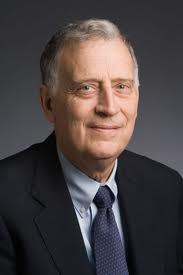
Dr. Ralph Cicerone, President of the US Academy of Science, is one of the brightest and top scientific minds in the country. His research focused on atmospheric chemistry, the radiative forcing of climate change due to trace gases, and the sources of atmospheric methane, nitrous oxide and methyl halide gases.

He ended his lecture at the St. Louis Science Center on January 31, 2011, stating:

“I continue to think is there anything wrong with this picture (of climate change science) because scientists become rich and famous not by agreeing with everyone else. They become recognized by doing something different by showing that everyone else is wrong and doing something new, so I think about this all the time.

For 35 years, I have not been able to crack this thing (find ways to prove it as wrong). A lot of people who are smarter than me are always looking for new explanations. However, the consensus has come down stronger than ever that what we are seeing is due to the human enhanced greenhouse effect.”

In his 35 years as a scientist, if Dr. Ralph Cicerone found nothing wrong with the picture of the science of climate change, what makes you think you or Senator James Inhofe can easily dismiss it?

So what have I learned about science so far?
As I follow my passion to be a climate change communicator, it also a fascinating journey to discover ‘what is science’ so I can have a better understanding of climate change.
Here are 12 basic lessons I have learned so far:1. Science is very brief described as “Truth without certainty.”
2. Science never proves.  Science explains.
3. Proof requires 100% certainty, which science really never provides.

4. However, science can disprove things.
5. Science always leaves room for some other explanation.
6. The scientific definition of a theory is ‘A comprehensive explanation of some aspect of the natural world that is supported by a vast body of evidence.’
7. This is completely different than the common definition of theory, which is a ‘best guess,’ ‘hunch’ or idea.
8. Multiple lines of evidence point to the existence of human caused climate change, which makes climate change a very strong scientific theory.  Climate change is not some hunch or best guess.
9. No level of scientific certainty is higher than Theory.
10. The goal of science is to build THEORIES.
11. Uncertainty in science is not a weakness, but a strength.  Uncertainty, allows room for stronger and more useful explanations to emerge that can save lives.
12. Scientists are extremely competitive.  Try as they might, scientists have not been able to disprove that human are causing climate change.


Image: cdc.gov

My hope is that I will have a better grasp of science as I communicate to the public about climate change.  It seems like when scientists hand over their complex findings and conclusions about climate change to communicators like me, it can be as frightening for them as a father handing over the keys of his prized Porsche to his 16 year old child so they can hang out with their friends.  I have total respect of scientists’ dedicated and detailed work to provide the public the best explanation of what is happening to our global climate.  To me, it seems like the best way to honor their work is to convey science as accurately as I can.


I


Message from the Top of the World

The Arctic or North Pole fascinated me for years since this region is on the front line of climate change warming.  According to the 2007 report by the Intergovernmental Panel on Climate Change, the average annual temperature of the Arctic increased almost twice as much as the average annual global temperature over the past 100 years.  Even more, according to NOAA, the summer Arctic sea ice has declined by 40% since 1979.  For several years now, the polar bear has become the ‘poster child’ for climate change since it hunts for seals on solid Arctic ice that is now rapidly sinking.  With their bright white color, living at one of the harshest climates on earth, and their propensity to hunt people if given a chance, polar bears have always fascinated me.

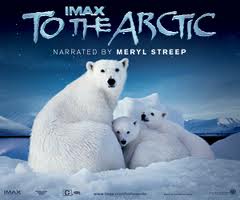
Thus, I was thrilled to hear this winter that an IMAX movie focusing on polar bears, To The Arctic,was coming to the St. Louis Science Center.  Since I worked at Science Center this winter, I recently got to watch To The Arctic.  With my interest in climate change, I was even more thrilled to read the film’s synopsis on the Science Center’s website that “To The Arctic tells the story of one mother polar bear’s determination to keep her cubs alive in the face of natural predators and a rapidly changing climate.”  I found this movie to be very inspirational with very beautiful shots of the frozen north.

Besides, the movie was narrated by Meryl Streep, one of my top favorite actors.  The music was by Paul McCartney, one of my all time favorite musicians.  They both provide solid and fun contributions to the film.
The film was also produced and directed by Greg MacGillivay, who also made a IMAX movie that I really loved back in 2000, Dolphins.  This looked like an All-Star team to motivate me to see a film about polar bears and the Arctic.

I was also spellbound by the opening helicopter shots of the roaring waterfalls at the at the edges of the cliffs of ice.  Sadly, the film eludes to the greater flow of these waterfalls probably due to climate change.  As the film continued to show incredible Arctic footage, the film also stated that summer now in the Arctic now lasts a month longer than what it did just decades ago.  As the film showed sea life, it mentioned ‘greenhouse gases releases from thousands of miles away is making the ocean more acidic and tougher for the plants and sea stars to survive.’

The real stars of the movie though were the polar bears.  I loved the shots of the adults gracefully swimming in the water.  Who knew such a bulky land animal could swim so fluidly.  Of course, the shots of the polar bear cubs playing were so adorable.  The image that stuck with me though was the mother turning around to confront a male who was stalking her and her cubs.  She successfully convinced the male with a stern glare and stand not to mess with her offspring this time.  Unfortunately, the film informs us that often males are eating cubs more often, even if they prefer seals.  The mother’s steel determination to protect her young made me even more impressed with polar bears.

The central message of the movie about polar bears having a hard time adjusting to climate change seemed to be very effectively delivered.  It did not seem to me to be too preachy or depressing.  It just laid out the unvarnished truth about climate change in the Arctic.  The daunting threat to the long term survival of polar bears is the shrinking Arctic sea ice, now melting faster than ever.  Polar bears depend upon floating sea ice to catch their favorite meal, the ringed seal.  Unfortunately, the film shows that the distance between the sea ice is growing.  The warming is leaving bears ‘on thin ice.’  If the distance between sea ice is too wide, it becomes a deadly swim for the bears, especially the cubs.

By 2050, the Arctic ice cap will be reduced to just a small fringe on the coast of Canada and Greenland.  Few climate and Arctic scientists would dispute this fact stated in the film.  Some scientists are more cautious and say the Arctic will be ice free in the summer by 2080, others are looking at the trends in sea ice loss and projecting 2013.  Either way, this spells bad news for the majestic and awe-inspiring polar bears.

With the images and stark message, this is where the film challenges us to do what we can individually and collectively to reduce the threat of climate change.  For the film says, ‘Just as mother polar bear fiercely protects her young, perhaps it can inspire all of us to protect the Arctic habitat.’  I am not a parent, but the film certainly inspired me to do more.  Hopefully, this message of parental care will connect with mothers, fathers, grandparents, aunts, uncles, mentors, and teachers seeing this film.

For I love the written quote at the beginning of the film by renowned ocean scientist, Dr. Sylvia Earle:
“As mothers, the greatest gift we can pass along to our children is a healthy planet.”


Titanic inspired me to be a Climate Change Communicator

To this day, I will never forget the first time I saw James Cameron’s movie, Titanic, in early January 1998.  I had just started working as a naturalist guide narrating the boat tours in the Flamingo outpost in Everglades National Park, Florida.  Part of my job was to be a ‘deck hand’ on the boat, assisting the captain with tying the lines, driving the boat on occasion, and participating in periodic man overboard training.  With a new job requiring me to be on a boat, watching for the safety of the passengers, boat safety was certainly on my mind when I saw the movie.  The soaring beautiful music of the first half of the movie when the boat was gliding across the ocean also played inside my head as our tour boats explored the waters of the Everglades.
As entertainment goes, besides the amazing musical score by James Horner, I also loved all aspects of the movie: the love story, the costumes, the way the ship was so vividly recreated, the acting by Leonardo DiCaprio, Kate Winslet, Kathy Bates, Billy Zane, etc.  The movie draws you in with an enticing love story, it then kicks you in the gut with the horrific sinking.  The sinking is what stayed on my mind ever since. All the innocent people who died lost their lives so tragically.
This disaster was totally a human caused disaster also.  White Star Lines wanted to break speed records to cross the Atlantic.  The Captain and crew ignored the iceberg radio warnings from other ships until it was too late.  The propeller, rudder, and engines were insufficient to steer the boat away from the iceberg once the boat was in eminent danger of hitting the iceberg.  To add insult to injury, there were only enough lifeboats to save half of the passengers on board.  Somehow, White Star Lines thought their boat was “unsinkable” and just followed the British maritime regulations for the minimum number of lifeboats.  Of the over 2,200 passengers on boat only about 700 people made it safely to the life boats.  Most of those who deaths were caused by hypothermia of the freezing waters of the Atlantic, not by drowning.
What was striking to me then in 1998 and to this day was the hubris and arrogance of White Star Lines and the ship’s designer, Harland and Wolff.   They thought they had outsmarted nature with their watertight compartments on board and other engineering advances.  They then foolishly believed their innovations would enable the ship to be “unsinkable.”  Well, we all know how that turned out once the ship hit that iceberg.
In January 1998, I was also deep into studying the Everglades to learn to be a naturalist to be able to explain the history of the Everglades to the passengers.  I was also amazed by the 20th century human arrogance about the Everglades was a ‘useless swamp’ by Americans moving into south Florida the same time that Titanic was constructed. Floridians sincerely thought from when Florida became a state in 1845 until the 1950s that if they could just drain the Everglades they would have this world class productive farmland and urban development.  However, the results were a disaster.  Up until the 1950s, the Everglades was teeming with birds, fish, alligators and other wildlife that was a sight to behold.  Up until the 1930s, locals talked about the skies so full of flocks of birds that it would block out the sun.  The old timers from around the same time used to mention that the creeks used to be so full of fish that you could walk across them.
However, by the 1960s, scientists had noticed that upwards of 90% of the total bird and fish population was gone due to the human draining of the Everglades.  The Army Corp of Engineers and the South Florida Management District dug over 1,800 canals to slice up the Everglades to drain it and provide water for the cities.  As a result, there was 68 threatened or endangered species.  However, the cities were actually running out of fresh water because the draining was allowing salt water from the Atlantic to creep into the underground water supply.
Just like the Titanic, the decline of the Everglades was a human caused disaster.  Ever since the year 2000, the state of Florida and the federal government has attempted to spend a couple of billion dollars to ‘restore the Everglades.’
In the same year that I saw the movie Titanic, I started educating myself about global warming.  Park visitors were asking me if global warming was impacting the Everglades.  Park visitors expect park rangers and naturalist guides to know everything.  Thus, I added global warming to my reading list to be able to answer their questions.  The first book I bought in a used book store was Laboratory Earth: The Planetary Gamble We Cannot Afford to Lose by Stanford University climate scientist, Dr. Stephen Schneider.  The book sounded an alarm bell that releasing so much carbon dioxide and other greenhouse gases from the massive global burning of fossil fuels is playing with the planet’s life support system.  A key point that Dr. Schneider made in this 1997 book was that “the faster and harder we push on nature, the greater the chances for surprises – some of which are likely to be nasty.”
Dr. Schneider did not really go into detail of what those nasty surprises could be in that book. However, by 2006, I noticed that he was sounding an alarm bell, similar to the men on the crow’s nest observation platform on the Titanic who first saw the approaching iceberg.   He states in the 2006 HBO climate change documentary, Too Hot to Handle that “It is getting warmer.  The storms are getting stronger.  And, the plants and animals are changing as you would expect as it is warming.  It is getting hard to say that this is an accident of nature.”
From seeing the movie Titanic, learning about the human caused damage to the Everglades, and reading Dr. Schneider’s Laboratory Earth book, lots of seeds were planted in me to eventually become a climate change communicator.
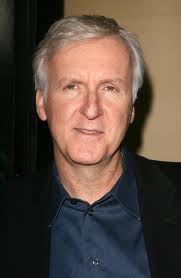
In the back of my mind, I always wondered if anyone else had noticed dangerous parallels with the Titanic sinking and the modern day threat of climate change.  It turned out that Titanic director James Cameron noticed the similarities.  Last week, the National Geographic TV Channel aired a two hour special Titanic: The Final Word with James Cameron.  In this show, Cameron, brought together a team of engineers, naval architects, artists, and historians to solve the lingering mysteries of why and how an “unsinkable” ship sank.  It was a fascinating special to watch.
This is how James Cameron connected the Titanic sinking to the current threat of climate change:
Part of the Titanic parable is of arrogance, of hubris, of the sense that we’re too big to fail. Well, where have we heard that one before?
There was this big machine, this human system, that was pushing forward with so much momentum that it couldn’t turn, it couldn’t stop in time to avert a disaster. And that’s what we have right now.
Within that human system on board that ship, if you want to make it a microcosm of the world, you have different classes, you’ve got first class, second class, third class. In our world right now you’ve got developed nations, undeveloped nations.
You’ve got the starving millions who are going to be the ones most affected by the next iceberg that we hit, which is going to be climate change. We can see that iceberg ahead of us right now, but we can’t turn.
We can’t turn because of the momentum of the system, the political momentum, the business momentum. There too many people making money out of the system, the way the system works right now and those people frankly have their hands on the levers of power and aren’t ready to let ‘em go.
Until they do we will not be able to turn to miss that iceberg and we’re going to hit it, and when we hit it, the rich are still going to be able to get their access to food, to arable land, to water and so on. It’s going to be poor, it’s going to be the steerage that are going to be impacted. It’s the same with Titanic.
I think that’s why this story will always fascinate people. Because it’s a perfect little encapsulation of the world, and all social spectra, but until our lives are really put at risk, the moment of truth, we don’t know what we would do. And that’s my final word.
Just as many contributing factors caused the sinking of the Titanic, three factors in 1998 colliding to inspire me to be a climate change communicator: connecting with the Everglades as a naturalist, reading Stephen Schneider for the first time, and seeing James Cameron’s Titanic.  As we reflect on the 100th anniversary of the sinking, may the Titanic also speak to you to reduce the threat of climate change.

The Debate is Over

Below is the text from my eight minute speech for St. Louis South County Toastmasters for the the April 11, 2012 meeting.  Because of this speech, I was voted by the other Toastmasters as the Best Speaker for this meeting.


Free Beer!  Who here is interested in free beer?  Or, if you cannot drink, how about free chocolate?  Well, unfortunately, I do not have beer or chocolate for you tonight.   As a Washington University scientist recently informed me, whenever scientists get together there is always lots of debate and arguing.  About the only thing they can agree upon is FREE BEER.

Besides, FREE BEER, there are lots of subjects were scientists are in agreement were THE DEBATE IS OVER, such as scientific observations that the Earth is round, the Earth revolves around the sun, the law of gravity, dinosaurs once existed, the Cubs will never win the World Series (Oops, sorry that is the agreement among St. Louis scientists), smoking causes cancer, and Neil Armstrong walked on the moon in 1969.   Finally, the debate about climate change is over among scientists since about 1979.  Unfortunately, many people are stuck on the idea that scientists disagree whether humans are causing climate change.  How many folks here tonight think this?

You are not alone.   In May 2011, a joint study was published by the Yale Project on Climate Change and the Center for Climate Change Communication at George Mason University, called Climate Change and the American Mind.  The results of the research showed only 39% of Americans think that most scientists think climate change is real.  However, 40% of Americans think there is still a lot of disagreement among scientists whether climate change is real.  Another 4% think that most scientists do not think climate change is real, and 18% just do not know.

Just like the old TV show Dragnet, I am here tonight to report “just the facts, ma’am.”  That fact is that there is a widespread agreement among scientists that climate change is real and caused by humans.

How do I know this?

First of all, there have been numerous scientific studies over the past 10 years proving this.  Most recently, June 21, 2010, an article was published in the scientific journal of United State National Academy of Science called, Expert credibility in climate change.  The lead author was William R.L. Anderegg, a doctoral candidate at Stanford University.   He focused on over 900 scientists who had published at least 20 papers on climate, as a way to concentrate on those most active in the field and whose work was subjected to close scrutiny. The authors then asked those scientists whether they were convinced or unconvinced by the evidence for human-induced climate change.  The results are very clear that 97 out of 100 working climate scientists accept the evidence for human-induced climate change.

Second, that study matched a 2009 scientific study published in the Journal of the American Geophysical Union by Dr. Peter t. Doran and Maggie Kendall Zimmerman, Earth and Environmental Sciences, University of Illinois at Chicago, called Examining the Scientific Consensus on Climate ChangeThey surveyed over 3,000 earth scientists.  They also concluded that over 96% of climate scientists are convinced that climate change is real and caused by humans.

But wait a second Brian!  There are still around 3% of scientists who disagree with climate change, shouldn’t we hear them out?  My answer is NO.  I like how former California Governor Arnold Schwarzenegger responded “If 98 doctors say my son is ill and needs medication and two say, ‘No, he doesn’t, he is fine,’ I will go with the ninety-eight. It’s common sense – the same with global warming. We go with the majority, the large majority.” (Hot, Flat and Crowded by Thomas Friedman 2008, page 138)

Speaking of large majorities, how many folks here think that Toastmasters is the best support group you that can empower you to be a great public speaker?   Imagine you are preparing for a speech, maybe even a Toastmasters competition, where you really want to win.  Would you seek out the advice of someone who was skeptical of Toastmasters, or someone who rarely attends meeting, or someone who attends meeting but rarely gives speeches, or someone who attends Toastmasters regularly but is constantly critical of everything happening at the meeting.  No, if you want to wow the club with a speech and win a competition, you would seek advice with the best speakers of the club.

This is no different with scientists.  This is what the scientific peer review process is.  Scientists submit their scientific writings and presentations to their peers to be scrutinized.  After all the scientific debate and intense scrutiny, a vast overwhelming percent of scientists now say that climate change is real and caused by humans.  The debate is over among scientists whether climate change is happening.  As I heard Penn State climate scientist Dr. Richard Alley during his talk  at Climate One meeting at the Commonwealth Club in San Francisco last December, “Scientists are no longer debating (whether humans are causing) climate change because that is no longer a useful discussion.”

Again, who here is interested in FREE CHOCOLATE or FREE BEER, one of the few things that scientists can agree on.  We then talked about various scientific studies showing how scientists have nearly a 97% agreement that climate change is real and caused by humans.  I now encourage you to move beyond the assumption that scientists disagree about climate change.

However, as I conclude my speech, I also realize the debate is not over among many of you about climate change.  Therefore, I will now spend about five minutes to open it up to your questions…

False Witnesses whose Testimonials Did Not Agree

It is Passover and Easter this weekend.  Many people are in the middle of reflecting on stories central to their spiritual traditions right now.  Growing up as a Christian, I was struck by the story about Jesus’s trail before the chief priests, the elders and the scribes.  The religious leaders wanted desperately to find damaging testimonials against Jesus so they would have enough evidence to convict him in a trial and obtain a death sentence against him.  The problem was, accord to Mark 14:56, “For many bore false witness against Jesus, but their testimonies did not agree.”

Amazingly, the chief priests had to keep road testing different testimonies against Jesus.  Finally, they stumbled across witnesses Jesus saying, “I will destroy this temple that is made with my hands, and in another day I will build another made without my hands.”  Right then, the chief priests thought they had a statement of blasphemy on which they could condemn Jesus to death.  Even then, Mark 14:59 points out that “But not even then did their testimony agree.”

Photo: topics.nytimes.com

This story reminds me of people who reject the science of climate change.  Amazingly, just like the witnesses at Jesus’ trail, the contrarians of climate change science cannot get their testimonies together either.  Naomi Klein wrote about this in the November 9, 2011 issue of The Nation in an article, Capitalism vs. the Climate.  The previous June, she attended the Heartland Institute’s Sixth International Conference on Climate Change, the annual largest gathering of those rejecting the science of climate change.  After hearing numerous speakers, Naomi noted that “no attempt is made to explain why each speaker seems to contradict the next. (Is there no warming, or there warming but it’s no problem? And if there is no warming, then what’s all this talk about sunspots causing temperatures to rise?)

http://www.meteo.psu.edu

Even more, I thought Dr. Michael Mann, climatologist at Penn State University also crystallized beautifully this idea of the ‘False Witnesses whose Testimonials Did Not Agree.’  On page 23 of his most recent 2012 book, The Hockey Stick and the Climate Wars, Dr. Mann talks about his “six stages of denial”:

1. CO2 is not actually increasing.
2. Even if it is, the increase has no impact on the climate since there is no convincing evidence of warming.
3. Even if there is warming, it is due to natural causes.
4. Even if the warming cannot be explained by natural causes, the human impact is small, and the impact of continued greenhouse gas emissions will be minor.
5. Even if the current and projected future human effects on Earth’s climate are not negligible, the changes are generally going to be good for us.
6. Whether or not the changes are going to be good for us, humans are very adept at adapting to changes; besides, it’s too late to do anything about it, and/or a technological fix is bound to come along when we really need it.

On that same page, Dr. Mann also points out that “Contrarians have tended to retreat (to a higher number) on ‘the ladder of denial’ as the scientific evidence has become more compelling.”  In other words, those rejecting human caused climate change look to be all over the map with their closed-minded skepticism.  It is hard to pin them down why the science human caused climate change should be totally dismissed.  When they get together at a Heartland conference, someone should challenge them to coalesce under one certain point or theory on why climate change should be rejected.  Until then, the contrarians just sound like a cacophony of confusion.  Again it is like the false witnesses at Jesus’s trail who contradicted each other.  It did not matter that their testimonials did not agree they just have to find a way to condemn to death an innocent man teaching different religious ideas.

As I have grown concerned and alarmed about climate change, I had a few people tell me that “I should look at both sides of the issue.”  However, climate scientists such as Michael E. Mann, Stephen Schneider, James Hansen, Richard Alley, Wallace Broeker, Katharine Hayhoe, Richard Somerville, Gavin Schmidt, and many others have convinced me with their evidence and observations with their consistent message.   That message is climate change is real, caused by humans, over 95% of climate scientists agree upon this, climate change is harmful to people, and people can limit it if we choose.

The bottom line is that I have not heard any compelling evidence presented by contrarians of climate change.  Even more, I do not have time to listen to any contrarians when they provide false science that disagrees with each other.  Just as the contradicting witnesses at Jesus’s trial have not gone down well in history, the contrarians will not go well in history either as evidence for human caused climate change grows stronger by the day.

According to NASA, there is multiple lines of evidence pointing to the existence of human caused climate change, such as sea leve rise, global temperature rise, warming oceans, declining sea ice, glacial retreat, increase in extreme weather events, and ocean acidification.  The Good News of Easter is that Christians believe that Jesus overcame his corrupt trial and execution to rise from the dead   The good news of climate change is we can also lessen the nastiest consequences of climate change if we act fast on the solutions collectively as a society and as individuals also.

Happy Easter!


Listen to the Man (Scott Mandia)

Recently, I met, Bob, a 5th grade teacher from a local St. Louis Catholic School who is doubtful about climate change.  Bob pressed me with how do scientists know climate change is real.  He then requested that I send him information about the science of climate change.

I e-mailed a friend of mine, Scott Mandia, to assist me.  Scott is a professor of meteorology at Suffolk County Community College in New York.  He is also the founder of The Climate Science Rapid Response Team and The Climate Science Legal Defense Fund.  He is a leading national voice in engaging the public, media and his students about the serious threat of climate change.

Below is what Scott e-mailed to me:

“I think it is very important to show the pattern of warming shows heat-trapping.  Here is my standard reply:


1. Climate change science is probably the most scrutinized field of science today.

2. It is quite clear that the planet is warming:
 The oceans are gaining heat
 The land is warming
 The air is warming
 Ice is rapidly melting
 Animal and plant species are moving northward and upward
 Cold seasons are getting shorter while warm seasons are getting longer
 Maximum temperature records are increasing much faster than minimum temperature records etc.


3.  This warming can only result from:
 1) More incoming heat from space (sun)
 2) Less outgoing heat to space (earth emission)
     We have carefully measured the incoming solar radiation and it is NOT increasing. 
      In fact, we are at historic lows lately!


4.  Scientists have known that adding heat-trapping CO2 will cause less heat to be
          released to space. The pattern of warming matches “heat trapping”:
 1) Nights are warming faster than days (how could the sun cause this?)
 2) Winters are warming faster than summers 
    (sun is weakest in winter and strongest in summer so the sun is not to blame)
 3) The lowest layer of the atmosphere is warming while the upper layers are cooling 
   (again, cannot be the sun)
 4) Satellite and ground-based devices have MEASURED the decreasing heat in the CO2 band to space with a corresponding increased heat back to the surface in the CO2 band.


5. There are many lines of evidence for CO2 warming. 
 In fact, the increases in temperature over the past three decades is nearly 100% due to increased CO2. 
 The only reason we have not gotten even warmer is that pollutants suspended in the air called aerosols are reflecting some of the sunlight and are offsetting the CO2 warming.


6.  It is because of this overwhelming evidence that virtually every climate science expert and every international science academy agrees that humans are warming the climate.”


Scott then goes on to share his vision for America:

“Landing on the moon was certainly a big challenge and we did that!
Fixing the ozone hole was a big problem and we did that!
Solving acid rain was a big problem and we did that!

America is great because when we are faced with a challenge and especially with a threat, we collectively take action and we usually do quite well. The energy revolution is akin to the Internet revolution. I want America to take the lead. If we do, we create jobs, we sell products to China instead of buying them, we have cleaner air and water, greater national security, and energy savings put money directly into our pockets.


Imagine it is the Olympics and the event is the Clean Energy Race. The US track team has always won the big events before and appears to be in the best shape to win again. (Mention the three “we did that’s” above.) However, after the starting gun has fired, the American runner is just jogging while China, India, and others are sprinting. Don’t you want the American to win? There is still time for her to step it up but the window of opportunity is getting shorter every year because she is falling farther and farther behind.”

I thought this was an outstanding tool for climate change communicators, like me.  I asked Scott for his approval to share his message with others.  His generous response: “Feel free to share with all.”


As you read this, I hope you use Scott’s message when you communicating climate change to friends and family members who are undecided or doubtful about global warming.

Thank you, Scott, for this tool.  I promise to use it wisely and effectively with Bob, the 5th grade school teacher, and others when I discuss climate change.

Connecting with animals Can Inspire Us to Save the Planet

WBS Director, Jeff Meshach with Mariah, the Golden Eagle

Recently, I got to look into the eyes of a Golden Eagle named Mariah.  What a beautiful bird!

The Crestwood Sunset Hill Rotary Club invited me to attend their weekly luncheon meeting last Wednesday, March 21, 2012.  I came to scope out the meeting since I am invited to speak at a future club meeting on Wednesday, April 19th.  This Rotary Club invited me to speak on carbon footprints.  I was chosen because of my interest in climate change and my experience as a public speaker on this subject as a park ranger and a St. Louis Toastmaster.

I choose to attend this meeting because I wanted to hear the presentation of Walter Crawford, Jr. He is the Executive Director of World Bird Sanctuary, located just outside of St. Louis in Valley Park, Missouri.   The World Bird Sanctuary (WBS) rehabilitates birds of prey, such as hawks, falcons, eagles, owls, vultures, and other animals.  The Sanctuary also provides education on-site and traveling outreach presentations to the public all around St. Louis and the United States.  Walt was speaking about his 35 year experience rehabilitating birds, caring for them, traveling with them, and showing birds of prey to the general public.

Walt was a very engaging speaker and the Rotary audience hung on every word he said.  He wove amazing stories of being pulled over by the police with the birds of prey perched in passenger seat.  He was able to use his charm and show the birds to talk the police out of giving him tickets.  He talked about keeping eagles in his hotel room and talking a few ladies into seeing the birds in his room.  He shared how the birds are extremely loyal to him or other trainers at the WBS.  It was spell bounding to also hear how the birds always return to the trainer when they are flown before a crowd of 50,000 plus people at a St. Louis Cardinals baseball game.  The huge and very noisy crowds of people never bothers the birds because they are strictly focused returning to the trainer.

The best part though was when the Director of World Bird Sanctuary and fellow trainer, Jeff Meshach,  brought out the Golden Eagle, Mariah.  She is nearly 40 years old and has lost much of her sight.  The audience, especially an 8 year old and a 10 year old boy in attendance, felt awestruck by the bird.  Walt knew bringing the birds out to show people are the key to his successful presentations.  He knows firsthand that people will not be inspired to save nature, unless they can experience it with their own eyes, such as being a few feet away from a live eagle.  He even pointed out the obvious, “You cannot save something unless you love it.”  

Walter Crawford, Jr; Execute Director of WBS

I then was so enthralled with his insightful wisdom that he shared with the group and then with me after the presentation.  He also stated, “Conservation is not a philosophy.  It is how we should live every single day.”  Walt’s mentor was in the 1970s Marlon Perkins, past Director of the St. Louis Zoo.  Marlon Perkins was also the host of the TV show Mutual of Omaha’s Wild Kingdom that I watched as a child.  Walt also has continued Marlon’s philosophy that showing animals to “getting people to understand their connection to nature.”

Even more, staying connected with nature will have an impact on you.  Walt stated, “Everything you eat, breath, and drink is a product of what you do.”  Even more, “Everything you touch has an effect on you.”  His words did strike deeply into my heart as I strive to be a climate change communicator and do all I can to promote the protection of nature and the natural world.  Walt really was a ‘Sage on the Stage’ that day.  He certainly motivated me to be a better steward of our planet.

I really felt blessed that I got to see his presentation.  Interacting with Walt, Jeff, and Mariah was the highlight of last week for me.  I also want to thank the members of the Crestwood Sunset Hills Rotary Club, such as Randy Martin, President Jenny Bell, Wesley Finke, Bob Alexander, Randy Martin, and Carl Deutsch for allowing me to feel so welcome at their meeting.

Walt’s words of wisdom reminded me of the Baba Dioum quote:
“In the end, we will only conserve what we love.
We will only love what we understand.
We will understand only what we are taught or allowed to experience.”


I also want to share this video that was given to me and all the other participants at the Earth to Sky: Communicating Climate Change Conference in Shepardstown, West Virginia in September, 2011, sponsored by the National Park Service, NASA, and Fish & Wildlife Service.

I also wanted to share my central philosophy (which is very similar to Walter Crawford’s)
Think Globally and Act Daily


And:
Each and everyone one of us can change the world.
We can do this by 
1. The way we vote
2. The products we buy
3. The attitudes we share with each other. 

Dr. Michael E. Mann’s Hockey Stick Book is a ‘Very Gripping Read’

If you want the latest perspective on climate change science, especially the creation of the famous `hockey stick graph,’ then I highly recommend reading Dr. Michael E. Mann’s book, “The Hockey Stick and the Climate Wars.” I heard Dr. Mann speak at the American Geophysical Union conference in San Francisco last December. At the end of his talk, he mentioned his up-coming book about the creation of hockey stick graph and his perspective of the onslaught of attacks he received from the contrarians of climate science.
I was eager to read his book and hear his perspective. Before I saw Dr. Mann, what I mostly knew about him was myths perpetrated by his attackers, such as `the hockey stick has been debunked,’ and the fake Climate-gate scandal where supposedly Dr. Mann had `found a trick’ to `hide the decline’ when he created the famous hockey stick graph. I knew these myths were utter nonsense, but I still wanted to hear his point of view. The book did not disappoint me at all.
As a climate change communicator, I did learn much to share when I engage people on the subject of climate change. First, I liked his analogy of `The Serengeti Strategy.’ Lions attack zebras at the edge of herd because the zebras’ stripes make it hard for the lions to see individual zebras in the center of the heard. Deep down, the contrarians know scientific agreement on climate change is overwhelming and extremely strong multiple lines of evidence that climate change exists. Thus, the contrarians desperately nitpick at the hockey stick graph and personally attack individual scientists like Dr. Mann.
In the first chapter, I thought Dr. Mann did a superb job of immediately defending himself against his attackers’ lies. In the fabricated Climate Gate hoax, contrarians loved to wave the stolen e-mail quote of Dr. Mann’s “trick” in assembling the hockey stick graph.   Mike talked about growing up and playing computer games in the early 1980s. Even more, he was deeply influenced by the 1983 anti-nuclear film, War Games. Similar to the movie, he wanted to program his computer to run faster to “learn” from previous games how to play tic-tac-toe better each time. Thus, he discovered a “trick” to get the computer program to learn faster. Mike then defined “trick” on page 6 as “the term scientists and mathematicians often use to denote a clever shortcut to solving a vexing problem.”
What is crazy is contrarians cherry picked a word, “trick,” in the fake scandal. However, they offered no evidence of any kind of “trick” or deception by Dr. Mann. As mentioned in this book, there have now been over 8 independent reviews of the poorly named `Climate Gate’ scandal, including the British Parliament and 2 separate reviews by Dr. Mann’s own university, Penn State. Every time, Dr. Mann was cleared of any wrong doing and the investigating commissions found no devious “tricks” when he constructed the iconic hockey stick graph.
In chapter two, I really latched onto Dr. Mann’s “6 Stages of Climate Change Denial”:
1. CO2 is not increasing.
2. Even if it is, the increase has no impact on the climate since there is no convincing evidence of warming.
3. Even if there is warming, it is due to natural causes.
4. Even if the warming cannot be explained by natural causes, the impact of continued human caused greenhouse gas emissions will be small.
5. Even if the current and projected future human effects on Earth’s climate are not negligible, the changes are going to be good for us.
6. Even if the changes are not going to be good for us, humans are very adept at adapting to these changes; besides, it is too late to do anything about it, and/or the technological fix is bound to come when we really need it.
This ladder was very helpful because I find contrarians to be all over the map to rejecting the science of climate change. They cannot seem to coalesce around a single point of contention. As a matter of fact, when they do gather at their contrarian Heartland Conferences, they contradict each other, clinging to various rungs of Dr. Mann’s ladder. Dr. Mann even points out on page 23 that “Contrarians have tended to retreat up the ladder of denial as the scientific evidence has been more compelling.” This reminds of the movie Titanic when the stranded passengers where running up to cling to projected stern of the boat as the bow was sinking into the water.
Photo source:  http://www.meteo.psu.edu

The contrarians and undecided folks really need to read Dr. Mann’s detailed explanation in the book how he came up with the hockey stick graph since 1996. He created with cooperation from many other climate scientists, and using vast amounts of tree ring, ice cores, corals, lake & ocean sediment and a smattering of the climate recordings. It was amazing how contrarians so viciously attacked it, ever since, like lions on the Serengeti, trying to find some way to discredit it.

Like Mike points out in the book, numerous other scientists have re-affirmed the Hockey Stick graph with their independent research, data, and computer models. Contrarians love to claim that Mike’s graph was “debunked” because it was not used in the 2007 United Nations Intergovernmental Panel on Climate Change (IPCC) Report, unlike the previous IPCC reports. Mike points out on page 173 that “the purpose Summary for Policy Makers (in the 2007 IPCC Report) was to highlight new findings, not old ones.” Furthermore, he states “the original (1999 hockey stick graph) was one of the dozen reconstructions shown in the IPCC paleoclimate chapter, which collectively formed the basis for the strengthened conclusions of…the anomalous nature of recent warming.”

From meeting Dr. Mann and reading his book, he struck me as a soft-spoken, humble guy who just wants to be a scientist. He even states on page 253, he just wants to be “left alone analyzing data, constructing and running theoretical climate models, and pursuing curiosity-driven science.” Mike does not come across as the kind of guy who is the life-of-the-party telling jokes, seeking the center of attention, and trying to impress people with his accomplishments. He is probably the polar opposite of the Dos Equis `Most Interesting Man in the World’ beer ads.  Dr. Mann is a dedicated climate scientist.

My observation is Mike is an incredible man of integrity. He has accomplished greatly to the world of climate science with the hockey stick graph, co-founding the Realclimate.org with Gavin Schmidt and Stefan Rahmstorf, and his other scientific publications and books. This is why his attackers still cannot seem to pin any dirt on him. His scientific body of work is impeccable. The Hockey Stick Graph is a result of years of meticulous research by him and lots of other scientists.
With his honesty, integrity to pursue impactful climate science, and his soft spoken nature, I find the personal attacks, threats, disinformation, and endless political investigations he has received from contrarians very disgusting. However, I am glad to hear that he ends the book by stating that in the future, “My fellow scientists will be fighting back, and I look forward in joining them.”
This is the second book I read by Dr. Mann. I read the first, Dire Predictions: Understanding Global Warming about a year ago. It has excellent pictures and illustrations to highlight the findings of the 2007 IPCC Report. I used graphs from the book in my own climate change presentations. My minor regret is that I did not have Dr. Mann sign my book when I met him last December. However, now I have two books for him to sign next time I meet him: Dire Predictions and now The Hockey Stick & the Climate Wars, which I highly recommend also.