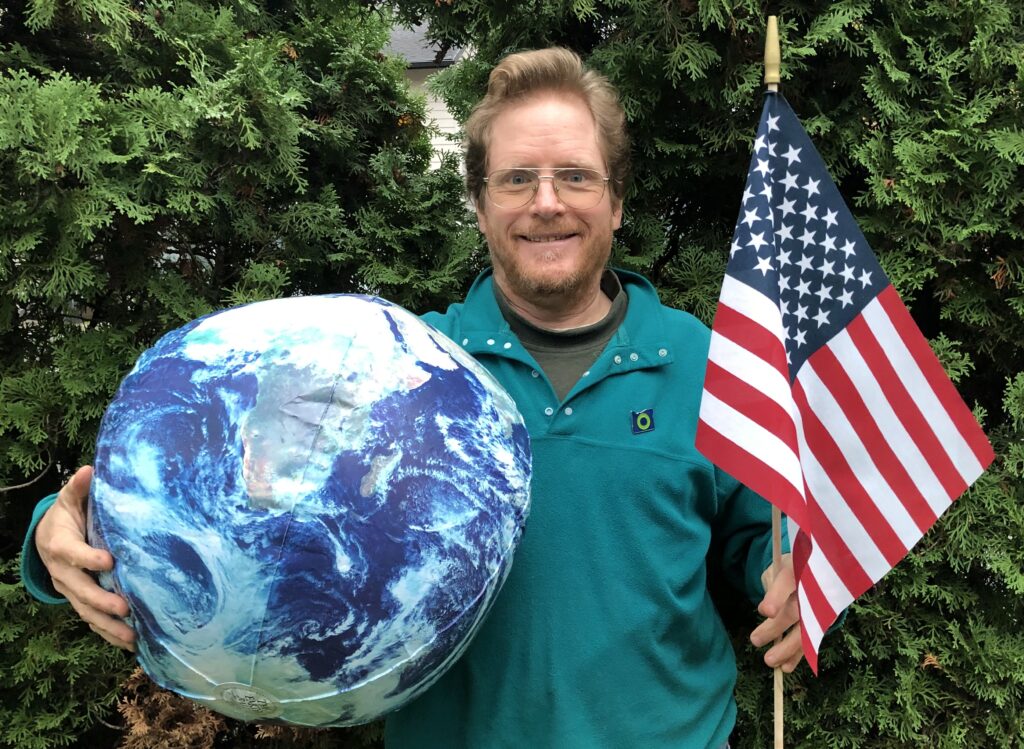
“Testimony, testimony
Declare yourself – I will testify
Testimony, testimony
Speak the truth, I will testify”
– from the song “Testimony” written and sung by Robbie Robertson with U2 in 1987
This is my latest update to oral testimony I gave to the Oregon Legislature, plus oral testimony to the Oregon Environmental Quality Commission, in 2025. In 2025, I previously blogged, “For Climate Action, giving oral testimony to legislative committees,” from 2019 to 2023. I then followed it up with “For Climate Action, my oral testimony to legislative committees Part II” about my oral testimonies from September 2023 to March 2024.
I wrote and published the Part II blog on February 26, 2025, one day before I started giving oral testimony in 2025. This year I gave oral testimony 9 times. I feel like I need a break before I give oral testimony again. It is depressing now because all the bills I testified to support died in committees. These bills did not make it to receive a floor vote in the Oregon House or Senate. In my March 22nd testimony to the Legislative Joint Ways and Means Committee, all those bills that I advocated died without funding. The transportation package that I gave testimony on August 31st passed the legislature on September 29, 2025, but that was a pyrrhic victory. It was a short term budget fix, not a long term transportation package addressing the climate crisis. Now that package will likely be put on hold in 2026 by a petition led ballot measure for the November 2026 election where voters will decide to accept or reject the transportation tax increases.
1. My Testimony for the CEI Hub Bill – HB 3450 on February 27, 2025
In late 2024 and early 2025, I first learned about the problem of Portland’s Critical Energy Infrastructure (CEI) Hub. According the the Multnomah County Government website,
“The CEI Hub is a six-mile stretch of industrial development along the west shore of the Willamette River. More than 90% of all liquid fuel in Oregon is stored at facilities in the CEI Hub. This includes the gas and diesel supply for the Portland metro area, as well as all the jet fuel for the Portland International Airport. Other hazardous materials are also stored at the CEI Hub.”
As Oregon Public Broadcasting reported on March 18, 2025,
“Portland is particularly vulnerable to the 9.0 Cascadia Subduction Zone earthquake that scientists predict could happen in the next few decades, based on historical geographic data. The city’s six-mile hub of fuel storage and shipping terminals along the Willamette River is expected to crumble due to an earthquake phenomenon called liquefaction, a type of riverside quicksand effect that could release millions of gallons of fuel.”
If that happened, “It could be a spill that matches the volume of the BP Deepwater Horizon spill, but rather than occurring out in the Gulf of Mexico, it would be occurring in the heart of a major American city,” Multnomah County sustainability director John Wasiutynski told councilors during a Monday work session.
Thus, it is a priority of the City of Portland, Multnomah County, and various environmental groups such as 350PDX, MCAT (Mobilizing for Climate Action Together), Climate Reality Portland Chapter, etc. to work together to lessen the risk of these fuel tanks turning into an environmental and human catastrophe caused by a high intensity earthquake, wildfire, or other causes.
In the third week of February, 350PDX asked for volunteers to give oral testimony to support the package of 4 CEI Hub Bills (HB 3450, HB 2949, HB 2152, & HB 2151) for a hearing scheduled for Thursday, February 27th to the Oregon House Committee On Emergency Management, General Government, and Veterans. I heard about this opportunity to testify from the Portland Climate Reality Chapter. They offered to write up a statement representing our chapter for me to read as my oral testimony for the hearing.
This was a relieve for me not to have to draft my own testimony. I could simply read the statement they sent me by email. My only actions were to find a ride to Salem to testify and to sign up in advance to testify for the hearing on the Oregon Legislature Information System website.
Here is the testimony that I read to the Oregon House Committee:
“My name is Brian Ettling. I live in Portland I am a member of the Climate Reality Portland Chapter, which has members who live and/or work inside the “blast zone” of the CEI hub. As an organization focused on climate justice and public health as well as a just transition to clean energy, we support near-term action to mitigate pollution and emergency-related harms to communities and longer term phase-out of dangerous combustion fuels.
So Climate Reality strongly supports HB 3450, the CEI Hub Transition Plan. We thank Rep. Thuy Tran for this legislation and urge all House and Senate Members to become co-sponsors. The bill calls on Oregon Department of Energy to study and develop an “energy storage transition plan” for the CEI Hub to include:
- Benchmarked short-, medium-, and long-term goals
- A risk bond study;
- Engagement of industry stakeholders, technical experts, researchers, affected
- Community members, state and local govts. agencies, and others;
- May contract with the National Policy Consensus Center at Portland State University.
This bill is urgently needed. Oregon needs a wholistic plan that moves us from bemoaning the
dangers of the CEI Hub to solving the problem. HB 3450 gives Benchmarked goals to allow for
easier steps to begin sooner. Benchmarked goals can support a safe and equitable transition to
renewable sources of energy by recognizing that any flammable, combustible, or toxic materials
stored in the CEI Hub zone poses a danger. An inclusive planning process should ensure that
all interested and affected parties will be at the table; an essential tenet of environmental justice.
Thank you for your time.
The Committee Chair, Rep. Thuy Tran, set time limit for oral testimony at 2 minutes. It felt stressful to squeeze in all the words in time, but my testimony was right at 2 minutes. It always feels beneficial for me to give oral testimony to Oregon Legislative committees to support climate and environmental bills. This was the first of my 9 times giving oral testimony in 2025. I felt like I was off to a good start.
Unfortunately, HB 3450 and all of the CEI Hub bills died during the Legislative session. All of them, except for HB 2151, were passed out of the House Committee On Emergency Management, General Government, and Veterans to be sent to the Joint Ways and Means Committee. HB 2151 died in the committee. The Legislature determined that it would cost money to enact these CEI Hub bills. Because the state economist predicting the state would have half a billion dollars less than formerly expected to budget, the Joint Ways and Means Committee killed nearly all the bills during the 2025 regular session that were deemed to cost money to implement.
The Chief Sponsor of the CEI Hub bills, Rep. Thuy Tran of Northeast Portland, hopes to introduce a CEI Hub bill in the short 2026 session. The threat still looms of a catastrophic subduction zone earthquake causing nightmare fuel tanks ruptures and explosions for these 600 storage tanks along the Willamette River, just northwest of downtown Portland, Oregon. This problem is not going away. I fear an incomprehensible environmental disaster from an overdue earthquake before the state passes legislation to fully address the issue.
2. My Testimony for Updating OR’s Greenhouse Gas Goals – HB 3477 on March 11, 2025
On February 4th, I traveled to Salem to participate in the Divest Oregon Lobby Day at the Oregon Capitol. Divest Oregon organized this gathering in Salem to lobby legislators to support the Pause Act (SB 681) to stop the OR Treasury from new private equity investments in fossil fuels. One of the speakers to prepare for the lobby day was Oregon Representative Mark Gamba. I have known Mark Gamba since 2017 when I met him at the Climate Reality Training in Bellevue, Washington. He is a trained Climate Reality Leader like me. Before he was elected as a state legislator, Mark served as the Mayor of Milwaukie, Oregon. His leadership as Mayor enabled Milwaukie to become the first city In Oregon to declare a climate emergency.
Rep. Mark Gamba is one of the top climate champions in the Oregon Legislature. I look to see what climate bills he is a Chief Sponsor so I know which bills to urge my legislators to support. During his talk at the Divest Oregon Lobby Day, he urged us to support other bills he championed, such as HB 3477 to declare climate change an emergency and update Oregon’s greenhouse gas goals. After I returned home to Portland that evening, I went on the Oregon Legislature Information System (OLIS) website to subscribe to the bills so I could follow them. In March, I received a notice on OLIS that HB 3477 would have a hearing on March 11th in the House Committee On Climate, Energy, and Environment.
Rep. Gamba had other bills besides HB 3477 that he wanted climate advocates to show up to testify and lobby their legislators to support. However, I wanted to give oral testimony for this bill because Senator Michael Dembrow and other climate champions tried for years to update Oregon’s greenhouse gas goals with legislation with zero success. Republicans always have fierce opposition to these bills. The Democratic legislators then seem to negotiate away these greenhouse gas benchmark bills so that their GOP counterparts will allow other bills to pass.
I decided to register to give oral testimony to this bill to hopefully show that HB 3477 had support from Oregonians to update our state’s greenhouse gas goals. Thus, I signed up online because I did not see how I would get a ride to Salem to testify in person.
Here is the testimony I gave to the House Committee.
Members of the Committee. My name is Brian Ettling. I live in Portland. For 25 years from 1992 to 2017, I was a seasonal park ranger at Crater Lake National Park, one of the most beautiful places on Earth. Sadly, I saw climate change while working at Crater Lake with a diminishing annual snowpack. Even worse, I saw more intense fire seasons and smoke in the summertime leading visitors to cancel their vacations. When they cancel their vacations, they were not staying in our hotels, eating in our restaurants, and shopping in our stores. It had a bad impact on Oregon’s economy.
Since moving to Portland in 2017, I saw bad wildfire smoke in the summers making it hard to breathe. We had a very scary heat dome in 2021 with temperatures up to 116 degrees and 96 people died in Oregon. Scientists say these freak events are made worse and are triggered by climate change. They will continue to get more deadly if we don’t act now to reduce this threat.
Please pass HB 3477 to declare climate change an emergency and modify our state goals to reduce greenhouse gas emissions to reflect what science tells us the actions we must take to reduce this threat. To paraphrase comedian Larry the Cable Guy now is the time to ‘Get R done!’
I applaud Rep. Mark Gamba as a champion on this bill and as a leader on climate and environmental issues in the Oregon Legislature.
Even more, please pass the other two bills from Rep. Gamba and Rep. Helm in your committee today, HB 3681 to speed up the Electricity Transmission Permitting process. And HB 3609 to require electric companies to develop a distributed power plant program for the grid services provided by distributed energy resources.
Someday your children and grandchildren will ask you: ‘What did you do as a legislator to solve climate change?’
Please pass these bills so you can tell them that you did all you could.
Thank you for your time.
Sadly, HB 3477 died in this House committee. It did not receive a work session, as known as a committee vote, to move it to a House floor vote. It went nowhere because of the fierce Republican opposition to the bill, similar to the result in previous legislative sessions.
3. My Testimony for Creating Westside Express Service Authority (WESA) – HB 3453 on March 11, 2025
My oral testimony for HB 3477 happened online for the House Committee On Climate, Energy, and Environment for their meeting on March 11th scheduled at 8 am. At 5 pm that same day, the Joint Committee on Transportation scheduled a hearing for HB 3453 to create the Westside Express Service Authority (WESA). This bill directed Trimet (the public transportation agency for the Portland metro area) to transfer authority of their operation of the (Westside Express Service) WES commuter rail line to the state of Oregon to create a new state agency WESA.
As a climate organizer, I hate to drive with the pollution it creates that makes our air unhealthy and contributes to climate change. I drive a 2002 Honda Civic that is almost 24 years old, so I like to save money on gas, plus the wear and tear maintenance expenses, by not driving. I worry about getting into a car accident when driving because of other crazy drivers on the road or making a mistake while driving.
Fortunately for me, Portland has an excellent public transportation system with Trimet that I rely upon almost daily to meet up with friends, attend town halls and climate organizing events, go on hikes with Tanya, etc. Once I am board the public buses and MAX commuter trains, I get a lot of reading done that I am not able to do at home since I am so distracted by the internet. I use public transportation out of privilege. However, every time I ride the bus or MAX, I see people around me that are very dependent on public transportation because they are unable to drive or can’t afford a car. Therefore, I like to consider myself a strong advocate for public transportation especially for the Portland area.
Oregon Senator Chris Gorsek from Gresham is a strong advocate for passenger rail service. Chris and I had conversations about this for several years in total agreement that more passenger and commuter rail service is needed in Oregon. I like to pay attention to the train bills he advocated, especially since he was the Co-Chair of the Joint Transportation Committee during the 2025 Legislative session.
On February 4th, Portland TV station KGW ran a story and a 30 minute news report about legislative actions to try to expand passenger rail in Oregon. I noticed posted by one of the Oregon environmental advocacy groups, No More Freeways, on social media. This KGW news report listed 4 passenger rail bills introduced in the Legislature during the 2025 session:
HB 3231: Improves passenger rail capacity across Oregon.
HB 3233: Directs ODOT to work with WA State Department of Transportation and British Columbia Ministry of Transportation to improve capacity on Amtrak Cascades rail service.
SB 715: Creates the Cascadia High Speed Rail Task Force.
SB 689: Creates the Oregon Rail Department.
After seeing that story, I started following those bills closely. Somehow, I learned about HB 3453 to create a WES state agency. Thus, I signed up to give oral testimony remotely from home when this Joint Transportation Committee hearing took place at 5 pm on March 11th.
Here’s what I said in my oral testimony for HB 3453:
Co-chairs Gorsek, McLain, and members of the Committee.
I am Brian Ettling. I live in northeast Portland.
I support HB 3453 which creates the Westside Express Service Authority and directs TriMet to transfer operation of the WES commuter rail line to this authority. I applaud Representatives Mannix and Neron for introducing this bill. This could be a step forward for Oregon to take responsibility to improve WES and possibility expand this passenger rail line in the future.
The WES Trains are amazing, which currently runs a couple times a day from Beaverton to Wilsonville. I took the train last July to meet up with a friend in Tigard and I loved riding on it. However, it only runs a couple times a day. The route is also way too short. It needs to be expanded all the way to Salem.
You might recognize me because I to come to Salem periodically to testify and lobby legislators for climate and environmental bills. I always try to carpool with friends. A couple of times, I took the Amtrak train and bus to come to Salem. The last time I tried to take a train to leave Salem and return to Portland on February 4th, the Amtrak train was delayed for 10 hours. Fortunately, I got a ride back to Portland with a friend.
I hate that drive from Portland to Salem on I-5 because of all the traffic delays at rush hour.
I am here today to lobby for you, Oregon legislators and your staff, as well as citizen advocates like me. Frankly, your commute stinks! There must be a better way to commute to Salem to not get stuck in traffic on I-5. Let’s aim to increase dependable passenger train service in the Willamette Valley from Portland to Salem and even down to Eugene.
I think HB 3453 could be a step in the conversation to do that.
I am here today to speak for the passenger trains and even blow my train whistle.
Thank you for your time.
During my testimony, the part that received a response from legislators and the audience in the hearing room in Salem was when I said: “I hate that drive from Portland to Salem on I-5 because of all the traffic delays at rush hour. I am here today to lobby for you, Oregon legislators and your staff, as well as citizen advocates like me. Frankly, your commute stinks!”
I could hear laughter break out in the room after I made that remark. I intended to be funny and I was thrilled I made a humorous connection with the audience in the room. At the end of my testimony, I blew a train whistle, which made the legislators and audience in Salem laugh.
After the Committee Co-Chair Susan McLain closed the oral testimony HB 3453, Senator Khanh Pham asked the chair to be recognized for brief remarks. Senator Pham stated, “Thank you Madame Chair…I want to appreciate everyone who came out (to testify)…This bill has passed out of committee twice and I do remember all of the incredible voices that came out from rural, urban, and suburban committees. I agree with Mr. Brian Ettling who was talking about our commute. I also hate this commute and everyday I think about how many more Oregonians could participate in our state government if they had an easy, affordable way to get to Salem without having to own and operate a car. I just want to thank everyone who came out to testify today.”
I was elated to hear Senator Pham mention me in her comments to the committee. HB 3453 passed out of the Joint Committee on Transportation on April 14th. It was referred to the Joint Ways and Means Committee where the bill died.
4. My Testimony for Creating the Cascadia High Speed Rail Task Force. – SB 715 on March 18, 2025
One of the passenger rail bills that is listed above is SB-715, a bill to create the Cascadia High Speed Rail Task Force to to study, research and make reports about high speed rail in Oregon. In addition, the bill would establish a Cascadia High Speed Rail Task Force to to submit progress reports and a final report. I requested to the MCAT (Mobilizing for Climate Action Together) Transportation Committee that I give oral testimony on behalf of the committee. I drafted my oral testimony in advance for their approval. They quickly gave their approval for me to testify to represent them.
Here is the oral testimony I gave for SB 715 that I gave live via the internet:
Co-chairs Gorsek, McLain, and members of the Committee.
I am Brian Ettling. I live in Portland. I am a member of the MCAT (Mobilizing for Climate Action Together) Transportation Committee. We advocate for reducing carbon pollution from the transportation sector, Oregon’s highest carbon pollution source. We want Oregon’s Transportation System to offer more convenient and accessible passenger rail service within Oregon and the Pacific Northwest Region.
We thank Senators Gorsek, Pham, and Frederick and Representative Ruiz for sponsoring SB 715 creating the Cascadia High Speed Rail Task Force to study, research, and make reports for Oregon high-speed rail. The 2024 Joint Committee on Transportation Road Show showed many Oregonians want more public transit options, including commuter/passenger rail service, plus increasing frequency and dependability of public transit modes. We believe SB 715 helps achieve this.
A large percentage of Oregonians can’t drive, or can’t afford to own a car, or don’t like to drive and prefer to use mass transit and passenger rail like me. As Oregon interstate highways and roads become more congested with cars which you notice on your commute to and from Salem, let’s provide Oregonians with high-speed passenger rail options to reduce the wear and tear on our roads and help clean the air from car tail pipe pollution.
On a personal note, I hate driving, and I love taking the train. My wife and I use the Amtrak Cascades Trains, which runs from Eugene to Vancouver British Columbia, about once a year to visit friends and family in the Seattle area. Last August, a malfunction on the Steel Bridge in Portland delayed our train for two hours. On February 4th, I booked an Amtrak train from Salem to Portland that was delayed for 10 hours due to mechanical issues.
Let’s improve dependability and reliability for Oregon’s passenger trains.
Please pass SB 715 as a step forward to do this.
Thank you for your time.
Here’s a video of my testimony:
Sadly, SB 715 was another bill that died in the Joint Transportation Committee.
5. My Oral Testimony to Oregon Environmental Quality Commission on March 14, 2025
In between testifying to the Oregon Legislature Joint Committee on Transportation to support passenger rail bills, I testified to the Oregon Environmental Quality Commission (ECQ) on March 14th. I spoke in favor of making permanent the Advanced Clean Trucking Rule to try to push large trucks in Oregon to run on clean energy.
The EQC is part of the Oregon Department of Environmental Quality (DEQ), which is the state agency overseeing environmental protection for the state. The ECQ is a five-member panel appointed by the governor to adopting rules and establishing policies for the DEQ, such as determining how to implement the Advanced Clean Trucking (ACT) Rule. DEQ’s Advanced Clean Trucks policy was under development since 2021 to shift Oregon’s medium-to-heavy duty trucks from fossil fuel internal combustion engines to electric-powered vehicles to improve air quality and help the state meet its carbon reduction goals. Transportation, with a large amount emitted from large trucks, is the biggest contributor
Two days before, on March 12th, Joseph Stenger, one of the leaders of the MCAT Transportation Committee sent an email to the members for an action opportunity to testify in support of clean trucks in front of the EQC on March 14th. In his email, Joe forwarded the request from Brett Morgan, Oregon Transportation Policy Director for the advocacy group Climate Solutions:
“We are asking for partners to comment during the EQC’s Public Forum section of their agenda, This Friday the 13th at 1:30PM, to affirm support for ongoing DEQ rulemaking to give more flexibilities to the ACT (Advanced Clean Trucking) program that will make it work better for all stakeholders, and to ask them to resist efforts to legislatively tweak the program in ways that could hurt it legally and operationally.”
My knowledge was scant about Oregon’s efforts to adopt advanced clean trucking rules. Thus, I asked Joe if he or a member of the MCAT Transportation Committee could help me draft my testimony. Joe offered to send me his written testimony on the ACT rules to guide me in crafting my own testimony. Joe’s written testimony was lengthy. I figured this EQC hearing would probably limit testimony to two minutes, like many of the Oregon Legislative hearing where I testified over the years. After I signed up to testify on March 12th on the EQC website, I spent time whittling down Joe’s testimony into my own words for a testimony script that I could comfortably speak in less than two minutes.
Unlike all the times I testified in person for legislative hearing at the state Capitol in Salem, this EQC hearing was very convenient for me to travel using public transportation. This hearing was held at the DEQ offices in the Lloyd District, a neighborhood just northeast of downtown Portland. I arrived at the DEQ conference room in plenty of time while the Environmental Quality Commission were adjourned for their lunch break. The conference room was small, with the five commission members, one EQC staff person, and around five private citizens, including myself, present to give testimony. It was a much smaller room for me to testify than my experiences in Salem. At the Oregon Capitol, I usually testify before a committee of around 12 legislators with around 50 members of the general public in attendance.
Before the commission called me before them to give my oral testimony, several individuals I knew testified over the phone to support implementation of the clean trucking rules, such as Oregon Representative Pam Marsh and Eliza Walton, Coalition Director for the Oregon League of Conservation Voters. My testimony was adequately squeezed into the 2 minute time limit from my numerous times practicing it at home with the stop watches on my iPad and iPhone.
Here’s the testimony I gave to the Oregon Environmental Quality Commission:
Chair Donegan and members of the Commission:
My name is Brian Ettling.
Regarding Item C on the March 13 agenda, “Clean Truck Rules 2025”, I strongly support these rules. I urge you to make permanent the temporary rules the Advanced Clean Trucks. Please do not delay of implementation of these crucial measures. Let’s affirm market certainty for clean tech, not delay it.
Diesel exhaust causes illness and death. DEQ webpage states: “In Oregon alone, the direct and indirect public health and environmental impact of exposure to diesel exhaust could be valued up to $3.5 billion per year.”
According to a 2017 Oregonian article, “The EPA estimates diesel pollution prematurely kills 460 Oregonians annually.”
For 25 years, I was a seasonal park ranger at Crater Lake National Park. It is in southern Oregon inside Klamath County and next to Jackson County. The American Lung Association found that Klamath, Lane, and Jackson counties were among the 13th worst counties in the country for year-round particle pollution.
Medium and heavy trucks produce disproportionately much more toxic pollutants than light vehicles.
We must shift to electric trucks. With 12 states participating, that make up over a third of the US market share of trucks, the ACT provides the boost to the market that will accelerate manufacture of zero-emissions vehicles and will speed investment in charging stations.
The ACT requirements increase slowly over years. No manufacturer must meet yearly goals until 2028. There is not and will never be a “ban on diesel trucks”. By 2050, only 40% of class 7-8 trucks need to be electric.
The ACT applies only to manufacturers, not dealers or purchasers.
The American Lung Association says the ACT will result in many billions of dollars of health cost savings. Do not delay the ACT. We must boost market certainty to continue investment in this healthy change in our transportation system.
Thank you for your work on behalf of the people of Oregon.
I could not find a video recordings of this DEQ hearing. However, a fellow attendee took a photo of me delivering my oral testimony to the commission.

After I testified to the EQC on March 14th, Oregon still seems uncertain about implementing advanced clean trucking rules. On May 15th, The Oregon Department of Environmental Quality announced it delaying enforcement of its Advanced Clean Trucks rule, which went into effect Jan. 1. Oregon Governor Kotek released a statement pointing to the lack of federal support from the Trump Administration for transitioning to electric vehicles for making it difficult to up the standard for more clean trucks in the state. However, on July 11th, Oregon Public Broadcasting (OPB) reported “Oregon adopts Clean Trucks Rules as state fights Trump’s challenge.”
I still feel like my head is spinning trying to understand this issue. The big picture is that Oregon must make a large concentrated effort to shift from trucks burning dirty fossil fuel pollution which is hazardous to breathe and contributes to climate change to trucks that run on clean energy. I hope Oregon will join 10 other states, including neighboring California and Washington, to find ways to shift clean energy large trucks.
6. My Oral Testimony for Divest Oregon’s Pause Act – SB 681 on March 19, 2025
For several years, I have been supportive of Divest Oregon with their efforts to push the Oregon Treasury to divest its investments from fossil fuels. As I wrote about in my blog, “For Climate Action, my oral testimony to legislative committees Part II,” I gave oral testimony twice during the 2024 Legislative session for Divest Oregon’s the COAL Act to divest the Treasury from any coal investments. Sue Palmiter, Co-Leader of the Divest Oregon Coalition, was appreciative and complementary of my two oral testimonies I gave for the 2024 COAL Act.
For the 2025 Legislative session, Divest Oregon focused its energy to try to get the Pause Act – SB 681 passed by the Oregon Legislature. This bill would have prohibited the State Treasurer from renewing investments in or making new investments in a private market fossil fuels. To urge legislators to co-sponsor and support the Pause Act, Divest Oregon had a lobby day in Salem on February 4th. I was part of the lobby meetings with my Rep. Andrea Valderrama, Rep. Zach Hudson, and the staff of Rep. Hoa Nguyen. Senator Jeff Golden introduced the Pause Act in the Oregon Senate on January 13th. Senator President Rob Wagner then assigned the bill to the Senate Committee on Finance and Revenue, Chaired by Senator Mark Meek.
The Pause Act just sat in the Senate Finance and Revenue Committee for almost two months. We knew we needed the Chair, Senator Mark Meek to schedule a hearing. The Divest Oregon advocates and I alerted each other that he had an online town hall on February 26th
I attended Oregon Senator Mark Meek’s virtual town hall on February 26th. Several Divest Oregon organizers, advocates, and I attended this Zoom town hall to specifically ask Senator Meek if he could schedule a hearing for the Pause Act in his committee. During this town hall, I raised my hand to ask Senator Meek a question and he called on me. I asked him directly if he could schedule a hearing on the Pause Act in the Finance and Revenue Committee. He was friendly recognizing me from my previous lobby meetings with him. He graciously responded that he would be happy to schedule a hearing for the Pause Act soon.
Sue was delighted that I pressed Senator Meek to schedule a hearing for the Pause Act. She thanked me in the Zoom chat. Even more, she urged me to give oral testimony for the Pause Act if Senator Meek scheduled the bill in his committee. In addition, she asked if I would provide oral testimony supporting the Pause Act on behalf of MCAT. I agreed with Sue that was a great idea. Both of us reached out to the MCAT Steering Committee for their approval. They quickly approved Sue’s suggestion for me to speak on their behalf. The only catch was that I needed to show them the script of my oral testimony in advance so they could have the final say.
As soon as we saw the news on OLIS (Oregon Legislature Information System) that SB 681 had a hearing scheduled in the Senate Finance and Revenue Committee on March 19th, I began drafting my oral testimony. I sent my draft to the MCAT Steering Committee. They had some suggested edits, as well as the leaders of Divest Oregon. When MCAT and Divest Oregon were satisfied and had no more edits for me several days before the hearing, I was knew I would be ready to give my oral testimony at the hearing on March 19th. I told Sue that I was willing to testify in Salem at the hearing at 8 am if she could help me find a ride to Salem. Sue found another Divest Oregon volunteer to carpool from Portland to Salem and back.

Since the Senate Revenue and Finance Committee met at 8 am, this hearing was not well attended. About 20 participants sat in the gallery, many hoping their name would be called quickly so they could give oral testimony and then slip out of the hearing to enjoy the rest of their day. Senator Meek scheduled the hearing to start soon after he called the meeting to order a few minutes after 8 am. Meek started with some of the remote online testimony before calling up the individuals who signed up to testify in person. I was not long into the meeting when my name was called. As usual, I practiced this testimony several times at home to make sure that it clocked under 2 minutes, in case Senator Meek restricted each oral testimony to that time.
Here is my oral testimony representing MCAT supporting The Pause Act SB 681:
Chair Meek and members of the Committee.
I am Brian Ettling. I speak today on behalf of MCAT, Mobilizing for Climate Action Together. We are a grassroots organization that works with legislators, state agencies such as the Oregon Treasury, and policymakers by promoting, testifying and advising to advance legislation to help meet Oregon’s climate goals. MCAT is one of over 100 Oregon organizations included in the Divest Oregon coalition.
Today we are here to support SB 681, The Pause Act. We thank Divest Oregon, Chief Sponsor Senator Jeff Golden, and the sponsors for their work on this bill.
We like that this bill enacts a five-year moratorium on investing state monies in new private equity fossil fuels funds. We believe fossil fuel investments are risky, because damages from climate change could cause them to lose value.
In February 2024, Oregon Treasurer Tobias Read proposed a “Major Action” listed in the net zero plan to achieve a net zero carbon future for the Oregon Public Employees Retirement Fund. Yet, no action was communicated to the public. Thus, we need this bill to codify that plan.
We approve that under this bill, the State Treasurer may not renew or make new investments in private market funds whose managers presently invest (or stated an intention to invest) 10% or more of their holdings in fossil fuel equities. Covered activities include exploration, mining, shipping, infrastructure maintenance and refinement of fossil fuels.
The Treasurer is required to monitor State holdings to ensure that the funds it invested in comply with this principle. The Treasurer must also provide an annual report to the Legislature on this subject, including actions it took to
- reduce the systemic risks of remaining fossil fuel holdings and
- incorporate just transition principles in its decarbonization efforts.
With these bill provisions, we urge you to swiftly pass The Pause Act, SB 681.
Thank you for your time.
Here is a video of my oral testimony for The Pause Act – SB 681
After I finished speaking and the hearing was finished, Sue Palmiter and others associated with Divest Oregon thanked me for my testimony and seemed pleased with the words spoke to the legislators. Before the hearing, Divest Oregon volunteers and I were introduced to staff of Oregon Treasurer Elizabeth Steiner. They were cordial and pleasant to chat with us. They wanted to be perceived as neutral about the Pause Act. However, the day after the hearing, Treasurer Steiner publicly announced she was opposed to the Pause Act. Instead, she supported Climate Resilience Investment Act of 2025, HB 2081.
Divest Oregon supported HB 2081. They liked these aspects on the bill:
- Legislative recognition of climate change risks
- Just Transition principles highlighted
- Enforceable commitment
- Step in the right direction by preferring low-emission investments
- Increased transparency and accountability
On the other hand, Divest Oregon felt HB 2081 fell short in these areas:
1. Exclusion of Scope 3 emissions
2. Lack of transparency and a specific plan of how to deal with private equity investments.
3. Absence of frontline community acknowledgment
4. Insufficient specificity and accountability
Divest Oregon thought the Pause Act was a much stronger bill to divest the Oregon Treasury from new fossil fuel investments. However, as soon as Treasurer Steiner came out against the Pause Act, it was dead. Senator Meek did not schedule a work session to vote the bill out of committee. Steiner did not want to negotiate with Divest Oregon with the Pause Act. Divest Oregon had to settle with her Climate Resilience Investment Act of 2025, HB 2081. It is a step forward, but more still needs to make Oregon Treasury investments more climate friendly.
One of the highlights for me for testifying for the Pause Act was that my friend Cathy Cowen Becker from Columbus, Ohio saw me on the OLIS livestream video giving my oral testimony. I have known Cathy for over 10 years as a fellow Climate Reality Leader. We knew each other for several years on Facebook as fellow climate advocates. We met in person for the first time on May 7, 2015 when we both attended the Climate Reality Training in Cedar Rapids, Iowa. We ran into each other at the airport. We were thrilled to meet each other for the first time. Then, former Vice President Al Gore, the founder of the Climate Reality Project noticed us at the airport and said hello. Even more, we got our photos with him. In a sense, Cathy and I are bonded as lifelong friends with this peak experience of chatting with Al Gore.
Cathy reached out to me on Facebook after she saw my post that I had given oral testimony for the Pause Act. She wrote that she submitted written testimony for SB 681 on behalf of Green America, where she now works. She stated that supporting good state legislation was her campaign plan this year. She felt that Oregon was one of the few places where Green America can make some climate progress. It was a thrill to reconnect with Cathy because of the Pause Act.
7. My Oral Testimony to OR Legislature Joint Ways and Means Committee- March 22, 2025
The same week that I gave oral testimony for the Pause Act on March 19th and Cascadia High Speed Rail Task Force to the Joint Committee on Transportation on March 18th, I received an alert from OLCV, that the Legislative Joint Ways and Means Committee would have a road show hearing in Gresham, Oregon on Saturday, March 22nd. These road show hearings allow the Joint Ways and Means Committee to hold around 5 hearings in various locations across Oregon. The “road shows” happen in the spring of the odd numbered years when the Oregon Legislature determines the two year state budget during the long legislative sessions. The “road shows” gives local Oregonians an opportunity to testify on bills and policies impacting the Oregon budget without having to travel to the capitol in Salem Oregon.
OLCV, as well as other climate and environmental groups, wanted to take advantage of this legislative road show to make sure lawmakers understood from local Oregonians how important funding our climate resilience programs was to Oregonians. They note that climate programs reduce costs, improve health outcomes, and make our communities more resilient.
OLCV coordinated with the Building Resilience Coalition, and Oregon Environmental Coalition to push climate advocates to give oral testimony for 9 bills they supported for Heat Pumps, One Stop Shop 2.0 to navigate weatherization incentives and rebates on one website to be fully funded, Community Resilience Hubs, Natural & Working Lands Fund, Community Renewable Energy Program, Farmworker Disaster Relief Bill, Medium and Heavy Duty Electric Vehicle Rebates & Infrastructure Grants, and Oregon Clean Vehicle Rebate Program / Charge Ahead.
If you have not noticed yet, I like to give oral testimony. However, this felt overwhelming to try to squeeze some of these priorities into less than 2 minutes. I testified in the Joint Ways and Means road show hearing in Portland on April 8, 2023. I remember that a huge audience shows up for these hearings, especially to testify. Thus, our time would definitely be limited to 2 minutes, possibly even a minute and a half, to squeeze in as many people as possible to testify during these 2 hour hearings.
It was stressful trying to figure out which bills to emphasize as I composed my testimony. I sent emails to staff of OLCV, Annabelle Rousseau – Advocacy Coordinator of the Portland environmental justice group Verde, and two members of the MCAT Steering Committee trying to figure out which bills to highlight in my testimony. The response I received from Brittney VanCitters, Political & Organizing Director at OLCV, was to go with “the info Annabelle shared with you early aligns well with OLCV’s goals.”
As I drafted my testimony, I thought about urging legislators to support the One Stop Shop 2.0 (HB 3081), but not other bills. Annabelle Rousseau from Verde advised, “Since you already plan to talk about One Stop Shop 2.0 (HB 3081), it would make sense to also focus on funding for the Rental Heat Pump Program and Community Heat Pump Program. All three of these priorities are so interconnected with widening access to home energy efficiency, by removing barriers.”
From the MCAT Steering Committee, Rich Peppers suggested that I “could just select ideas from the MCAT outlook.”
I replied to Rich by asking: ‘As far as MCAT… are there any top priority bills that you or others on the steering committee feel like it would be a big win if we got a certain bill passed with funding or that would be a big loss if we did not get a certain bill passed with funding?’
Rich responded: ‘Sorry, Brian, I can’t be much help. In this period with federal cutbacks, getting bills passed even without much funding can probably be counted as a win… For EV rebates, the goal would be to have the Charge Ahead program functioning year-round, instead of operating for a few months and then shutting down again. But if that funding came out of what Fix It First maintenance or Safe Roads would have gotten, I’m not sure that’s the right allocation. And “growing the pie for everything”, which means new taxes, will also be difficult… I think just advocate for what you think is important is the right thing (until our coalitions refine a unified message we can all get behind…)’
After receiving responses from Britney, Annabelle, and Rich, I decided I had to follow my heart as what I thought which climate bills should be funded. In addition, I chose to advocate for bills supported by my legislator, Rep. Andrea Valderrama, who sits on the Joint Ways and Means Committee. She was a Chief Sponsor of the Farmworker Disaster Relief bill, HB 3193. Thus, I thought it would be helpful for her to voice support for that bill during my testimony.
With all these factors in mind, here was my Oral Testimony for funding for climate priorities for March 22, 2025, Joint Ways and Means Road Show:
Members of the Committee.
My name is Brian Ettling. I live close by in Portland. I am worried about climate change. Last year was the hottest year ever recorded on Earth, and Oregon is on the frontlines of this climate crisis. With your leadership, we have passed legislation that helps Oregon families to access more affordable, cleaner energy sources, better prepare for and respond to extreme weather, and breathe cleaner, safer air.
We know you face many tough budgeting decisions with the chaos and uncertainty of federal spending in Oregon. I urge you to prioritize protecting and investing in Oregon’s climate progress. If we fail to act, it’s our frontline communities — people with disabilities, rural families, people of color, and working folks — who will be hurt first and worst. But every Oregonian will feel the impact.
Please pass and provide funds for these bills:
Due to their working conditions, farmworkers are more vulnerable than other workers to smoke and deadly heat. Let’s make the Farmworker Disaster Relief fund permanent with HB 3193 so we can protect the workers who face the most risks from climate change.
Please fully fund our state energy and natural resource agencies to advance Oregon’s climate goals, ensuring healthy, resilient communities, and supporting clean energy job growth across Oregon.
Thank you for your time.
Oregonians need more support navigating all the programs to upgrade their homes and buildings through incentives and rebates for efficient heat pumps, improved insulation, sturdier doors and windows, and clean electric cooking. One Stop Shop 2.0 (HB 3081) will help families get direct assistance from someone in their area to make their home projects more affordable.
Around $10 million is needed for Community Resilience Hubs (HB 3170) across the state to coordinate and provide access to resources and services for vulnerable populations during disasters.
Here is the video of my oral testimony at the Ways and Means Testimony. Like all of my other testimony, it is less than 2 minutes long. However, if you watch the end of the video, you will hear some cheering at the end. This was a packed auditorium at Mt. Hood Community College. Several climate organizers were in the audience, such as my friends mentioned above, Brittney VanCitters, Annabelle Rousseau, and Rich Peppers. I was proud of my testimony. My testimony seemed to make them proud that someone was speaking out for the climate and environment.
Most of the people attending this hearing were testifying on vital issues such as fully funding education, healthcare, reducing homelessness, drug treatment programs, labor rights, etc. Crucial issues I might have worked on if I had not seen climate change working in the national parks. Just a few of us spoke on fully funding climate programs at this Ways and Means roadshow hearing. To be fair, I signed up in advance. Speakers were chosen to testify on various subjects such as education, healthcare, environment, etc. so that all the speakers would not just be advocating for one topic. Thus, if I receiving cheering at the end of my remarks, as well as the other speakers who spoke on the environment and climate, those of us in the audience who advocate on those topics did not want those priorities to be forgotten and unfunded.
Sadly, because of the federal restrains on funding, all the bills that I highlighted in my oral testimony died in the Joint Ways and Means Committee and did not receive funding, such as Farmworker Disaster Relief fund permanent (HB 3193), Stop Shop 2.0 (HB 3081), or Community Resilience Hubs (HB 3170). I held out hope until the end of the legislative session at the end of June. However, the Oregon Legislature did not believe there was money in the budget to fund these bills. Yes, I understand the state of Oregon does not have money right now to fund new budget items. Still, it was disheartening to see the legislature not fund any climate programs when the issue of climate change is only getting worse.
8. My Oral Testimony about the Right for a Healthy Environment Ballot Referral – SJR 28
In April 18, 2024, I helped Portland Citizens’ Climate Lobby (CCL) organize a Congressional District 03 Candidate Climate Forum with then Democratic candidates Maxine Dexter and Susheela Jayapal. One of my duties was to reach out to other climate and environmental organizations in the Portland area to invite them to table at this event. One gentleman I reached out to was Jeff Hammarlund. He organized with COIN (Consolidated Oregon Indivisible Network). Jim was an affable gregarious and engaging guy that I quickly struck up a friendship on the phone. He waffled back and forth about organizing a COIN table at the CCL Candidate Climate Forum due to other commitments he had at the time, plus Portland CCL asked other groups for a $50 fee help pay for the costs to rent the venue for the event. I was able to get the fee waved for Jim and he then decided that it fit his schedule to table at the Candidate Climate Forum.
During our phone calls, Jim invited me to participate in the Right for a Healthy Environment Oregon Constitution Amendment rally happening in Salem, Oregon on Saturday, May 4th. It was organized by a group called OCERA (Oregon Coalition for an Environmental Rights Amendment). In early to mid April, I had no plans for May 4th, so I told Jeff I would attend and join a carpool to Salem. In late April, I landed a job with East County Rising (ECR) as a Field Organizer knocking on doors to urge east Multnomah County residents to vote in the May 21, 2024 Oregon election primary. The first day of work was Saturday, May 4th.
I called Jeff to let him know that I did not want to miss out on the first day of work, so I would have to cancel participating in the May 4th OCERA event. He became irritated at me for backing out of the event. I was surprised by his reaction. I had a volunteer role, but it was a minor role. I did not want to miss out on a paid day of work and the first day onboarding as an ECR Field Organizer. I felt bad, but I promised Jeff I would gladly participate in a future OCERA event, which seemed so soothe things over for Jeff and me.
After the May 21st primary, my short term job was completed with ECR. After the election primary, Tanya and I took a four day trip to see Crater Lake National Park. I traveled to Washington, D.C. in the second week of June to participate in their Washington D.C. Conference and Congressional Lobby Day. A friend from Climate Reality Project Itzel Morales visited Tanya and I in Portland the third week of June, and my mom came to visit Tanya and I in the last week of June. In July, Tanya and I took a four day trip to North Cascades National Park, Washington.
At the beginning of August, I accepted another short term ECR Field Organizer Job that lasted until the November 5th election. In November, I found out about an OCERA lobbying day happening on December 11th at the Oregon Capitol. I signed up for this lobby day and I did not want to miss it, especially after I let Jeff down for backing out of the May 4th event. I found rides to carpool to Salem. I had a great experience lobbying that day with face-to-face meetings with Representatives Travis Nelson and Emerson Levy, plus meetings with the staff of Representative Hoa Nguyen and my Senator Kayse Jama. Senator Jama and Representative Nelson agreed to become sponsors of the bill. Representative Levy and the staff of Representative Hoa Nguyen seemed open to support the bill if it came to a floor vote.
On March 26, 2025, as Chair of the Rules Committee, Senator Jama scheduled a hearing in the Senate Rules Committee for the bill, known as SJR 28, a legislative ballot referral for an amendment to the Oregon Constitution relating to a clean, safe and healthy environment.
So many people showed up to give oral testimony and show support for the bill that Senator Jama limited testimony for the bill at one minute. Normally, legislators give the public two minutes for public testimony. That’s what I prepared when I crafted and practiced my testimony the previous day. After Senator Jama made that announcement, I quickly had to cross out much of my testimony to keep it under a minute.
Here is what I composed for my SJR 28 oral testimony:
Chair Jama and members of the Committee.
For the record, I am Brian Ettling. Let me tell you about the worst day of my life. In 2014, I was plaintiff in a lawsuit led by the Sierra Club in my hometown St. Louis, Missouri. We sued the local utility for the pollution of their coal plant that violated the Clean Air Act near my family’s home.
On January 8, 2016, I sat down with the Sierra Club lawyer representing me, a lawyer representing the utility, and a court reporter for my sworn deposition. This was the closest I was to testifying in a court case. All I can say was Wow! It was one of the most grueling experiences of my life to be cross examined for 2 and a half hours. I was a citizen plaintiff, but the defense lawyer grilled me hard on my knowledge of particulate pollution.
By the end of my cross examination, I was physically worn out and exhausted. It felt like I had been in a bar fight and got my butt kicked. This deposition was on a Friday, and I spent the whole weekend in bed to recoup my energy. The case was settled out of court in a way that was a partial victory for the plaintiffs. I am proud to be part of that lawsuit. However, citizens should not have to sue our government or others for a healthy environment and planet.
American photographer Ansel Adams said, “It is horrifying that we have to fight our own government to save the environment.”
This is why I am here today to support SJR 28-1: Right to a Healthy Environment. Oregonians’ lives and futures depend on a safe and healthy environment. This amendment puts this key value, that all Oregonians hold, into our state constitution. If passed by the voters, the State government will be required to do a better job to prevent environmental threats to the health and safety of Oregonians.
Thank you for your time.
Here’s a video of my SJR 28 testimony:
On Saturday, April 29th, I participated in the 350PDX Lobby Day in Salem. Jeff Hammarlund was there as part of the Ecumenical Ministries of Oregon (EMO) Lobby Day. EMO was advocating for OCERA’s SJR 28 as part of the bills they urged legislators to support on this lobby day. The day before, Jeff asked me if I could participate in the lobby meeting with Senator Kayse Jama since I was a constituent as they were trying to urge him to hold a vote in the Rules Committee to try to pass SJR 28 out of the committee.
I felt valuable that Jeff wanted me to be part of this meeting. On the other hand, the meeting was frustrating because Senator Jama acknowledged that he would not hold a work session vote in the rules committee for SJR 28. The head scratcher was he was a sponsor of the bill and strongly supported it. At this meeting, he shared these unexpected concerns that big business would do everything they could to try to stop the bill if it it went to the ballot. Plus, he felt uncertain if voters would pass it. The OCERA leaders felt betrayed and letdown by Senator Jama.
After the lobby meeting, I waited in the inner office to speak directly with Senator Jama. He was happy to see me, but he shared he was scared of big business if the OCERA SJR 28 passed the legislature and went on the ballot. I felt crushed by his candid admission to me. Jeff was in the outer office loudly announcing, “Where’s Brian? Where’s Brian? Our carpool is leaving now!”
I was too stunned to say anything much to Senator Jama. However, I wanted to say, ‘Why are you working in the Oregon Legislature when you are scared to pass tough bills? Climate change is not going away! If you are not going to lead, we need someone else in your position who will.’
I was too polite and Jeff was in too much of a rush for us to leave for me to say anything to try to motivate him. Even more, he is my senator. In the future, I needed him to vote on future climate bills. Thus, I did not want to strain my relationship with him. His response to SJR 28 left me feeling very dissatisfied and unmotivated about lobbying in Salem for climate bills. Senator Jama never held a work session in the Rules Committee. Everything I heard was that Senate President Rob Wagner did not trust that the OCERA amendment would pass a ballot initiative. Thus, he made it known that he was not allowing a Senate floor vote on SJR 28.
I will never give up organizing and lobbying for cilmate action. However, hearing Senator Jama say he’s scared of big business to then let SJR 28 die left me feeling demoralized lobbying for climate bills.
9. My Oral Testimony to OR Legislature Joint Transportation Committee on August 31st
On Sunday, August 31st, I woke up that morning to an email from Helena Birecki, the Chapter Chair of the local Climate Reality Portland OR Chapter. The email simply stated, “Transportation-interested folks. Please read and consider.” I considered myself a passionate advocate on public transportation, so this email caught my eye. Helena included an email from Cassie Wilson, Legislative Manager for 1000 Friends of Oregon. In her message, Cassie wrote,
“There is a public hearing tomorrow (Sunday, August 31 at 12pm) on the bill, HB 3991. We understand that it is Labor Day weekend and many folks are offline or otherwise occupied – but if you are able to join us and submit written testimony or sign up to testify virtually or in-person, your efforts would be greatly appreciated.”
I traveled to the State Capitol several times in the spring of 2025 to lobby legislators to support a legislative package that fully funded public transportation. The legislators and their staff I lobbied were receptive to fund public transit in the 2025 transportation package. However, the bill package failed to pass at the end of the session because it did not have enough Democratic support. I found it infuriating because the Democrats had a super majority (60%) of seats in both the House and Senate chambers. Yet, the bill died because they did not have enough votes to pass it before the legislative session ended on June 30, 2025.
All the other times I traveled to Salem during the legislative session the winter and spring in 2025, I carpooled with other climate advocates. The Interstate 5 route from Portland to Salem is a grind to drive with heavy traffic during weekday rush hour. The good news: it was Sunday of Labor Day weekend, so the traffic would be light. The bad news: it was too short of a notice to arrange for a ride to Salem, so I needed to drive myself and figure out where to park.
I arrived inside the Capitol Building after 11 am, with an hour to spare before the hearing was scheduled to start. A large crowded assembled outside the hearing room of primarily conservative citizens eager to testify against any tax increases. I made a beeline for the bathroom since I had last used it two hours before the drive to Salem, finding a free parking space, and walking 10 blocks to the Capitol Building.
While I washed my hands inside the men’s restroom, a friendly thirty something young man asked me if I was there to testify for the transportation package. I affirmed that that was why I was there. He was eager to tell me that his grandfather was once the Governor of Oregon. He then shared that he felt like this special hearing and session on Transportation was illegal and not the way that legislative business should be done in Oregon. He could not wait to voice this opinion to legislators during the hearing, especially if he had a chance to give oral testimony. In addition, he was against raising taxes to fund transportation in Oregon.
He thought I would agree with him, but he was curious what I would say in my oral testimony.
I responded, “I am very worried about climate change, so I am going to testify that I think public transportation should be fully funded.”
As soon as the words “climate change,” he replied, “Can I share with you my words that I like I assure folks that they don’t have to worry about climate change?”
I was in a sour mood driving down to Salem to give oral testimony in the middle of Labor Weekend when I would have rather been hiking with my wife. Thus, I retorted, “I am anxious to draft my testimony in the few minutes before this hearing. I am not interested in getting into a debate about climate change.”
He replied, “I am not interested in debating either. Can I just share my information with you?”
In exasperation, I sighed and said, “Sure.”
He proclaimed, “People worry about climate change, but I want to put you at ease that forest fire smoke and volcanoes emit a lot more carbon dioxide (CO2) than humans.”
I countered, “That is not true. That was debunked many years ago by scientists. In fact, humans are currently emitting 100 times more CO2 than volcanoes.”
He was flabbergasted, “Really? Do you mind if I look this up using AI (artificial intelligence) to determine which one of us is correct.”
I answered, “Yes. Go for it!”
He looked up the answer on his iPhone. AI showed I was basically correct that humans emit a lot more CO2 than volcanoes. He joyfully responded, “Thank you so much! I did not know that!”
He had a big smile and reached out to shake my hand. I gladly shook hands with him. I asked him what his name was. I might have even given him one of my business cards. I wished him the best of success at the hearing and then ended the conversation. I was singularly focused drafting my oral testimony before the hearing began.
While I composed my words for my oral testimony, the Capitol security opened the doors to allow the public into the hearing room. That same fellow walked up to various legislators at the dais before the hearing officially started to shake their hands and introduce himself. He loved interacting with people even if he gave off vibes of some social awkwardness.
I sat next to Indi Namkoong, Transportation Justice Coordinator for Verde and and a spokesperson for the Move Oregon Forward coalition. With her involvement with these organizations, Indi was one of the leading organizers pushing for the 2025 Oregon transportation package to be climate friendly. She gave me some suggestions what to share in oral testimony. I showed her my testimony script that I just typed up on the spot and she seemed pleased with it.
To my surprise, about 40 minutes into the hearing, House Speaker Julie Fahey called me to the front table to testify, along with Cassie Wilson from 1000 Friends of Oregon. Cassie spoke first. She gave compelling testimony how she relies upon public transportation as a disabled person to get to personal and work related events in Portland. I have known Cassie for years as a strong climate and transportation advocate. It was hard act to follow her impactful testimony. I admired her advocacy for years. Her testimony reminded me that we needed to meet for coffee, like we have wanted to do for years. We finally met for coffee two months later in October.
After Cassie, it was my turn to give oral testimony. As always, I was nervous speaking to legislators in this public setting. The hearing allowed the public to give two minutes of testimony. But, due to the fast manner I spoke since I was anxious and my written remarks were shorter than I realized, I spoke for a minute and ten seconds. The hearing went two hours longer, so the legislators and fellow attendees were probably grateful that my remarks were brief.
Here are my remarks for my Oral Testimony to the OR Joint Transportation Committee on August 31st:
Members of the Committee.
My name is Brian Ettling.
As I testified before to legislative committees, I was a seasonal park ranger for 25 years at Crater Lake National Park.
Sadly, I saw climate change while working there with the average annual snowpack diminishing and the summer fire season smoke getting worse. It was so bad at times, I saw visitors cancel their vacations because it was so harmful to breathe the smoke.
Thus, 8 years ago, I started organizing for climate action in Portland. I depend upon Trimet on nearly a daily basis to reduce my emissions. Plus, I hate driving and would much rather use public transportation.
I am very worried about the ODOT employees and Trimet that might lose their jobs if we don’t fully fund our transportation budget in the short or long term.
So I did the one thing I hate doing: I drove here today from Portland to testify.
Nearly every other time I came to Salem to testify and lobby, I rode with friends or I took the train or bus.
I made this effort to drive here today to tell you to please do not reduce transit funding or further weaken any climate protections with HB 3991-18.
Thank you for your time and public service.
Here’s the video of my HB 3991 testimony:
I gathered up my belongings and then left to head back to Portland after giving my oral testimony. Two days later, on September 2nd, the Oregon House passed this transportation package by nearly a party line vote of 36 to 12, with 12 Republican Representatives not in attendance. One Democrat, Rep. Annessa Hartman, voted against the bill. At the same time, one Republican, Rep. Cyrus Javadi, voted with the Democratic majority to pass the bill. Javadi’s vote was sorely needed because his vote provided minimum number of yes votes required for a three-fifths majority approval to increase state taxes.
The transportation package then stalled in the Oregon Senate until the end of September. The Senate Democrats lacked lack one vote to pass it. Senator Chris Gorsek experienced health complications after a back surgery he had during the summer. His health finally improved that he was able to join his colleagues on the Senate floor on September 29th to approve it by a an 18-11 party-line vote — the minimum threshold support to pass a tax increase.
The bill then went to Oregon Governor Tina Kotek for her signature to approve it. She waited until November 7th to sign it into law, but she did not announce she signed it until November 10th. Her delay in signing the bill looked like it was a strategic decision to provide opponents less time to gather the signatures needed to refer the tax increases to voters. As of December 2nd, the ballot petitioners, led by No Tax Oregon, announced they have now obtained more than 150,000 signatures, nearly double the 78,116 signatures needed by the December 30th deadline, to get the measure on the ballot.
The Oregon Secretary of State will have to verify the signatures. If they’re valid, then the portions of Oregon’s new transportation funding law raising state taxes wouldn’t take effect until after the November 2026 election, when voters would vote to approve or reject it. If the ballot signature initiative is approved by the Secretary of State, the new revenue from the 2025 transportation package would be paused. This could then cause the Oregon Department of Transportation (ODOT) to “face a significant funding gap, which could lead to cuts to operations and service levels across the transportation system,” said ODOT spokesperson Katherine Benenati.
As a climate organizer, this alarms me that Oregon could have suspension in public transportation programs as a result of the delay of implementing the 2025 transportation package with the anti-tax ballot referral. I use TriMet public transportation services in Portland several times a week. On November 30th, TriMet stated that it expects to cut service by 10% over the next two years. They plan on reducing frequency on five bus lines after 7 p.m. They intend to lessen frequency four additional bus lines in March 2026 and more cuts later in 2026.
Since I worry deeply about climate change emissions and reducing our dependence on vehicles run on fossil fuels, Oregon is heading in the wrong direction with cuts to public transportation.
Final Thoughts
For climate action, I gave oral testimony for 9 bills in 2025. It looks like all the bills I supported failed. I feel crushed and depressed about this. Looks like I won’t need to give oral testimony for legislative bills until the next session starts in February 2026. I definitely need a break before getting my spirits up to testify again.
I feel down about all the climate legislation I supported in the last year that failed but I am never giving up. I can’t give up. I can’t let the fossil fuel interests win. As I said for many years now:

I will lobby legislators, contact them, and give oral testimony when I am needed to do this to show support to pass these bills. As I wrote in my previous blog, I often think about the quote attributed to Henry David Thoreau, “What is the use of a house if you haven’t got a tolerable planet to put it on?”
Attorney and Law Professor Joyce Vance recently wrote a book, Giving Up Is Unforgivable: A Manual for Keeping a Democracy. I have been inspired by listening to her recent interview on the Democracy Docket podcast on December 1st, her conversation with Heather Cox Richardson on October 29th, and her discussion on the NPR Fresh Air program on November 25th. Joyce Vance is not giving up in her fight to save our democracy from tyranny.
I attended over 10 protests in 2025 to stand up for our democracy. I will never give up the struggle to maintain and improve our democracy. In fact, I live by the Al Gore quote that he has stated for decades and on April 21, 2025, “We have to deal with the democracy crisis in order to solve the climate crisis.”
I intend to fight or our democracy and to reduce the threat of climate change for the rest of my life. It is so damn hard when all the climate bills I testified to support in 2025 failed. I will continue, as rock musician Robbie Robertson sang with U2 in 1987, to “Speak the truth, I will testify.”
I hope you will join me.