As an adult, I experience sheer moments of terror whenever I use a key that does not open a door, mailbox, or lock where I was told this is the correct key to unlock it. My heart starts racing. My mind goes into a panic mode like I might be in danger any moment if I don’t unlock this quickly. I start cursing. Tears are welling up in my eyes. I am on the verge of crying. I start pacing a couple feet around the lock wondering why I am in this situation. Why me? There’s no one around to assure me that things will be ok. I tell myself that I must be stupid if I cannot solve this lock with this key and quickly. I start questioning the unfairness of life itself. I overthink that anyone else in my situation would have solved this by now. Finally, I reach a state of exhaustion with my body and mind reach from this heightened state of fear. I move away hoping I can talk to someone, and they can help me solve it.
This happened to me recently when my wife and I had a key in our apartment mailbox instructing us to open a bigger adjacent mailbox to receive a package. The key instructed us to a mailbox called P2 with this key because we had a package that would not fit in our mailbox. When I inserted the key, the mailbox would not open. When I inserted the key upside down, the same result. When I tried again to put the key inside the key slot more slowly to try to catch an unlocking release, the lock would not budge. I then went into total panic mode.
My panic attack in Washington D.C. in 2011
In October 2011, my friend Judy was happy to have me stay at her home in Washington D.C. for several days. She was a good family friend of someone I had just dated and broken up with. Judy and I had only met twice while I dated Beth in 2010. We developed a good rapport in the two times I interacted with her while hanging out with Beth’s family. I shared with Judy that I heard that Washington D.C. is a terrific city, but I had not been there in over 30 years. She immediately invited me to stay with her if I ever had a chance to visit there.
When I arrived on October 3rd, the weather was balmy overcast autumn weather. Not too hot or cold, ideal for walking around to explore a city with a light jacket, if that. Judy worked for the city government of Washington D.C. Judy had a lot of pride living in the city and working for the D.C. government, with very captivating stories to share. However, she thought I might arrive home before she would from work, so she gave me an extra house key to open her side entrance door. I held tightly to the key with my other keys as I explored the city during the day to walk by the White House, the Washington Memorial, Vietnam Memorial, Lincoln Memorial, etc.
One afternoon, I arrived at her house before she did. I tried the key to open her side door. It didn’t work. I tried pushing in the key upside down. No luck. I tried very gently moving the key inside the lock so that the grooves would catch the lock. Nothing. After about five times of failure, anxiety happened. I started cursing, crying, yelling about life itself. The houses were only a couple of feet apart from each other. The side door was next to Judy’s neighbor’s front door. Her neighbor came out inside very worried about me from all the commotion. I pretended like I was ok, but I clearly was not. I decided to go on a long neighborhood walk until Judy came home. After an hour or two of getting more steps in the streets around her home, I went back to the house to be relieved to see that Judy was there.
Judy’s neighbor was a friend of hers and she chatted with Judy in my absence. Both were concerned about me. Her neighbor could clearly see that I was not a robber or a threat to Judy’s home when she interacted with me. Her compassion for me gave me comfort. Judy then took the time to show me how it is an old lock that must catch in a certain way for the lock to release. I then practiced with the lock while she made dinner for the both of us.

Panic attack at working at Crater Lake National Park in 2007
In 2007, I was a seasonal park ranger at Crater Lake National Park. During the summer, I led evening campfire ranger talks at the park campground amphitheater. By September, the park starts turning chilly at in the evenings. It becomes too cold to sit in the wooden benches at the amphitheater, even with blankets, to hear a 45-minute ranger program. The campground elevation was at 6,000 feet adding an extra chill to the air. Our lead ranger, David Grimes, decided in late September that I would hold my evening program on a weekend night at the Community House, located at Rim Village.
The Community House sits near the Rim Gift store and a half mile down a very long parking lot is the Crater Lake Lodge. Rim Village is nestled close to 1,000 feet above Crater Lake at a point where one can see five miles across to the north side of the lake. The view from Rim Village offers an expansive view across the almost six-mile width of the lake. One can easily see the cinder cone volcano of Wizard Island located on the west side of the lake and the tiny rock ship formation of Phantom Ship located on the east side of the lake. Rim Village can be very busy with tourists during the day admiring views of the lake.
In the evenings, after the gift store shuts down for the day after 7 pm, things get eerily quiet on the Rim except for a light whistling sound of the wind. The Crater Lake Lodge looks majestic almost a mile down the road with the window lights reflecting out the wooden structure. With the wilderness forest around the expansive lake below, the building looks like a historical ship providing a cozy place for its guests to eat dinner in the dining room, relax in the Great Hall, or just snuggle up in their rooms. Rim Village lies at over 7,100 feet above sea level. It feels like it is high up on a mountain and very isolated from the rest of civilization.
With the frigid evening temperatures in the Mazama campground located seven miles sound of the Rim, we still had public National Park Service flyers announcing the evening program at the rim. We hope that campers would make the fifteen mile drive up to the rim to see the evening program. However, we hoped to entice some of the guests from the lodge to attend this ranger talk. This program was scheduled to start at 7 pm. I always enjoyed arriving an hour before the start of my evening programs to ensure the lights, projector, projection screen, chairs, and everything was set up working well. I wanted it to be an inviting space when guests would arrive up to 30 minutes before the program started.
When I arrived before 6 pm, the key on my government set of keys that should unlock the door did not work. I looked closely on the etched number on the medal lock to make sure it matched the number on my key. They seemed to match, but no success. I tried other keys in my set of government issued keys. The lock refused to let me in. I drove my car down to Dave Grimes residence to see if he had another key that I didn’t know about. He was surprised to see me when he was sitting down to dinner. He gave me one of his master keys. I drove three miles back up to Rim Village. Again, no success.
I tried every key again with no results. Then a couple of visitors showed up. I was reaching panic mode by this point. I looked forward to giving this ranger evening program all week in this large wooden cabin like building. The lock still would not give in to me no matter which key I used and tried turning it clockwise or counterclockwise. A kind middle aged couple showed up for my talk and I had to apologize for the situation. With the cooler autumn temperatures that evening, they were not interested in staying with me while I struggled with the lock. Another guest from the lodge showed up to see me in a losing fight with this door. My frustration was very evident at this point. It felt like life was being cruel to me for no reason.
She didn’t know what to say. She said the most convenient thing she could think of: “If you really don’t want to do the ranger program, you don’t have to do it.”
Her words crushed me and made me feel defiant at the same time. I retorted, “It’s not that I don’t want to do the program. I really want to do this program for you. It’s just that the lock won’t let me in.”
She soon left because this was not the entertaining ranger interaction that she hoped for that evening. I felt like a complete failure because there was no one working in the park to help me with the key situation that evening. The next week I learned that the park maintenance workers changed the locks on the doors. However, they never bothered to inform my supervisor Marsha, the lead interpretation ranger David Grimes, or anyone else. This situation was not my fault at all. However, my past led me to blame myself and how life seems to hate me.

My searing memory of my dad physically abusing me as a child
With the recent incident with the mailbox and other examples of how I responded when I can’t open a lock, I think I might have PTSD (Post Traumatic Stress Disorder) relating to my childhood. I can trace these events back to two incidents that happened when I was a child.
My parents, an older sister, and a younger sister lived in a three-bedroom home in south St. Louis County, Missouri. It was a one-story home that sat above a large basement. We had a sliding glass door in the back part of the basement that led to the back yard. It was very heavy for a kid to open when I was just 6 to 7 years old. We moved to the house from the city of St. Louis in 1973, when I was almost 5 years old. Two times when I was growing up, my dad asked me to walk through the basement to open the sliding glass door for him from the outside.
Both times that I did it the latch was stuck on the inside and would not budge. My dad went into an explosive rage. When we could finally get the door open, he kept hitting me. I felt so vulnerable. There was no place for me to hide. I was all alone. There was no one to defend me from his rage and physical abuse. For years after that, my mom did not want to believe that it happened. No one in my family wanted to believe me.
I hated my dad after that happened, and I still hate him for this to this day. Growing up, part me hoped that my mom would divorce him or that he would die. He was a terrific dad in that he provided well for our family by working two jobs over 60 hours a week. We had a good home, and we never lacked for food. My parents took us on great family vacations. They gave me everything that I asked for as a child, such as Star Wars toys, a new 10 speed bicycle, new clothes for school, etc. My dad was affectionate in his own way. Yet, my trust in him was gone after he physically abused me.
Dr. Henry Louis Gates Jr. once talked about on his PBS TV show, Finding Your Roots, about expression he heard from his cousins when he was growing up, “Street Angel. House Devil”
That’s what my dad was like when I was a child. He had an explosive temper occasionally. When I between the ages of 5 to 8 years old, he would threaten my sisters and I that he would “go get his belt” if we did not eat all the vegetables that were offered. I remembered flinching and briefly shaking around my dad growing up because I was so scared of him.
I know that my dad loves me deeply. He now lives in a nursing home in St. Louis. He has dealt with stage 4 bladder cancer for 12 years that robbed his ability to walk. Earlier this year he was diagnosed with dementia. He has a hard time remembering the names of my sisters now and he does not know the names of his four grandchildren anymore. My wife Tanya and I visit him twice a year in our visits to St. Louis to see our families. I write cards to him that I send in the mail regularly, and I call him once a month or so to see how he is doing.
For the last seven years, I have not known when I visited him if it would be the last time if I saw him alive. I always tried to give him a quality visit when I am in town. My mom, Tanya, and I enjoy playing the card game Hearts with him at his assisted care living facility. In April 2024, I showed him photos after Tanya, and I visited to St. Louis to see the total eclipse in southern Illinois the day before. He requested a copy of one of my solar eclipse photos, which I mailed to him two months later. My mom framed the photo, and it hangs on his wall.
One of my favorite quotes from Dr. Martin Luther King, Jr. is
“It is pretty difficult to like some people. Like is sentiment and it is pretty difficult to like someone bombing your home; it is pretty difficult to like someone threatening your children; it is difficult to like congressmen who spend all their time trying to defeat civil rights. But Jesus says to love them, and love is greater than like.”
This quote connects with me because I love my dad, but I struggled since my childhood to like him. The emotional and physical abuse he inflicted upon me as a child left deep scars and trauma inside me.

2018 Supreme Court Cavanaugh nomination hearings triggered my abuse wounds
In the last few days of September 2018 and the first week of October 2018, I felt shaken by the live oral testimony of Christine Blasey Ford who accused Judge Brett Kavanaugh of sexual assault. This happened during the U.S. Senate Judiciary Committee hearings to nominate Kavanaugh for majority approval by the committee and then the Senate to serve on the Supreme Court. It angered me how Kavanaugh and his Republican defenders attacked Blasey Ford’s credibility and blamed a partisan “frenzy.” He loudly proclaimed that the assault never happened. Yet, an investigative article in Slate showed “There’s an Entry on Kavanaugh’s 1982 Calendar That Supports Ford’s Story Better Than His Own.“
The media coverage of this story motivated me to post this on Facebook on October 4, 2018:
“#WhyIDidntReport #whyididntreportit
Take a good look at my picture. I was physically and verbally abused as a child by a family member. No, I was not sexually assaulted like so many women sharing their stories right now, but I can still relate. I was around 10 years old and a family member asked me to open the walkout basement door. The latch got stuck. This person started screaming at me like it was my fault. He/she then kept hitting me across my backside. This incident happened twice. To this day, I do not know what I did wrong. I have really struggled with depression over the years. I get panic attacks if I cannot figure out objects or if something gets stuck. I am very reluctant to ask for help to this day, even from my spouse, worried I will be screamed at. My family does not want to believe that this happened and it makes it very hard for me to be around them, even to this day.
Why didn’t I report it? I did not know who to turn. My family did not want believe me. I was around 10 years old. I did not know how to call the Police or Child Protective Services. The Kavanaugh incident with Christine Blasey Ford has me very triggered right now. Kavanaugh’s response at his hearing reminded me very much of my family member who abused me: arrogance, yelling, not answering the questions, Kavanaugh not thinking he did anything wrong, Kavanaugh not acknowledging reality or the hurt he may have caused, etc. I believe Christine Blasey Ford because I recognized her pain from my life.
Kavanaugh MUST NOT BE CONFIRMED TO THE SUPREME COURT. We definitely need undecided Senators to show PROFILES IN COURAGE right now to vote against his nomination. For folks living in Maine, Alaska, Arizona, North Dakota, West Virginia, and Tennessee: Please call your U.S. Senator and ask your senator to vote against Brett Kavanaugh. It’s the least you can do for victims of assault and abuse.”

I received countless supportive comments from friends from that Facebook post that provided much comfort and positive support for me. Unfortunately, the U.S. Senate confirmed Kavanaugh to the U.S. two days after this happened. To me, Kavanaugh’s emotional and bitter response, especially lashing out against Blasey Ford and the Democratic Senators who believed her, showed me that he was unqualified to serve on the Supreme Court.
Character matters in selecting our leaders and judges who set the course of American politics. Kavanaugh is one of the three Supreme Court Justices that Donald Trump elevated to the high court in his first term. Now many commentators who follow American politics and the Supreme Court closely worry that it is backing Donald Trump’s power grab to become a dictator and squelch American democracy. As part of the conservative 6-3 majority on the Supreme Court, Brett Kavanaugh is helping Trump fulfill his autocratic ambitions to rule the U.S. like a tyrant.
Authoritarian Parenting as a contributing factor to the decline of American Democracy
In the summer of 2025, I followed Parkrose Permaculture YouTube videos showing the commentary of Angela Baker of Portland, Oregon. In two of her May 2025 videos, she talked about authoritarian parenting as a contributing factor to the decline of American Democracy.
What is authoritarian parenting? According to the Mayo Clinic Press “The 4 types of parenting styles: What style is right for you?” from May 10, 2023,
“Authoritarian parenting uses strict rules, high standards and punishment to regulate the child’s behavior. Authoritarian parents have high expectations and are not flexible on them. The children might not even know a rule is in place until they’re punished for breaking it.”
As a side note, I felt like my Dad’s behavior of physical and emotional abuse when I could not open the basement sliding was an example of “not even know a rule is in place until they’re punished for breaking it” that falls under the definition of authoritarian parenting.
In Angela Baker’s Parkrose Permaculture’s May 15, 2025 video, “The Surprising Reason People Fall for Authoritarianism,” she referred to a 2022 CBC (Canadian Broadcast Company) article by Kristin Nelson, “Who’s drawn to fascism? Postwar study of authoritarianism makes a comeback.” That pointed to a book from 1950, The Authoritarian Personality by a group of academic researchers led by Theodor Adorno.
Within the CBC article, Jonathan Weiler, professor of global studies at the University of North Carolina at Chapel Hill, stated: “When these (research) questions (trying to uncover authoritarian parenting) were first being asked in 1992, there was a pretty even split among Democrats between those who answered these questions in an authoritarian direction and those who answered them in a non-authoritarian direction.”
But all of that had changed by 2020, with the rise of Donald Trump in American politics and the social upheaval of the global COVID-19 pandemic.
“People who identified as Democrat were far more likely to answer these parenting questions in a non-authoritarian way and people who identified as Republican were far more likely to answer these questions in an authoritarian way.”
Angela had this conclusion in her May 15th video:
“When I say that the Republican party is now a party of fascism, they are the authoritarian party. They’re no longer the small government party. They’re the party of social control. They’re the party of the dictator, Donald Trump. That seems to play out when you look at what kinds of people identify as Republicans. People who very much align with authoritarianism, are very much susceptible to fascist propaganda, are very much susceptible to authoritarianism. This is why I say that parenting children well in 2025 is a radical act. The way that we view children’s relationship with adults and the kind of behavior we expect out of children absolutely shapes our entire world view. It all comes back to how we treat kids, what we think about children as human beings in society. (Authoritarian as well as) Evangelical parenting that has dehumanized and controlled children focused on obedience has primed this entire nation for the reality that we are living in 2025.”
In Baker’s Parkrose Permaculture May 18, 2025 video, “Can parents show us the way out of this?”, she observed,
“Once you see the connection between how we parent children and how people become pro-authoritarian, you can’t unsee that connection.”
Her emphasis on authoritarian parenting struck a nerve with me with my earliest memories of my dad. He had authoritarian parenting tendencies to “do as I say,” screaming and physically hitting, primarily with spanking, when we misbehaved. He even punished me without warning and no fault of my own when I could not get the basement sliding glass doors open. He would warn by sisters and I when we were young children that he would take off his belt to hit us or use a wooden paddle stored in a closet on us if we didn’t eat all our food at the dinner table.
My dad was a working-class man working two union jobs to provide a middle-class standard of living for my mom, two sisters, and me. He always voted Republican for President. My dad regularly listened to Rush Limbaugh starting when he gained prominence on the radio in the 1990s until Limbaugh died in 2021. My dad believed many of Limbaugh’s false conspiracies such as Iraq having weapons of mass destruction leading to the 2003 American Invasion of Iraq. My dad proudly voted for Donald Trump for President three times.
My dad’s physical abuse on me as a child left deep wounds and our differences in politics as adults caused bitter tensions. I can see now that my dad used authoritarian parenting when I was a child. The physical abuse and authoritarian parenting played a role with my lifelong struggle with depression, lack of self-esteem, an inability to make decisions, and isolating myself from the world for periods of time.
How do we overcome authoritarian parenting that harms our society and democracy?
First, we must become aware of authoritarian parenting. I never heard of it until the recent Parkrose Permaculture videos. This is probably one of the most painful blogs I wrote. If one is comfortable sharing their story, we must be more open talking about child abuse. It is very awkward and scary for me, but it is good to put names and faces to stories of child abuse. Child abuse victims cannot just be statistics.
Second, we must be honest that authoritarian parents can lead to authoritarian fascist rulers in the United States, such as Donald Trump. Research I cited above backs up this claim. We must teach children and adults how to identify people running for political office and elected leaders who are lying to us and have authoritarian traits. A top reason Donald Trump was elected President twice, in 2016 and 2024, was because too many people ignored or chose not to speak out about his authoritarian nature.
Third, if we are parents or want to be parents, we must choose to not be authoritarian parents.
I think that Angela Baker from Parkrose Permaculture said it best,
“This is why I say parenting well in 2025 America is a radical act. to treat your children with dignity and humanity and to give your children the freedom to become who they are as people, to raise them in a way where they get to hone their own good judgment, develop critical thinking skills, make their own decisions, and they are raised free of shame and coercion. That is a radical, radical thing in the United States.”
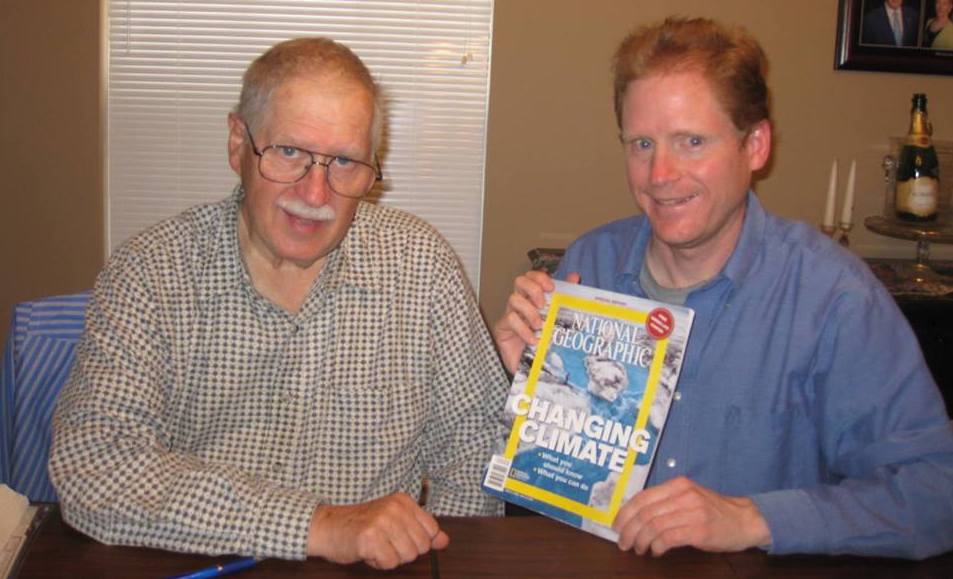
Now, I am going to do something radical. Yes, my dad physically and verbally abused me as a child. It left deep wounds that I am trying to heal from to this day. At the same time, he provided for my mom and two sisters a good home. My parents, especially my dad, paid for my college education. My parents, including my dad, took my sisters and me on fantastic vacations that led to my love of traveling and inspired me to work in the national parks. Over the last 12 years, my dad told me that he was very proud of my work as a climate organizer. We even made a YouTube video together in 2015 to promote climate change action. He tells me he loves me every time we talk on the phone or when I visit in St. Louis. Because of all the love my dad showed me, even with the trauma of abuse that still lingers in me, I am going to write him letters and call him to let him know that I love him.
Maybe this is how we can overcome authoritarian parenting and authoritarian leaders in the United States: with a strong nonviolent determination to rise above it with a courageous love.